
Introduction
For Indian PhD scholars, especially those studying in English-medium institutions, academic writing often feels like stepping into someone else’s voice. Students are told to sound “formal,” “academic,” or “like a journal article,” but few are taught how to do this without losing their own way of thinking. In the process, many end up copying sentence structures, repeating phrases from others’ work, or using tools to rewrite content — all of which increase the risk of plagiarism.
But there’s a deeper problem here. When you write in a tone or structure that doesn’t match your natural thinking, your ideas often lose clarity. Your arguments become shaped by borrowed formats instead of your research journey. That’s why writing in your own language and thought process — not just grammatically, but cognitively — is more than a preference. It’s essential for originality, clarity, and academic integrity.
Why Borrowed Language Leads to Academic Confusion
Many Indian scholars, especially those who’ve studied in regional languages or taken a long break from academics, find English academic writing intimidating. In private universities, where students come from diverse educational backgrounds, this challenge is common. To cope, some start lifting phrases from other theses or academic papers — not because they want to cheat, but because they think that’s how a thesis “should” sound.
However, this kind of mimicry often creates more problems than it solves:
- Unclear expression: When you borrow someone else’s sentence structure, the thought may no longer match what you meant. This leads to vague or contradictory writing.
- Increased similarity scores: Even if you change some words, your work might still match published material if the sentence flow or argument structure remains the same.
- Lost confidence: When your writing doesn’t sound like you, even your own ideas begin to feel distant. Many scholars then feel they aren’t “good enough” — when in fact, they just aren’t writing in their own voice.
Academic English isn’t about big words or complex structures. It’s about clarity, logic, and evidence. And that clarity begins when your thought process leads your writing — not the other way around.
Your Voice Is Not a Weakness — It’s Your Strength
Indian scholars often carry the burden of thinking their English isn’t good enough for academic writing. But this belief often leads to overdependence on tools — paraphrasers, templates, or even AI-generated sentences — all of which can dilute the originality of the work.
Here’s the truth: your natural way of thinking, when expressed clearly and ethically, is far more powerful than borrowed academic language. You don’t need to sound like a British professor to write a good thesis. What you need is:
- A clear argument
- Consistent reasoning
- Proper citation of sources
- Language that reflects how you think
Writing in your own language doesn’t mean switching to Hindi, Tamil, or Marathi in an English thesis. It means allowing your mental language — your logic, structure, and emphasis — to shape your English writing, rather than twisting your ideas to match someone else’s phrasing.
This is especially important in qualitative research, regional fieldwork, or topics rooted in Indian contexts. Your insight matters because it’s local, experiential, and lived. It must be expressed through your lens — not through borrowed academic jargon.
Academic Originality Starts with Cognitive Ownership
In Indian PhD programs, originality is not just about having a new topic. It’s about how you present your perspective, how you argue, and how you frame your contribution. This requires what we might call cognitive ownership — knowing what you’re saying, and saying it with confidence.
Here’s how writing in your own thought process supports originality:
- It helps you avoid plagiarism: When you write in your own words from the start, the chances of matching existing texts are much lower.
- It improves your viva performance: If your writing reflects your way of thinking, you’re more likely to remember and defend it during questioning.
- It strengthens interdisciplinary research: Many private universities in India encourage interdisciplinary work. Writing in your natural academic voice allows you to move between disciplines without sounding forced or artificial.
- It builds long-term academic skill: PhD writing is not the end of your journey. Whether you’re submitting a research paper, applying for a grant, or teaching, your ability to write in your voice will serve you everywhere.
Many thesis consultants in India now offer language polishing that preserves your voice — not just “corrects” your grammar. Scholars should seek that kind of help if needed, rather than surrendering their writing entirely to software or formulaic tools.
Working with Your Natural Language — Even in English
Even if your thesis must be in English, there are ways to bring your natural thought process into it:
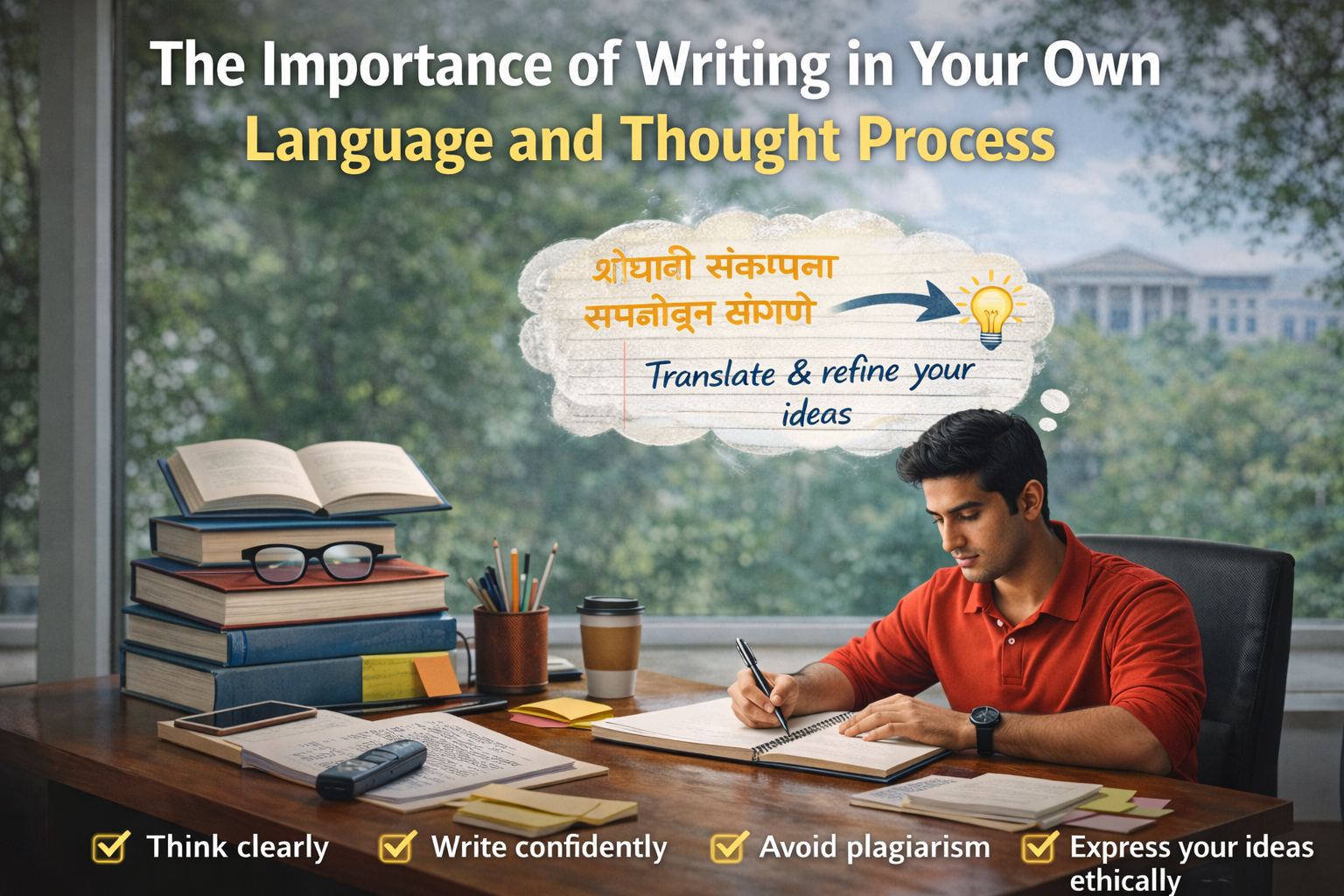
- Draft ideas in your regional language first, then translate and refine them. This helps retain clarity and confidence.
- Record yourself explaining a concept out loud, then write it down. This keeps your writing connected to how you actually think.
- Read your work aloud to see if it sounds like you. If it doesn’t, revise it until it does — while maintaining academic structure and citation.
- Use simple, clear sentences, especially when explaining your original contributions. Avoid overcomplicated words unless necessary.
Writing academically doesn’t mean erasing who you are. It means translating your insights into a shared format — without losing your voice.
Conclusion
In the rush to meet formal requirements, many Indian PhD scholars forget the most basic principle of good research: it must reflect the researcher. When you borrow too much academic language or rely too heavily on writing tools, you risk silencing your own thought process — and that’s where plagiarism and confusion begin.
Writing in your own language and thought process is not just a stylistic choice. It’s a declaration of academic honesty, confidence, and clarity. In a research ecosystem increasingly focused on originality, that kind of writing is not only safer — it’s stronger.