
Introduction
The fear of thesis rejection due to plagiarism is a real concern for many Indian PhD scholars, especially those studying in private universities or juggling research with professional commitments. Academic integrity holds a central place in Indian higher education, and plagiarism violations can lead to serious consequences — including outright rejection of a thesis. But behind these outcomes lie stories that offer more than caution; they provide insights into how scholars can navigate challenges, learn from mistakes, and strengthen their research process.
This blog titled “Thesis Rejection Due to Plagiarism – True Stories and Lessons” shares real experiences and key takeaways relevant to Indian students. It also sheds light on the importance of proactive measures to maintain originality in a thesis.
Real Cases of Thesis Rejection and What Went Wrong
Across Indian universities, there are documented cases where theses have been rejected because of plagiarism. Often, these cases reveal a combination of factors rather than a single cause.
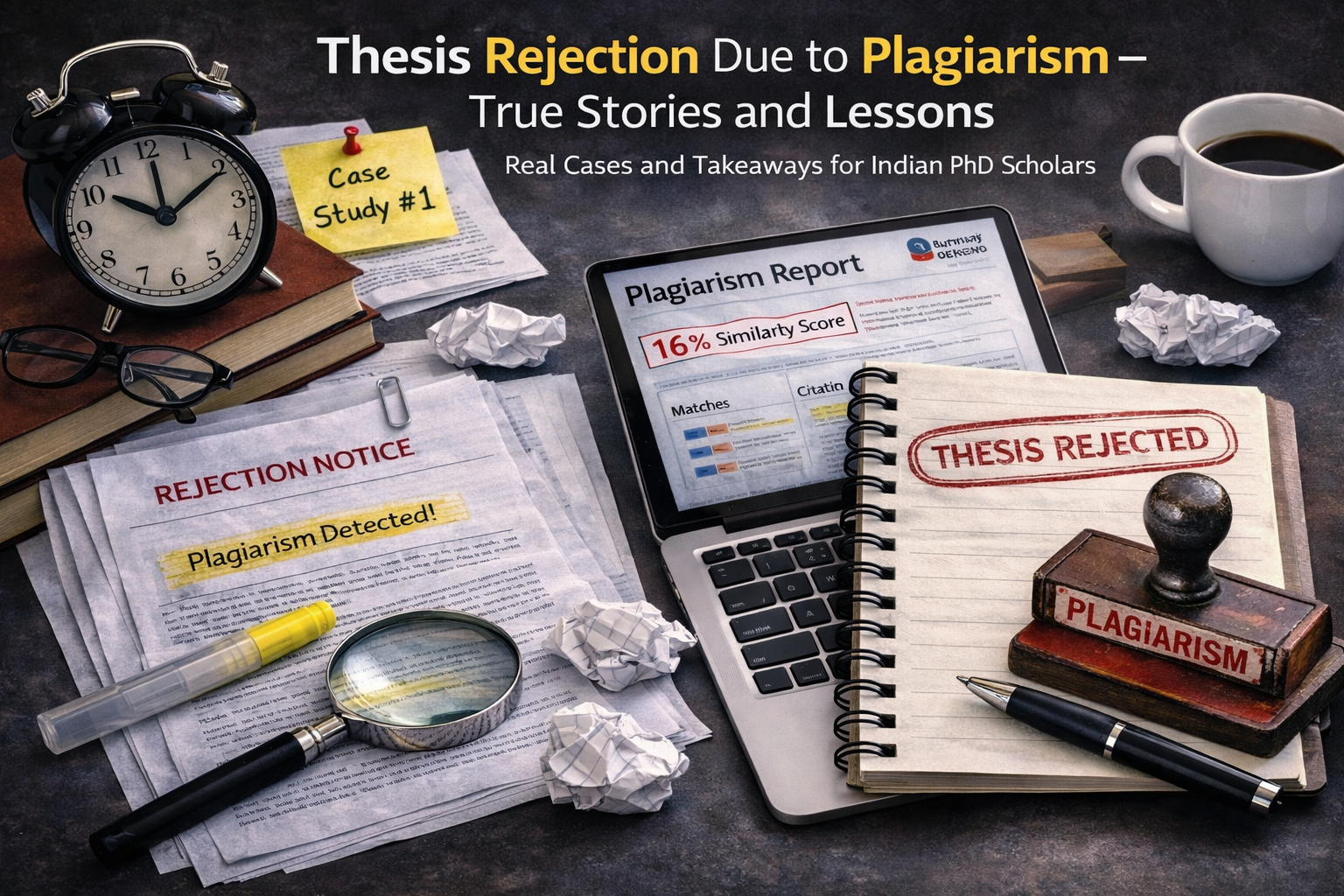
In one instance, a working professional pursuing a PhD part-time struggled to manage time and ended up copying several paragraphs verbatim from online sources without proper citations. The university’s plagiarism checker flagged the issue during the final submission stage, resulting in thesis rejection. The scholar faced not only academic delay but also reputational damage.
Another case involved a scholar writing in a regional language who was unaware that translated content from published English articles still needed to be cited. The thesis contained large chunks of translated text that were not attributed, leading to a similar rejection.
These examples underscore common pitfalls: lack of understanding of citation rules, unintentional plagiarism due to poor paraphrasing, and last-minute rush to meet deadlines.
Lessons from Rejection: Prevention Is Better Than Cure
While rejection can be devastating, it offers valuable lessons that every Indian PhD candidate can use to protect their work.
Firstly, understanding what constitutes plagiarism is essential. Many scholars confuse common knowledge with copied content, or do not realise that paraphrased text must be cited. Universities expect originality not just in ideas, but also in expression.
Secondly, time management plays a crucial role. Rushing to finish a thesis increases the chance of copying without proper attribution or relying excessively on AI tools or consultants who may cross ethical boundaries.
Thirdly, regular use of plagiarism checkers during the writing process — not just at the end — helps identify and fix issues early. Running checks on chapters or sections allows for thoughtful rewriting.
Finally, seeking guidance from supervisors or academic editors can prevent mistakes. Honest communication about difficulties and early feedback create space to correct course before problems become irreparable.
How Indian Universities Handle Plagiarism
Indian universities typically follow strict protocols when plagiarism is detected in a thesis. After the initial detection through software like Turnitin, the report is reviewed by the thesis committee or academic panel.
Depending on the severity, consequences may range from requiring revisions to outright rejection. Some institutions allow scholars to resubmit after corrections within a defined timeline, while others have zero-tolerance policies.
It’s important to note that penalties aim to uphold academic standards, not to punish scholars unfairly. Many universities also provide workshops and resources to help students understand plagiarism and proper citation practices.
Ethical Support and Tools to Avoid Plagiarism
Navigating a PhD thesis’s originality demands more than just plagiarism software. Indian scholars benefit from ethical academic support — including thesis coaches, editors, and credible consultants — who respect boundaries and help enhance writing without crossing into misconduct.
Developing good note-taking habits, paraphrasing skills, and accurate referencing are foundational. Tools like Zotero or Mendeley assist with managing citations, while manual proofreading ensures clarity and authenticity.
Importantly, maintaining transparency about the use of any external support preserves trust in the scholar’s own work.
Conclusion
Thesis rejection due to plagiarism is a harsh reality, but it can be avoided through awareness, preparation, and ethical diligence. Real stories from Indian PhD scholars remind us that academic integrity is non-negotiable — yet setbacks also teach resilience and growth.
For researchers navigating complex deadlines and multiple pressures, the best safeguard is steady, informed effort combined with honest support. When originality and ethics guide the journey, the thesis becomes not just a document but a true reflection of the scholar’s intellectual contribution.