
Introduction
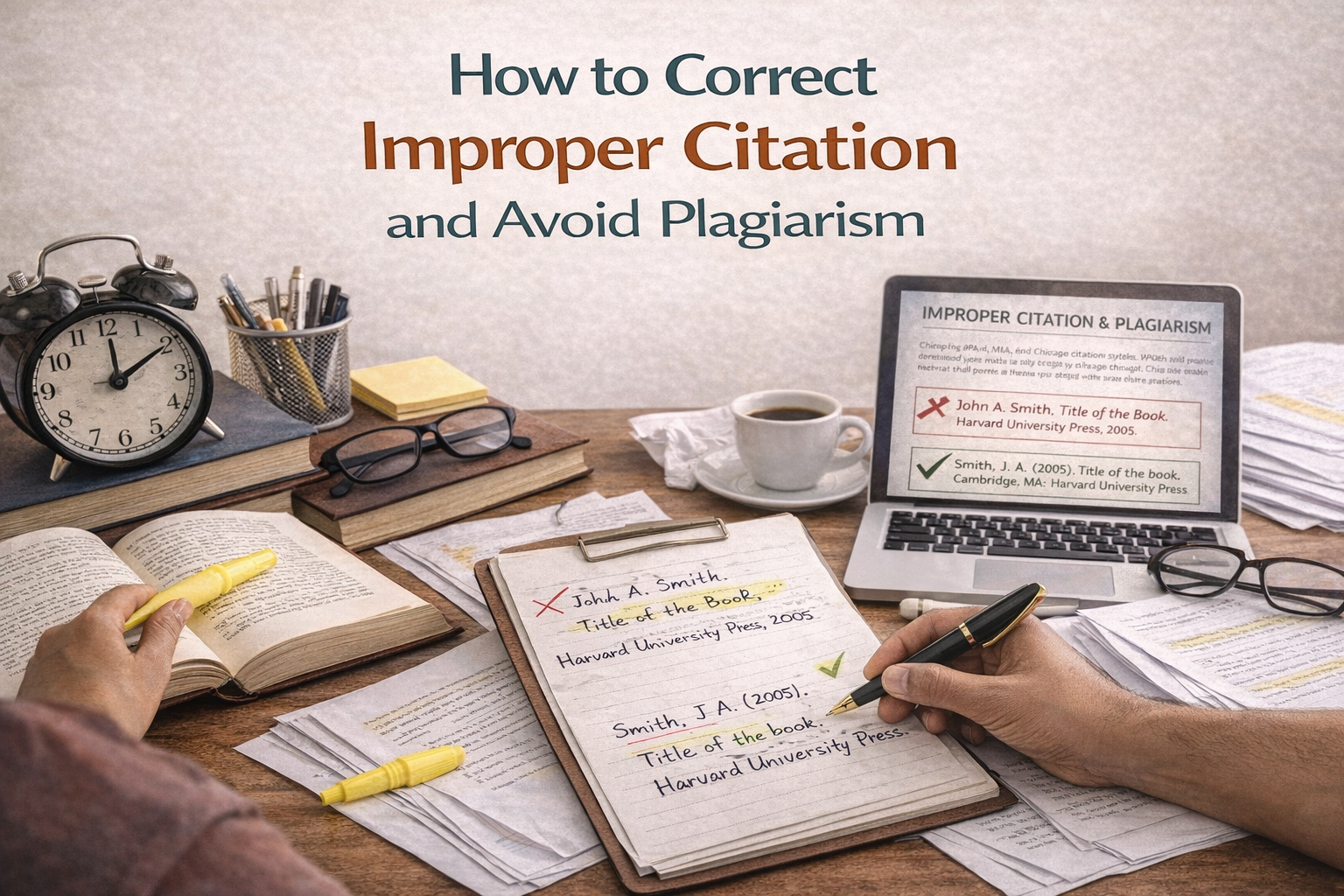
Improper citation is one of the most common reasons for high similarity scores in research submissions, particularly in Indian universities where strict guidelines are enforced by academic bodies like UGC and NAAC. While plagiarism is often seen as deliberate copying, in many cases, it arises from a lack of awareness about proper citation methods. For PhD scholars juggling multiple responsibilities, it’s easy to overlook citation rules or misuse tools, especially during the rush of final submissions.
Correcting citation mistakes is not just about passing plagiarism software—it is about building academic credibility and ensuring your work is ethically grounded. This blog explores how to identify and fix improper citation practices in research papers and theses, specifically in the Indian academic context.
What Is Improper Citation?
Improper citation occurs when a researcher either fails to credit a source correctly or uses incomplete, incorrect, or inconsistent referencing styles. This includes missing in-text citations, lack of quotation marks for direct quotes, incorrect author-year formats, or referencing the wrong publication. Even minor errors like citing a secondary source as a primary one can be flagged during evaluation.
In Indian academia, where citation styles like APA, MLA, or IEEE are often institution-specific, not adhering to the required format can result in both plagiarism accusations and rejection of your submission.
Common Situations Leading to Citation Errors
- Copying a definition or idea but forgetting to include the source
- Citing a source in the bibliography but not providing in-text attribution
- Using someone else’s words without quotation marks even if cited
- Referring to outdated or unverifiable internet sources
- Using inconsistent styles across chapters of a thesis
- Translating regional language content without attribution
Steps to Identify Improper Citation
- Use a Reference Management Tool
Applications like Zotero, Mendeley, or EndNote can help organize your sources and ensure uniform citation throughout your work. - Cross-Check In-Text Citations and Reference List
Every in-text citation should have a corresponding entry in the reference list and vice versa. - Consult the University’s Style Guide
Many Indian universities issue citation manuals or thesis writing handbooks. Follow these carefully for formatting rules. - Review Direct Quotes
Ensure all direct quotes are enclosed in quotation marks and have accurate citations. Even properly cited quotes will raise similarity if not formatted correctly. - Verify Paraphrased Content
Paraphrased material must still be cited. Ensure that the source is acknowledged even when the words are your own.
How to Correct the Mistakes
- Add Missing Citations: Go back to your notes or drafts to trace where you found the information. Add proper in-text and bibliographic citations.
- Fix Formatting Errors: Adjust the style (APA, MLA, etc.) based on your department’s requirements. Use official style manuals or tools like Purdue OWL for help.
- Replace Weak Sources: If your citation is based on unreliable or non-academic sources, find a peer-reviewed journal or book chapter instead.
- Rephrase or Quote Correctly: If a passage is too close to the original source, either paraphrase it properly or quote it with clear attribution.
- Use Plagiarism Detection Tools for Practice: Before submission, run your paper through Turnitin or similar tools, if allowed. They highlight citation-related issues as well.
Why Indian Researchers Must Be Extra Cautious
In India, universities increasingly require plagiarism reports during submission, and similarity above 10–15% is often subject to penalties. Unlike some Western institutions where collaboration and citation norms are emphasized early, Indian students often face these expectations at the end stage of research. This makes last-minute citation corrections both essential and stressful.
Moreover, research supervisors and academic panels in Indian institutions are especially vigilant about citation ethics, particularly for funded research or projects aiming for international publication.
Conclusion
Proper citation is not just a technicality—it is the backbone of scholarly integrity. In the Indian academic system, where plagiarism policies are becoming increasingly strict, learning to identify and fix improper citation is a vital skill for every researcher. By following structured methods, using reference tools, and seeking guidance from your university’s resources, you can ensure that your work is both original and ethically sound. Instead of fearing plagiarism checks, make citation a natural part of your writing process.