
Introduction
The internet has changed how students access and use information, making research faster and more convenient. However, it has also given rise to a new challenge — digital plagiarism. Copy-pasting from online sources, rephrasing using automated tools, and even buying ready-made assignments have become increasingly common in Indian higher education. For private universities, where academic quality is under constant scrutiny, the issue is particularly concerning. As the digital landscape grows, so does the need for robust policies, awareness programs, and technological interventions to preserve academic integrity.
Understanding Digital Plagiarism
Digital plagiarism is not just about copying text from websites. It includes using AI-generated content without attribution, duplicating work from online journals, paraphrasing without proper citations, and even reusing images or data without permission. The convenience of online access has blurred the lines for many students who may not fully understand the ethical and legal implications. In private universities, where students often juggle jobs, research, and coursework, the temptation to take shortcuts is high, making preventive measures even more essential.
The Role of Awareness Programs
One of the most effective ways colleges are tackling digital plagiarism is through early education. Many private universities now conduct orientation sessions on plagiarism for new students, explaining what constitutes unethical academic behaviour and how it can affect their careers. These programs often include hands-on training in citation styles like APA or MLA, as well as practical workshops where students learn to paraphrase correctly. By embedding academic integrity into the student culture, universities reduce the likelihood of misconduct later.
Use of Plagiarism Detection Tools
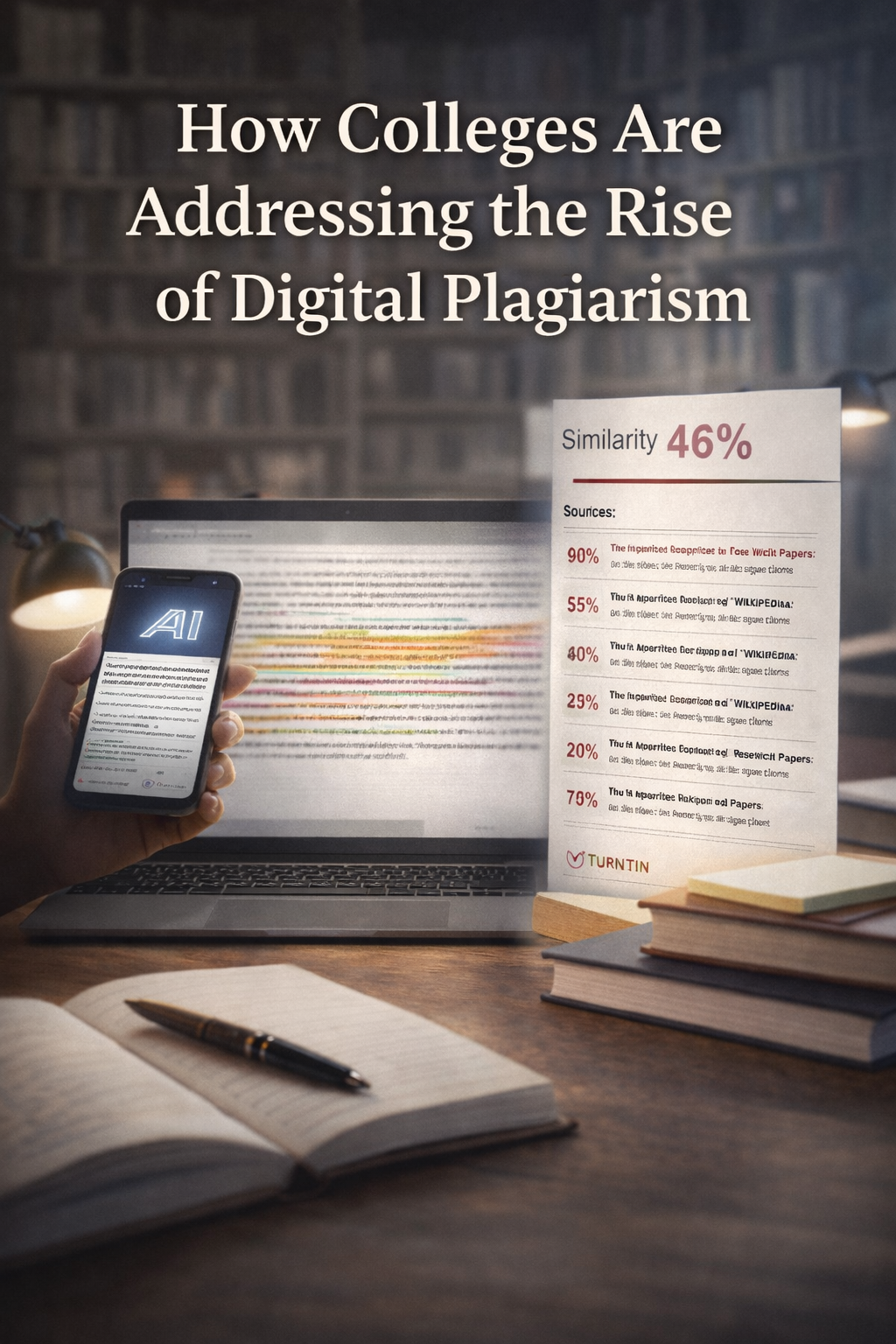
Technological tools like Turnitin, Urkund, and PlagScan have become standard in many Indian universities. These platforms compare student work against massive online databases to detect similarities. Private universities, in particular, are investing in these tools not just to catch offenders but to educate students. Some institutions even allow students to run their drafts through plagiarism software before submission, encouraging self-check and improvement. This proactive approach shifts the focus from punishment to prevention.
Faculty Training and Involvement
Preventing digital plagiarism is not just the student’s responsibility; faculty members play a critical role as well. Colleges are training faculty to identify suspicious writing patterns, verify sources, and guide students on how to improve their work. Supervisors in PhD programs are encouraged to regularly review progress and offer feedback on citation practices. This mentorship ensures students are not only monitored but also supported in producing original research.
Stricter Policies and Penalties
While education and technology are essential, enforcement is equally important. Many colleges have updated their academic policies to explicitly cover digital plagiarism. Penalties range from assignment resubmission to grade reduction, suspension, or even expulsion in severe cases. These rules are clearly stated in student handbooks and discussed in class, ensuring there is no ambiguity about the consequences. In private universities, such measures also help maintain the institution’s credibility and ranking.
Promoting a Culture of Originality
Ultimately, preventing digital plagiarism is about fostering an environment where original thought is valued over shortcuts. Colleges are encouraging students to engage in debates, discussions, and independent projects that require critical thinking. When students feel confident in their abilities and supported in their learning, they are less likely to rely on unethical practices.
Conclusion
The rise of digital plagiarism is a complex challenge for Indian higher education, but it is not insurmountable. By combining awareness programs, technological tools, faculty involvement, and clear policies, colleges — especially private universities — can significantly reduce the problem. The goal is not merely to punish offenders, but to nurture a generation of scholars who value integrity, creativity, and responsibility in their academic work. Addressing digital plagiarism today ensures that the research and knowledge produced in the future remain credible and respected.