Introduction
For a PhD scholar in India, maintaining originality in research writing is not just about meeting university requirements—it’s about academic integrity and building a credible reputation. Whether you are pursuing a PhD in a private university or a central institution, plagiarism checks are an unavoidable step in the thesis submission process. However, not every tool available online is safe to use. Some may compromise your data, store your document, or even make it accessible to third parties. This makes it important to know which plagiarism detection tools are safe for self-checks before you submit your work officially.
Why PhD Students Need Safe Plagiarism Tools
In many Indian universities, including private ones, the plagiarism check is done only once—at the time of submission. If your similarity score is high, your thesis may be returned for revision, causing delays of weeks or even months. Using a safe plagiarism checker beforehand allows you to identify and fix issues early. But safety here doesn’t just mean accuracy—it also means protecting your research from being misused.
Risks of Using Unsafe Plagiarism Checkers
Many free online plagiarism tools store uploaded documents on their servers, sometimes without informing the user. This means your thesis could be indexed online and appear as “already published” when your university runs its official check. In extreme cases, unsafe tools have been linked to research theft, where parts of uploaded work are later found in other publications. For a PhD student who has spent years building original research, this can be devastating.
University-Approved Tools for Self-Checking
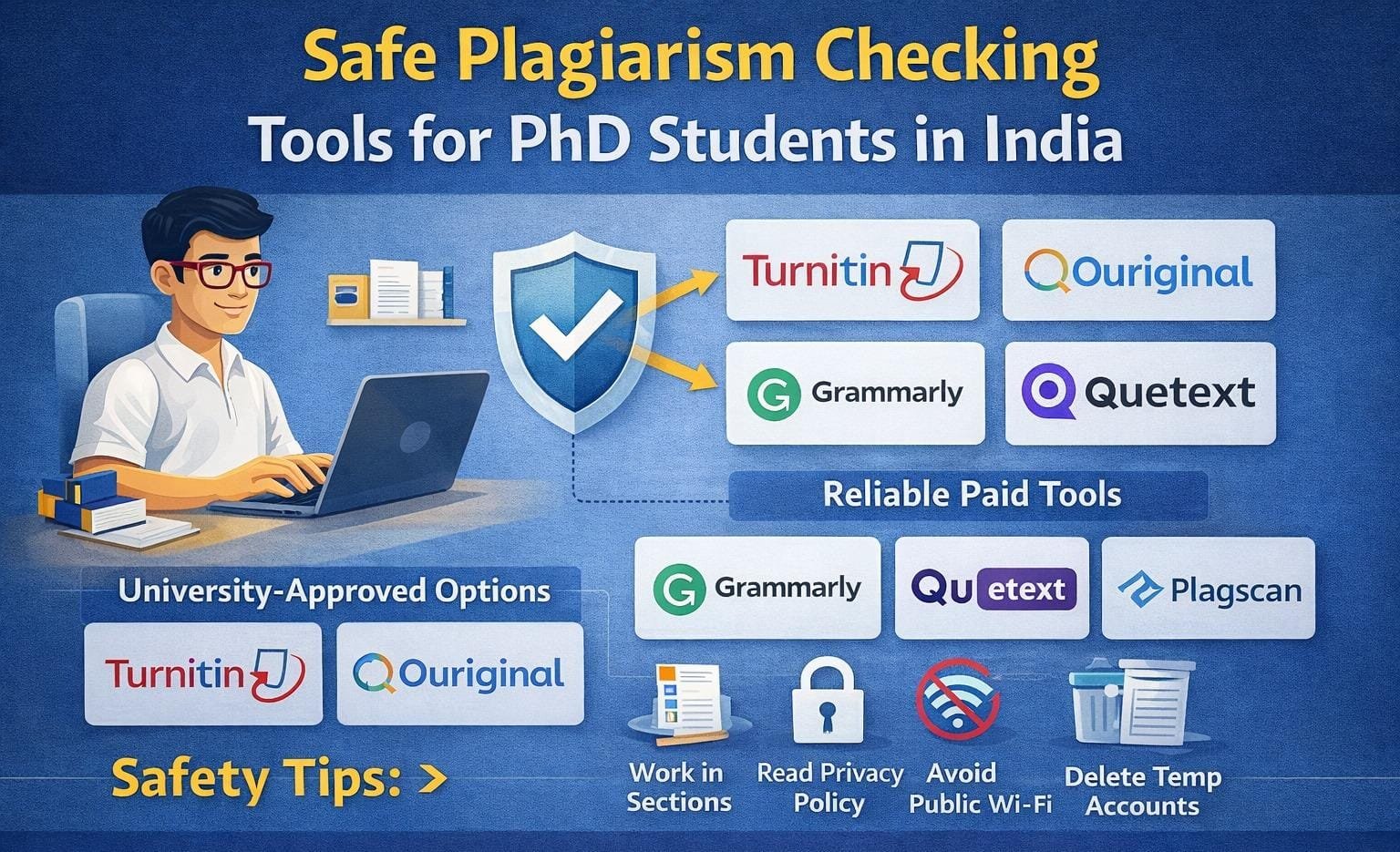
If you want to be completely safe, use tools officially recommended by your university. For instance, UGC-approved software like Turnitin and Urkund (now called Ouriginal) are trusted across India. While universities often have institutional subscriptions, some also offer limited self-check options for students. Check with your research supervisor or library staff if you can access these platforms before your final submission.
Reliable Paid Options for Individual Use
If your university doesn’t allow pre-checks on their official platform, you can opt for reputable paid tools.
- Grammarly Premium: While not as powerful as Turnitin in database coverage, Grammarly’s plagiarism checker is accurate for detecting copied text from online sources.
- Quetext Pro: Offers deep search and doesn’t store your documents, making it a safer choice for privacy-conscious researchers.
- Plagscan: Used by academic institutions worldwide, it provides secure checks and deletes documents after analysis.
These tools require a subscription but offer better safety and accuracy compared to unknown free websites.
Free Tools – Use with Caution
While some free tools like SmallSEOTools or PlagiarismDetector.net are widely used, they come with privacy concerns. They may not misuse your content, but their database coverage is limited, meaning they might miss plagiarism that your university’s software will detect later. If you use a free tool, avoid uploading your full thesis—check small sections instead.
Best Practices for Safe Plagiarism Checks
- Work in Sections: Instead of uploading the whole thesis, check chapters or parts separately to reduce exposure.
- Read the Privacy Policy: Always check whether the tool stores your content.
- Avoid Public Wi-Fi: When uploading research documents, use a secure internet connection.
- Delete Temporary Accounts: If you create an account just to check plagiarism, delete it once your work is done.
Balancing Safety and Accuracy
Accuracy is as important as safety. A completely safe tool that misses half the plagiarism is of little help. Your best approach is to run an initial check on a reliable, secure tool and then make corrections. After this, you can do a final check on your university’s official software before submission.
The Role of Supervisors in Safe Checking
In many Indian private universities, supervisors guide students on safe plagiarism-checking practices. If you are unsure which tool to use, your supervisor can either run a check for you or recommend a trusted service. This not only keeps your data safe but also ensures that the results match the standards expected by your institution.
Conclusion
For Indian PhD students, especially those in private universities, the journey from research to submission involves more than just writing—it demands vigilance in protecting originality. Safe plagiarism tools are not just a convenience; they are a necessity for safeguarding years of work from misuse. Whether you choose a university-approved platform, a reputable paid tool, or a cautious approach with free checkers, the key is to ensure both safety and accuracy. With the right precautions, you can approach your final submission confidently, knowing your thesis stands strong on academic integrity.