
Introduction
For many PhD scholars in India, receiving a plagiarism report for the first time can be an overwhelming experience. The document is filled with percentages, colour codes, and highlighted text, leaving you wondering what it all truly means. Misinterpreting the results can cause unnecessary panic—or worse, overconfidence. In private universities especially, where plagiarism policies can be stricter than assumed, knowing how to read and act upon your report is essential before submitting your thesis. Understanding a plagiarism report is not just about checking the similarity score—it’s about knowing what counts, what can be fixed, and how to present your work ethically.
Knowing the Difference Between Similarity and Plagiarism
One of the most common mistakes scholars make is equating similarity with plagiarism. Plagiarism detection tools like Turnitin, Urkund, or Grammarly identify matched text, not necessarily stolen ideas. A similarity index of 15% does not mean you have plagiarised 15% of your thesis. Many matches may come from your references, commonly used academic phrases, or legitimate quotations. The key is to identify whether the matching text is properly cited and whether it reflects original thought.
Checking the Source of Matches
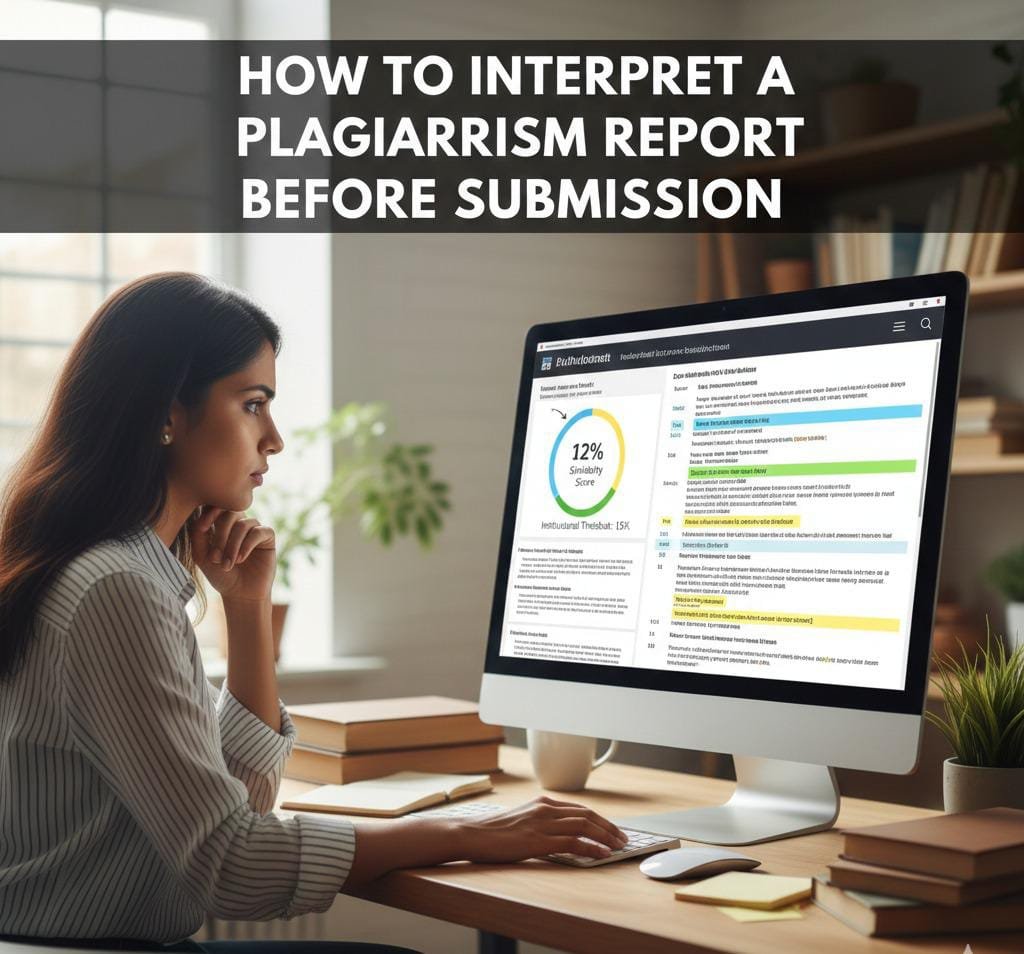
When you open your report, you will see highlighted sections linked to source documents. Go through these carefully. Are these matches from your literature review, from your methodology section, or from direct quotes you included? Matches from properly cited sources or universally accepted terminology (for example, “The study was conducted using a mixed-method approach”) are usually safe. However, if a large block of text matches a single source without quotation marks or paraphrasing, that is a problem.
Colour Codes and Match Types
Plagiarism reports often use colours to indicate different types of matches. For example, Turnitin highlights exact matches in one colour and paraphrased but similar text in another. Some tools even separate matches from internet sources, journals, or student submissions. Pay attention to these distinctions—they help you see whether you need to rewrite, re-cite, or leave the text as is.
Focus on High-Match Sections First
If you find a section with a high percentage of similarity to one source, deal with it immediately. This could mean rewriting the paragraph in your own words, breaking long sentences, or adding missing citations. Avoid the temptation to only replace a few words—plagiarism detection tools are advanced enough to still flag content with minor word swaps.
Understand Institutional Thresholds
Private universities in India typically set their own acceptable similarity limits, often following UGC guidelines. For PhD theses, this can range from 10–20% for the final document. But within this limit, matches from certain sections like your literature review may be viewed differently from those in your original analysis. Always check your university’s policy so you can interpret your report in context.
Don’t Ignore Self-Plagiarism
Many scholars are surprised to find their own previously published work appearing in their plagiarism report. This is called self-plagiarism. Even if you are reusing content you wrote yourself, your university may require you to cite it as you would another author’s work. Some private universities in India treat self-plagiarism as seriously as copying from others, especially if it has been published before.
Avoid Overcorrecting
While reducing the similarity score is important, be careful not to over-edit your work in an attempt to achieve a perfect 0% score. Academic writing naturally involves some degree of similarity, particularly in technical descriptions and standard phrases. Your goal should be an acceptable score with all matches properly referenced, not an artificially low number that compromises clarity or meaning.
Seek Help When in Doubt
If your report seems confusing or you are unsure about a match, consult your supervisor or an experienced academic mentor. Many private universities provide plagiarism review sessions for scholars. Taking advantage of these resources ensures you don’t misinterpret results or waste time making unnecessary edits.
A Step-by-Step Review Process
A practical way to handle your plagiarism report is:
- Review total similarity percentage.
- Identify and mark high-match sections.
- Check citations and quotations in those sections.
- Rewrite or paraphrase where necessary.
- Run the report again to confirm changes.
Conclusion
Interpreting a plagiarism report before submission is a skill every PhD scholar must master. It is not enough to simply glance at the similarity score; you must understand where matches are coming from, whether they are ethically acceptable, and how they align with your university’s guidelines. By reviewing the report systematically, focusing on high-risk sections, and seeking guidance when needed, you can ensure your thesis meets both academic integrity standards and submission requirements. Remember, a plagiarism report is not your enemy—it is a tool that helps you refine and protect the originality of your research.