Introduction
Artificial Intelligence (AI) has rapidly transformed academic writing across Indian higher education. Tools like ChatGPT are now widely used by PhD scholars for planning chapters, refining arguments, and improving language quality. Yet a critical question remains: can AI actually help reduce plagiarism, or does it create new academic risks?
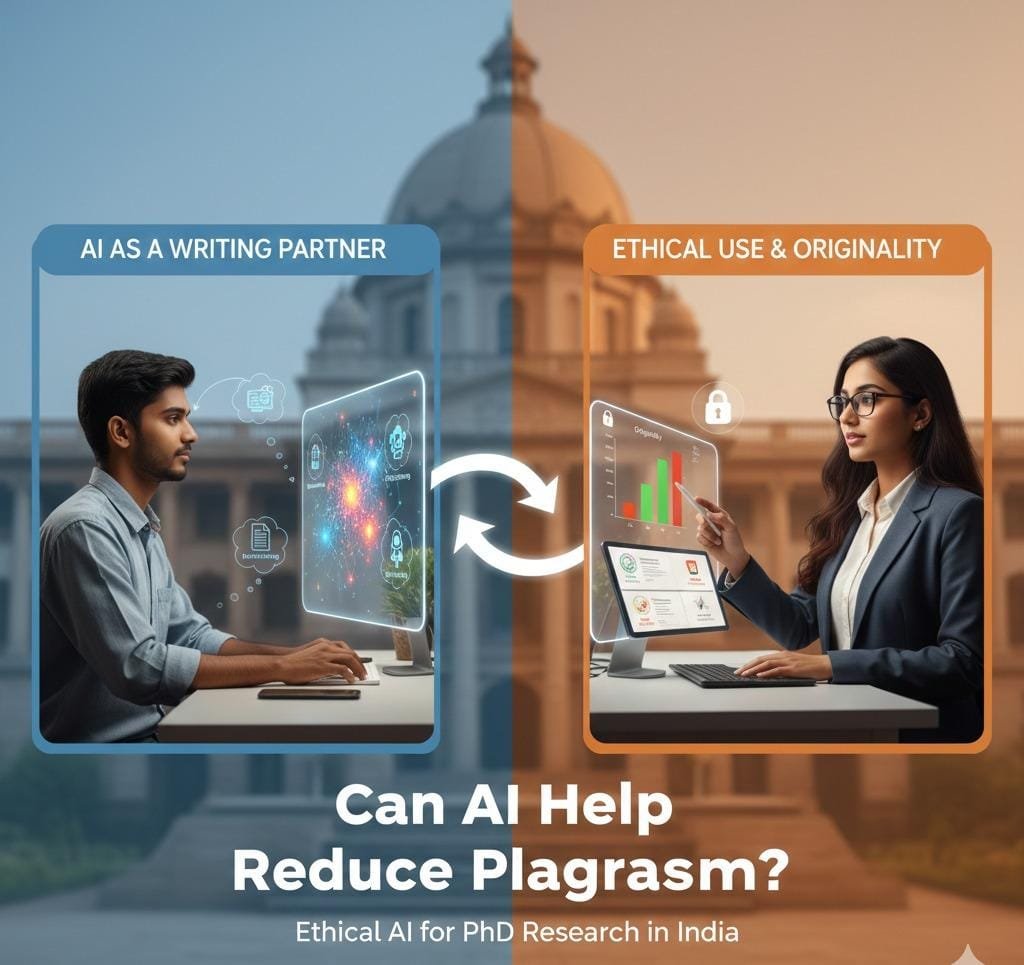
For PhD scholars in private universities—where strict plagiarism limits under UGC regulations determine thesis approval—this question is not theoretical. Understanding how AI can support originality without violating academic ethics is essential. This blog explains how AI tools can be used responsibly to reduce unintentional plagiarism, improve research quality, and maintain scholarly integrity.
AI as an Academic Assistant, Not a Replacement
Writing a PhD thesis involves complex reasoning, original interpretation, and academic discipline. AI tools can support this process by improving sentence flow, correcting grammar, and helping scholars express ideas more clearly. When used correctly, this reduces over-dependence on copied material and improves originality.
However, AI should never replace intellectual effort. Using AI to rewrite copied content or heavily borrowed text can still result in structural similarity that plagiarism detection tools like Turnitin or Urkund will identify. Ethical AI use begins with original thinking first, AI support second.
Using AI to Build Original Ideas from the Start
One of the strongest ways AI helps reduce plagiarism is during the early research stage. Instead of beginning with published paragraphs, scholars can use AI to:
- Identify key themes in a research area
- Explore research gaps
- Suggest analytical perspectives
By building arguments from these AI-guided ideas rather than from existing text, scholars naturally create more original content and reduce similarity scores.
Improving Paraphrasing Skills with AI Guidance
Paraphrasing is often misunderstood in Indian research writing. Changing a few words is no longer sufficient, as modern plagiarism software detects sentence patterns and structure.
AI tools can help scholars evaluate whether their rewritten text is genuinely original by suggesting alternative structures and analytical phrasing. Over time, this improves academic writing skills and helps scholars develop a unique scholarly voice—one of the most effective ways to avoid plagiarism.
Enhancing Language Quality Without Copying
Many plagiarism issues arise from language limitations rather than dishonest intent. Scholars may rely heavily on source material because they lack confidence in academic English. AI can help refine clarity, coherence, and tone without replicating source language.
This is particularly valuable in private university environments, where formal academic writing support may be limited. Clear expression reduces the temptation to reuse published wording and strengthens originality.
Limitations and Risks of AI in Plagiarism Control
Despite its benefits, AI is not a guaranteed solution. Scholars must remain cautious of:
- Factual errors or outdated information generated by AI
- Unintentional similarity, especially in specialised research areas
Every AI-assisted draft should be reviewed critically and checked using authorised plagiarism detection tools before submission.
Ethical AI Use Under UGC Plagiarism Regulations
UGC guidelines in India typically allow similarity levels between 10% and 20%, depending on thesis sections. Ethical AI usage includes:
- Never using AI to rewrite plagiarised content
- Always verifying AI output with credible academic sources
- Treating AI as a tool for support, not authorship
Following these principles ensures compliance with university policies and protects academic credibility.
Practical AI Strategies to Reduce Plagiarism
PhD scholars can use AI effectively by:
- Creating chapter outlines before writing
- Generating alternative academic vocabulary to avoid repetition
- Understanding complex theories through AI explanations, then rewriting independently
- Encouraging critical analysis rather than factual reproduction
These practices promote originality while maintaining academic discipline.
Conclusion
AI tools like ChatGPT can play a meaningful role in reducing plagiarism when used ethically and thoughtfully. For PhD scholars in private universities, AI should function as a supportive academic assistant—not a shortcut. By combining AI assistance with proper citation, critical thinking, and reliable plagiarism checks, scholars can produce research that is original, credible, and fully compliant with UGC standards.
Used responsibly, AI strengthens academic writing and helps scholars submit plagiarism-safe theses that genuinely reflect their intellectual contribution.