
Introduction
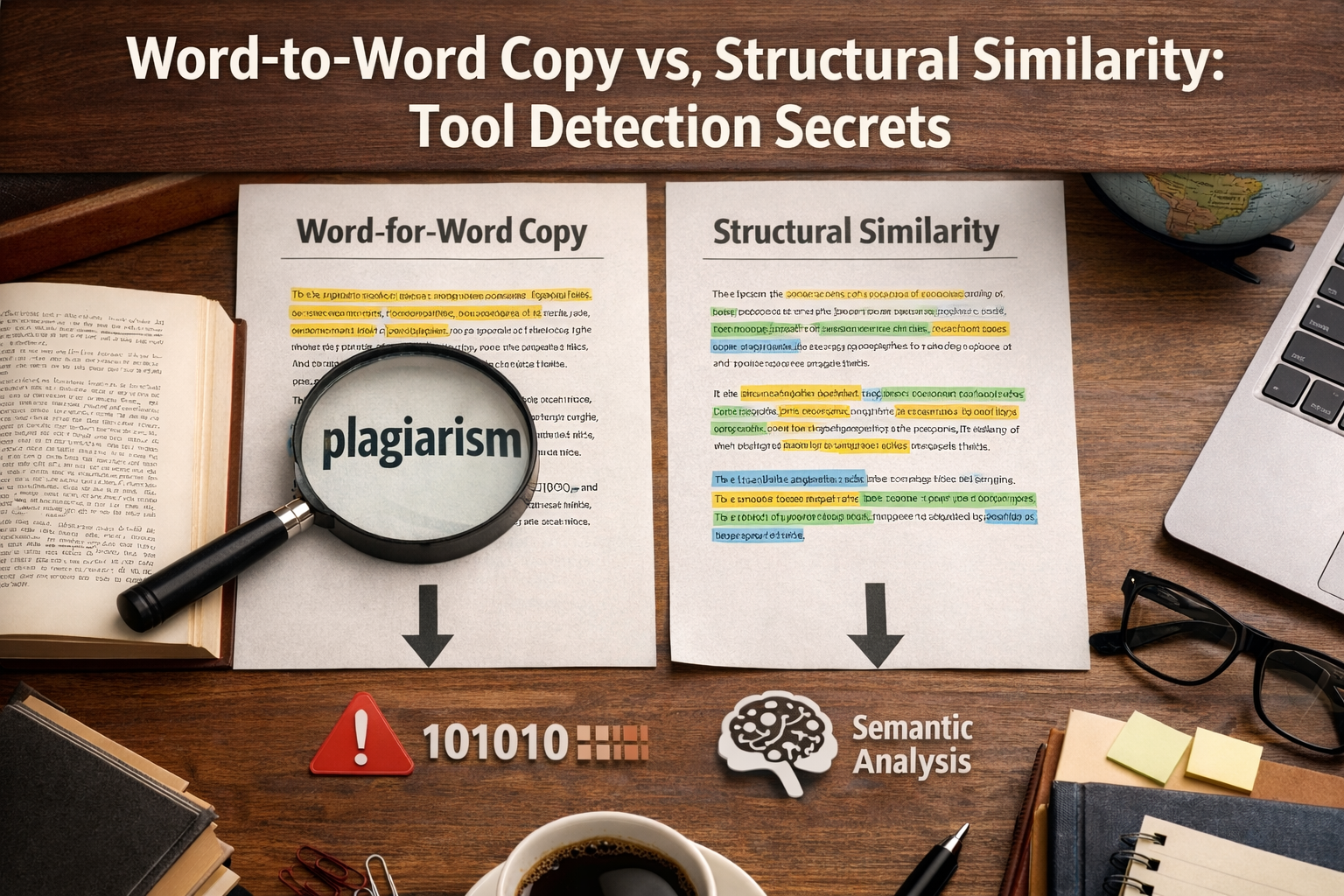
When we talk about plagiarism, many scholars assume it only means copying text word-for-word. In reality, plagiarism detection tools in Indian universities—especially in private institutions—are designed to identify multiple forms of similarity. This includes not only exact matches but also structural similarities where the words are changed but the sentence structure and meaning remain the same. For PhD scholars, understanding how tools detect these differences can be the key to avoiding unintentional plagiarism and passing similarity checks.
What is Word-to-Word Copy?
Word-to-word plagiarism occurs when text from a source is copied exactly without any modification or citation. Detection tools like Turnitin, Urkund, or PlagScan are highly effective at identifying this type of match because they rely on direct text comparison. Even a short sequence of identical words can trigger a match if it crosses the tool’s threshold for similarity. In Indian private universities, a high percentage of word-to-word matches usually results in immediate rejection or a mandatory revision.
What is Structural Similarity?
Structural similarity is subtler. Instead of copying the exact words, the writer keeps the same sentence structure, order of ideas, and meaning but replaces some vocabulary with synonyms. While it may seem like the content is “rewritten,” detection tools can still identify the similarity because the overall organisation and context remain unchanged. For example, replacing “researchers found significant results” with “scholars discovered notable outcomes” might fool a casual reader but not a sophisticated plagiarism checker.
How Tools Detect Word-to-Word Copy
For exact matches, tools use string matching algorithms that scan for identical sequences of words. They highlight these in the similarity report, showing both the matched section and its source. This makes detection fast and highly accurate. The only way to avoid a match here is by proper citation or original writing.
How Tools Detect Structural Similarity
Detection of structural plagiarism is more advanced. Many tools use a combination of phrase recognition, pattern matching, and semantic analysis. This allows them to see beyond vocabulary changes and identify underlying sentence patterns. For PhD scholars, this means that simply “replacing words” without rethinking the content and expression will still risk a high similarity score.
Why This Matters in Indian Private Universities
Private universities in India often have strict similarity thresholds—sometimes even lower than the UGC-recommended 10% for final submissions. This means that both direct copying and structural similarities can push a thesis over the acceptable limit. Scholars who are unaware of these rules often face delays, additional fees for resubmission, or even penalties that affect their academic record.
Strategies to Avoid Both Forms of Plagiarism
- Write from your own understanding instead of modifying a source sentence by sentence.
- Take notes in your own words before drafting.
- Use multiple sources to create original phrasing and structure.
- Always provide proper citations for borrowed ideas.
- Run self-checks with plagiarism detection software to identify issues before official submission.
Conclusion
While word-to-word plagiarism is easy to recognise and avoid, structural similarity is a hidden challenge for many PhD scholars. Detection tools in Indian private universities are equipped to identify both, making surface-level changes ineffective. The best defence is a deep understanding of the content and a commitment to original expression. By learning these detection secrets, scholars can not only pass similarity checks but also strengthen the authenticity and credibility of their research.