Introduction
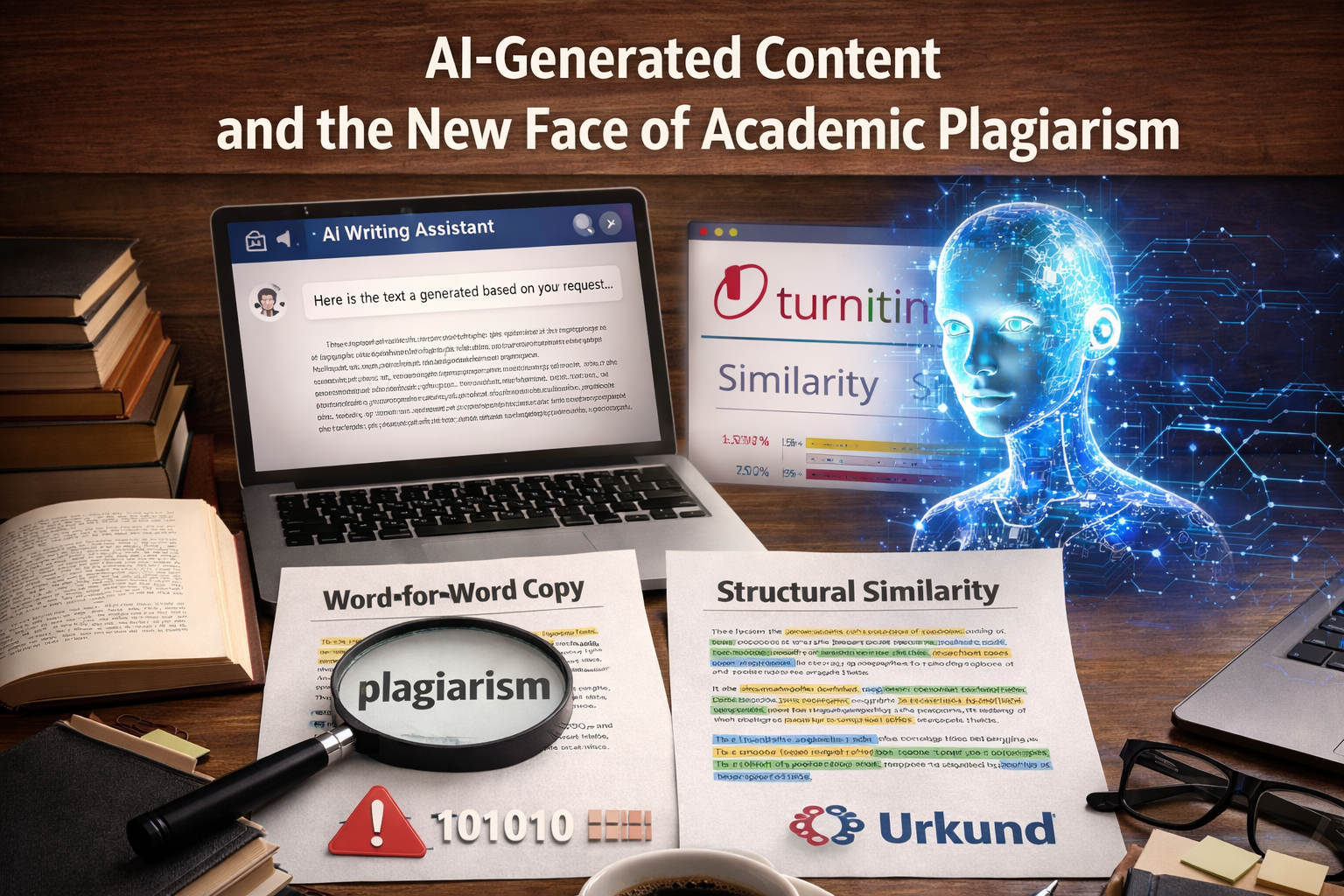
The rise of artificial intelligence (AI) writing tools like ChatGPT, Jasper, and Copy.ai has transformed how scholars create content. While these tools offer efficiency, speed, and convenience, they also bring a new challenge: academic plagiarism in a form that traditional detection methods might not fully capture. For PhD students in India, especially those pursuing a PhD in private university settings, understanding how AI-generated content interacts with plagiarism detection systems is crucial. AI may not “copy-paste” in the traditional sense, but it can still raise similarity scores or blur the line between originality and reproduction.
Understanding AI-Generated Content
AI-generated content is created using algorithms trained on massive datasets, often containing books, articles, and web content. These tools generate new sentences, but the structure, phrasing, or even unique ideas may mirror their training data. This means the output can unintentionally resemble published works, making plagiarism detection complex. In an academic setting, originality is more than avoiding direct copying—it’s about presenting ideas in your voice, with proper citation, even if a machine helped you write.
Why AI and Plagiarism Are Linked in Discussions
Many scholars believe that because AI “creates” rather than “copies,” its output is automatically safe. However, plagiarism isn’t only about identical wording; it includes using someone else’s ideas without proper acknowledgment. AI tools can reproduce common academic phrasing, statistical interpretations, or even paraphrased arguments from sources you have never read. For a PhD in private university, this creates a unique risk—your thesis may unintentionally echo someone’s published work, resulting in high similarity percentages in tools like Turnitin or Urkund.
Challenges in Detecting AI-Based Plagiarism
Current plagiarism detection tools are designed to catch textual similarity between submitted content and existing databases. AI-generated content often avoids exact matches but can still cause structural or conceptual similarity. Some tools, like Turnitin, are now introducing AI-writing detection features, but these are still evolving and may not be fully accurate. Moreover, AI plagiarism often lies in “idea replication” rather than verbatim copying, which is harder to measure.
Ethical Concerns for Scholars
Even if AI tools help you write faster, relying on them without critical input can erode academic integrity. Your thesis is supposed to be a reflection of your research capabilities, analytical thinking, and original contribution. Submitting AI-produced paragraphs without rephrasing, citing relevant sources, or adding your interpretation crosses into unethical territory. In private universities, faculty may now specifically ask for an explanation of methodology and writing processes to ensure that AI did not replace scholarly effort.
Best Practices to Use AI Without Crossing the Line
To benefit from AI while staying academically safe, PhD students should follow a few key strategies:
- Use AI as a brainstorming partner, not a replacement for your writing.
- Always verify facts, statistics, and references generated by AI.
- Paraphrase AI output in your own words and support it with cited sources.
- Maintain a balance—ensure most of your work is human-written.
- Run multiple plagiarism checks after using AI content.
Institutional Policies and Future Trends
Globally, universities are creating policies on AI use in academic writing. In India, many private universities are beginning to draft AI-use guidelines that align with UGC’s emphasis on originality. Over time, more plagiarism tools will integrate AI-detection algorithms, and journals may start requiring a declaration of AI assistance. This means the academic world is moving towards transparent AI use rather than outright banning it.
Conclusion
AI-generated content has added a new dimension to academic plagiarism. For PhD students, especially in private universities, the risk is not just about copying text—it’s about unintentionally reproducing someone else’s intellectual work without credit. By treating AI as a support tool rather than a writing shortcut, scholars can uphold originality, avoid plagiarism penalties, and maintain the trustworthiness of their research. In the evolving landscape of technology and academia, the real skill lies in blending innovation with integrity.