
Introduction
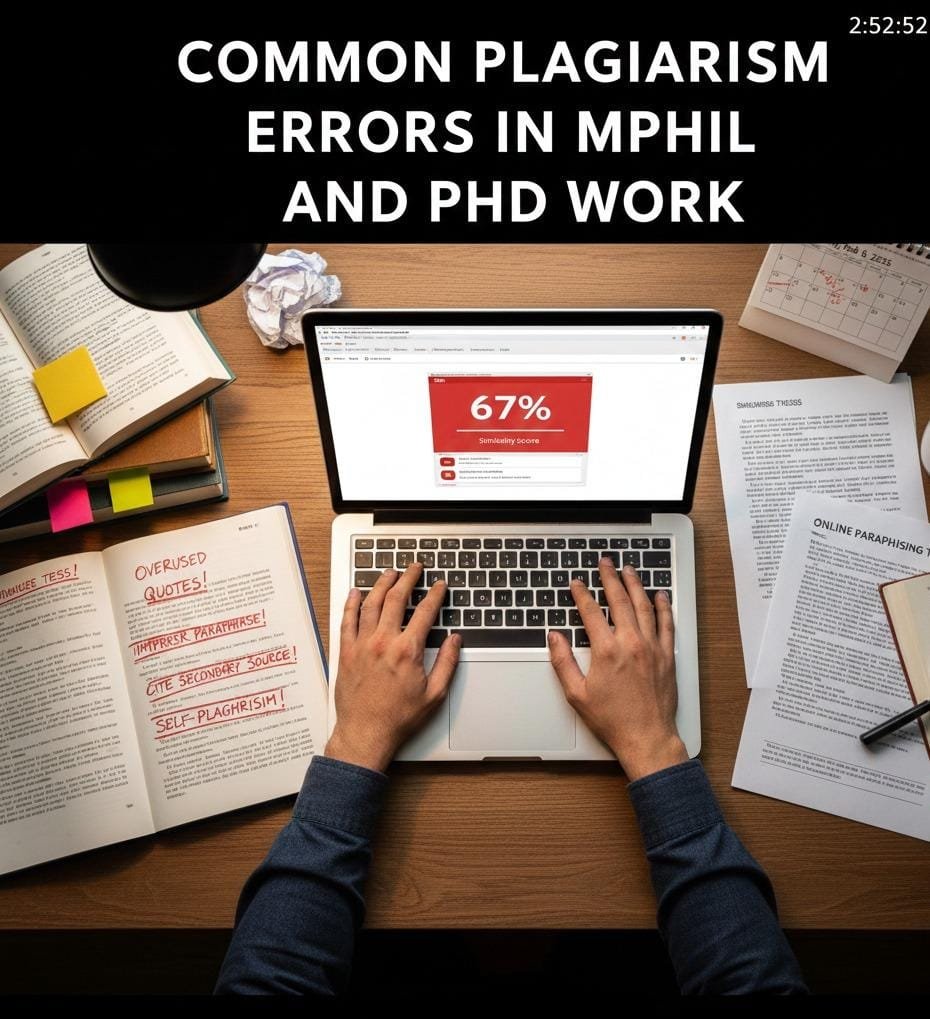
Plagiarism is one of the most common reasons why MPhil and PhD theses face rejection or major revisions in Indian universities. While most scholars are aware that copying someone else’s work without attribution is wrong, many still make mistakes that lead to unintentional plagiarism. In the Indian academic context, especially in private universities, these errors often happen due to a lack of proper training in research writing, over-reliance on secondary sources, and misunderstanding how plagiarism detection tools work. Understanding these mistakes is essential for ensuring academic integrity and avoiding delays in thesis acceptance.
Overusing Direct Quotes
Many MPhil and PhD students believe that adding quotation marks around copied sentences is enough to make it acceptable. While direct quotes are allowed, overusing them can still trigger high similarity percentages in plagiarism reports. A thesis overloaded with quoted text shows a lack of original contribution. Instead, scholars should paraphrase in their own words and cite appropriately. Direct quotes should be used sparingly and only when the original wording is essential.
Improper Paraphrasing
Improper paraphrasing happens when a scholar changes only a few words in a sentence but keeps the structure and meaning exactly the same. This is still considered plagiarism because plagiarism detection tools can recognise structural similarities. Proper paraphrasing involves rephrasing the content completely in your own voice while keeping the original meaning intact, and then adding the source citation. This skill takes practice and careful reading to master.
Forgetting to Cite Secondary Sources
In the process of writing, many scholars rely on summaries or interpretations from other papers without checking the original source. Citing only the paper you directly read while ignoring the primary source can lead to academic integrity issues. For example, if you use an idea originally proposed by Author A but found it in Author B’s paper, you must acknowledge both. Not doing so is seen as a citation error, which can count as plagiarism in some cases.
Copying from Your Own Previous Work (Self-Plagiarism)
A common but often overlooked mistake is self-plagiarism. Many students reuse large portions of text from their previous assignments, conference papers, or MPhil dissertations in their PhD thesis without citing themselves. While it may seem harmless since it is your own work, universities still consider it plagiarism if the material has been published or submitted earlier. Scholars should always rephrase, update, or properly reference their earlier work to avoid this issue.
Poor Note-Taking Habits
Sometimes plagiarism occurs not at the writing stage but during research note-taking. Scholars may record exact sentences from a source without quotation marks and later forget whether those were direct quotes or their own words. This leads to accidental plagiarism. The solution is to clearly mark direct quotes during note-taking and always record the source details alongside the note.
Using Unverified Online Content
In the digital age, scholars often rely on blogs, slides, or online summaries for quick understanding. However, much of this content is not peer-reviewed and may itself be plagiarised from elsewhere. Using such material without careful checking can introduce plagiarism into your own thesis. Always rely on authentic sources such as journal articles, books, and reputable institutional reports.
Misunderstanding Plagiarism Tool Reports
Tools like Turnitin or Urkund highlight matched text, but not all matches are plagiarism. Some could be references, common phrases, or necessary technical terms. Scholars who do not understand how to interpret these reports may either panic unnecessarily or ignore genuine issues. Before submission, it is important to carefully review the report and remove any matched text that is not essential or properly cited.
Relying on Friends or Freelancers Without Verification
In some cases, scholars outsource parts of their writing to friends, peers, or freelancers. While this may seem like a time-saver, if those contributors use copied material, the responsibility still lies with the student. Many theses have faced rejection because outsourced sections contained plagiarism. Always review and run plagiarism checks on any content before including it in your thesis.
Lack of Awareness About University Rules
Every Indian university, including private ones, has its own plagiarism policy with a specific acceptable similarity percentage. Some count references and quotes towards the percentage, while others exclude them. Not knowing these rules can result in unpleasant surprises during final checks. Scholars should always consult their university’s official guidelines early in the writing process.
Conclusion
Plagiarism in MPhil and PhD work is not always intentional. Many errors occur due to lack of awareness, poor writing habits, and over-reliance on unverified material. However, the consequences—ranging from thesis rejection to disciplinary action—are serious. By understanding the most common mistakes, scholars can take proactive steps to avoid them. This includes developing strong paraphrasing skills, maintaining proper citation habits, verifying all sources, and learning to interpret plagiarism reports accurately. In the competitive academic environment of Indian higher education, especially in private universities, avoiding these errors is not just about passing the plagiarism test—it’s about building credibility as a researcher.