
Introduction
For a PhD scholar in India, avoiding plagiarism is not just about avoiding penalties—it is about maintaining academic integrity. However, when scholars attempt to remove similarity from their thesis, they often face a dilemma: should they rewrite or simply paraphrase? While both methods aim to express an idea in a new way, the approach, depth, and level of safety they offer in plagiarism detection can vary significantly. In private universities, where plagiarism policies are often strict and monitored closely, knowing the difference is crucial. This blog explores what rewriting and paraphrasing mean, their advantages and limitations, and which one is safer for your thesis.
Understanding Paraphrasing
Paraphrasing involves taking an existing text and expressing it using different words while retaining the same meaning. It’s a common practice among researchers, especially when integrating findings from published work. Paraphrasing may involve changing synonyms, altering sentence structures, or rearranging clauses.
For example:
Original: “Plagiarism undermines the credibility of academic research.”
Paraphrased: “Academic research loses its credibility when plagiarism occurs.”
While the meaning is the same, the structure and wording have been altered.
Paraphrasing is helpful when you want to present an author’s ideas without quoting them directly. However, if done superficially—by changing only a few words—it can still trigger plagiarism detection tools. This is why simply relying on paraphrasing tools or minor edits is risky.
Understanding Rewriting
Rewriting is a deeper process compared to paraphrasing. It involves changing not only the words but also the way the idea is presented. This could mean restructuring the sentence, altering the tone, integrating examples relevant to your context, and adding your interpretation or analysis.
For example:
Original: “Plagiarism undermines the credibility of academic research.”
Rewritten: “When a researcher copies another’s work without credit, the trust in scholarly publications diminishes, leading to a decline in the overall value of academic contributions.”
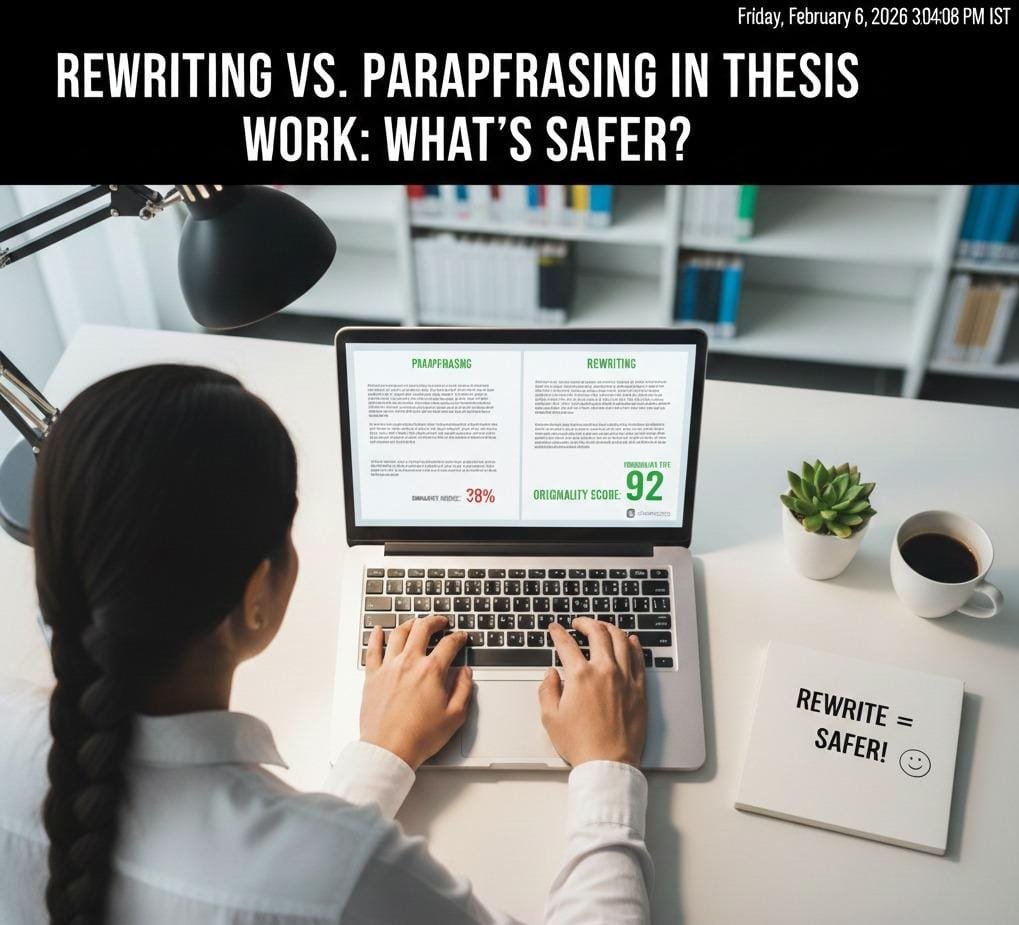
In rewriting, you are not just replacing words—you are reframing the idea and integrating it into your own writing style. This reduces the similarity index more effectively than simple paraphrasing.
Why Paraphrasing Alone May Not Be Enough
In the Indian academic context, especially in UGC-approved and private universities, plagiarism tools like Turnitin and Urkund can detect structural similarity. Even if you replace certain words, the underlying sentence structure may still match the source. This is why scholars who only paraphrase sometimes face high similarity percentages despite their efforts.
Additionally, paraphrasing without understanding the source material can lead to misinterpretation, which compromises the quality of your thesis. Overreliance on paraphrasing tools is also discouraged, as they often produce awkward phrasing that needs manual correction.
Advantages of Rewriting in Thesis Work
Rewriting is safer because it ensures originality at both the language and conceptual levels. When you rewrite, you are actively engaging with the source material, understanding it fully, and presenting it in your own academic voice. This makes it easier to integrate citations naturally and reduces the risk of unintentional plagiarism.
Other benefits include:
- Lower similarity scores due to restructured content.
- Improved clarity since you can adapt the explanation for your audience.
- Better integration of multiple sources without directly mirroring any single one.
When to Paraphrase and When to Rewrite
In thesis work, paraphrasing is acceptable for short, straightforward definitions or when the original expression is already concise and clear. However, for longer explanations, literature review sections, or conceptual frameworks, rewriting is a better choice.
For example:
- Use paraphrasing when summarising a short sentence from a source.
- Use rewriting when explaining an entire paragraph or integrating multiple authors’ perspectives.
Citation Is Still Necessary
Whether you paraphrase or rewrite, you must still cite the original source. Many students believe that changing the wording eliminates the need for citation, but this is a misconception. The idea still belongs to the original author, and failing to credit them counts as plagiarism.
Best Practices for Safe Thesis Writing
- Read the original text thoroughly before attempting to write it in your own words.
- Avoid looking at the source while writing to ensure originality.
- Use plagiarism detection tools during the drafting stage to identify problematic sections early.
- Always add your analysis or commentary to show your contribution to the research.
- Keep a consistent academic style throughout your thesis.
Conclusion
In the debate between rewriting and paraphrasing, rewriting emerges as the safer option for PhD scholars, especially in private universities where plagiarism detection is strict. While paraphrasing can be effective in small doses, it often fails to significantly reduce similarity if done mechanically. Rewriting, on the other hand, ensures both linguistic and conceptual originality, making your thesis stronger, clearer, and less likely to face plagiarism issues. Ultimately, the safest approach combines careful rewriting with proper citation, reflecting your genuine engagement with the research material.