
Introduction
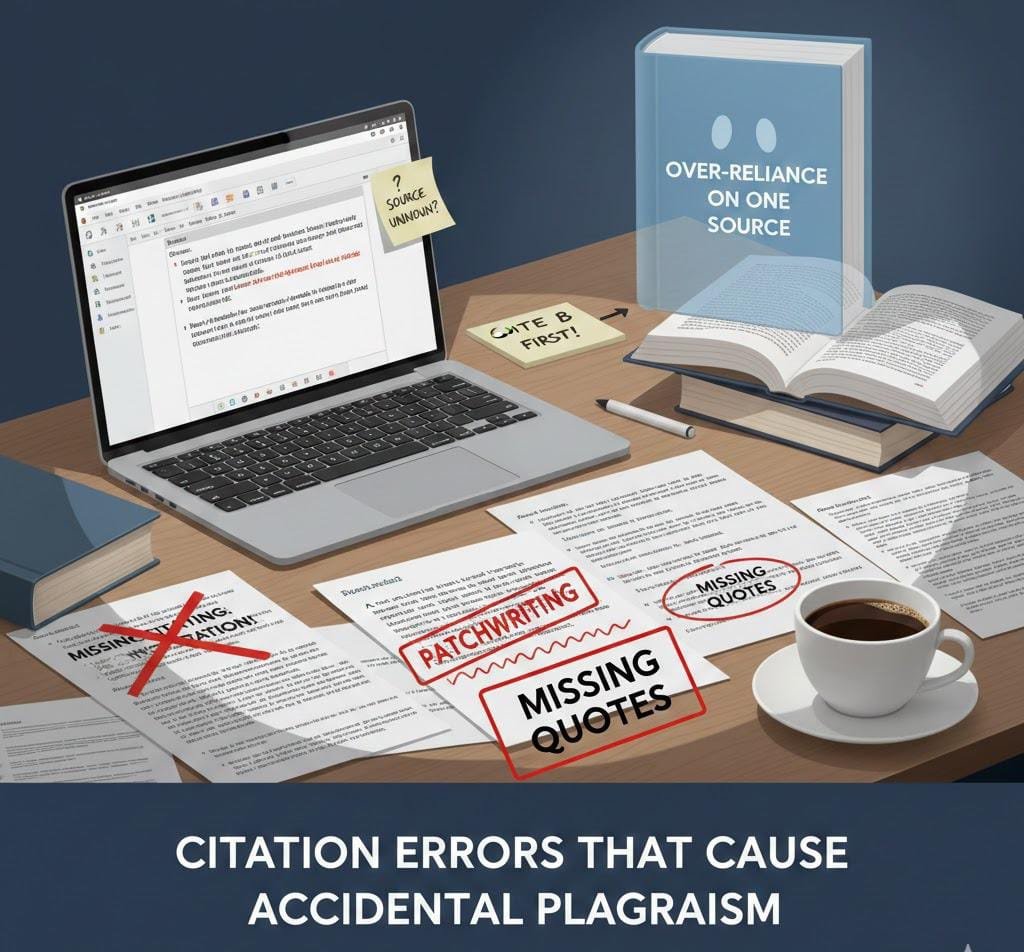
Citation is the backbone of academic integrity. It tells your readers where your ideas, data, and arguments come from. For PhD scholars in Indian private universities, proper citation is not just good practice—it is a requirement under UGC’s 2018 plagiarism regulations. But even when you cite your sources, small mistakes can turn into big problems. Citation errors—often unintentional—can result in plagiarism detection, potentially delaying thesis approval or damaging your academic credibility.
Why Citation Errors Happen
Most accidental citation errors stem from a lack of familiarity with academic writing standards. Common reasons include:
- Switching between citation styles without consistency.
- Over-reliance on citation software without double-checking.
- Misunderstanding the difference between paraphrasing and quoting.
- Rushing through the final draft and missing incomplete references.
In many cases, scholars assume that “something is better than nothing” when it comes to citations, but an incorrect citation can be just as problematic as no citation at all.
Common Citation Mistakes Leading to Plagiarism
- Missing citations for paraphrased content: Paraphrasing still requires acknowledgment of the original source.
- Incorrect author names or publication dates: These errors can make it impossible for reviewers to trace the source, creating suspicion.
- Using secondary citations without clarity: Citing a paper you have not read directly, but accessed through another source, without stating it clearly.
- Incomplete bibliographic details: Missing page numbers, DOI, or publisher information can affect the validity of the citation.
- Copy-pasting citations from other theses: This can lead to duplication errors and mismatched content.
UGC Guidelines on Citation and Plagiarism
UGC clearly defines plagiarism as the use of ideas, processes, results, or words without giving appropriate credit. Even if the content is paraphrased, lack of proper citation counts as plagiarism. The guidelines also note that incorrect citation can be treated as “attribution plagiarism,” where the source is either wrongly credited or not traceable. In private universities, where theses often undergo plagiarism software checks before submission, these mistakes can flag a high similarity index.
How to Avoid Citation-Related Plagiarism
- Understand your style guide: Whether APA, MLA, or Chicago, know the rules for in-text and reference list entries.
- Verify every reference: Cross-check author names, publication years, and titles before final submission.
- Paraphrase correctly: Even in your own words, credit the source to avoid misrepresentation.
- Use citation software cautiously: Tools like Zotero or Mendeley can help, but manual review is essential.
- Check secondary sources: If you use them, make it clear by stating “as cited in…” in your reference.
Role of Plagiarism Detection Tools
Modern plagiarism checkers can identify mismatches between in-text citations and reference lists. They can also detect if a cited source has been incorrectly referenced. Running your thesis through a reliable tool before submission allows you to fix these issues early.
Mistakes That Can Cost You Marks
- Assuming that general knowledge does not need citations when it actually does in your field.
- Overloading a section with multiple citations without matching them to the right ideas.
- Forgetting to cite tables, charts, or figures adapted from another work.
Conclusion
Citation errors are one of the most common—and preventable—causes of accidental plagiarism in research. For PhD scholars in Indian private universities, understanding UGC’s guidelines and maintaining meticulous citation habits is essential. A well-cited thesis not only protects you from plagiarism accusations but also strengthens your academic credibility. By double-checking every reference, staying consistent with your style, and using plagiarism detection tools wisely, you can ensure that your hard work is judged for its originality, not undermined by avoidable mistakes.