
Introduction
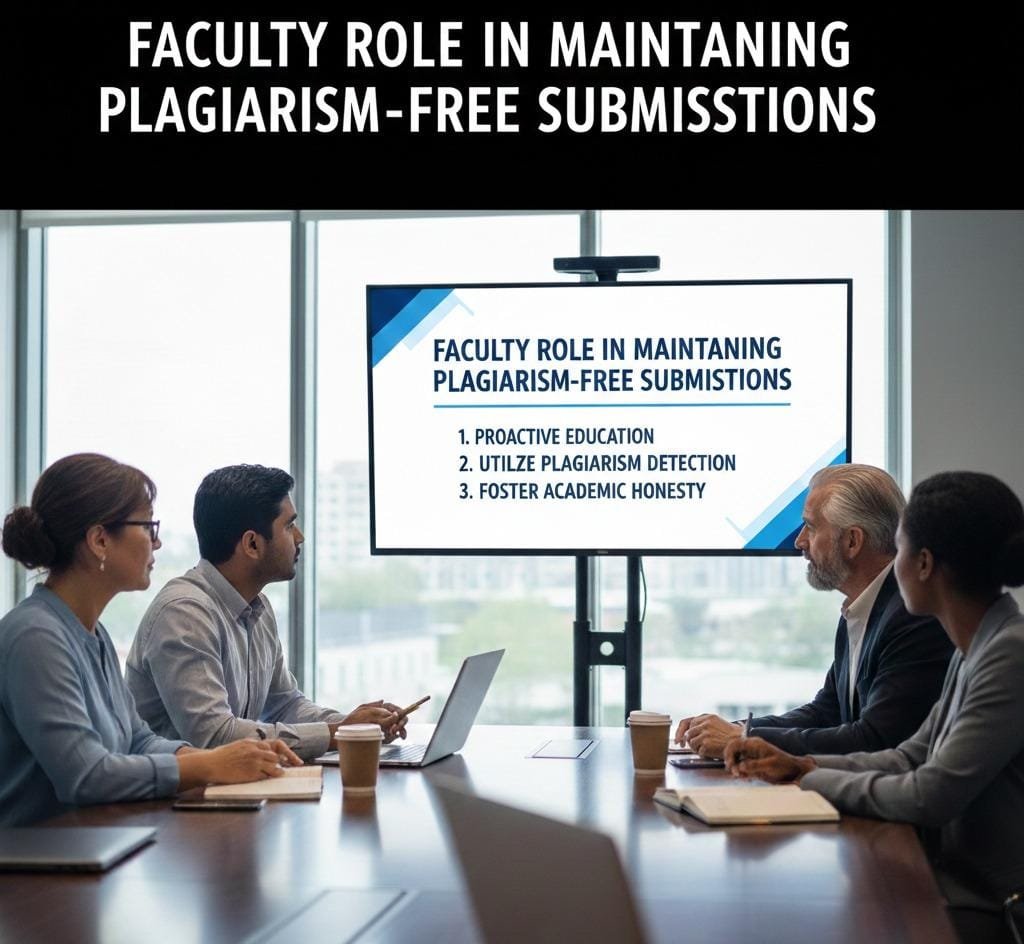
Plagiarism is more than a student mistake—it is a serious academic integrity issue that affects the credibility of institutions. In Indian private universities, where students come from diverse academic backgrounds, maintaining plagiarism-free submissions requires strong faculty leadership. Faculty members are not just evaluators; they are mentors, ethical role models, and guardians of research quality. Their active involvement directly shapes a culture of originality and academic honesty.
Why Faculty Involvement Is Absolutely Essential
Faculty Are the First and Strongest Line of Defence
Before plagiarism detection software generates a similarity report, faculty interact with students during assignments, projects, and thesis drafts. They can identify weak paraphrasing, missing citations, and copied content early—preventing serious violations before final submission.
Faculty Set the Tone for Academic Integrity
Students take plagiarism seriously when faculty consistently emphasize originality, proper referencing, and ethical research practices. When teachers reward independent thinking, students naturally prioritize authentic work.
Faculty Provide Context That Software Cannot
Plagiarism tools detect text similarity—but they cannot judge intention. Faculty can differentiate between:
- Lack of awareness
- Poor writing skills
- Accidental citation errors
- Deliberate academic misconduct
This ensures fair, balanced, and educational responses.
Powerful Strategies Faculty Can Use to Prevent Plagiarism
1. Integrate Plagiarism Awareness into Every Course
Rather than limiting discussions to orientation programs, faculty should actively teach:
- What plagiarism is and why it matters
- How to cite correctly (APA, MLA, Chicago, etc.)
- Effective paraphrasing and summarizing techniques
- How to interpret similarity reports
Early education prevents long-term misconduct.
2. Design Smart, Plagiarism-Resistant Assignments
Generic topics invite copying. Instead, faculty should assign:
- Case-based studies
- Local or institution-specific research
- Data analysis tasks
- Personal reflection combined with theory
These approaches demand original thinking and reduce dependency on internet content.
3. Encourage Pre-Submission Plagiarism Checks
Allowing students to check drafts using plagiarism detection tools promotes self-correction. When faculty explain flagged sections and similarity percentages, students learn how to improve independently.
4. Provide Constructive and Corrective Feedback
Simply marking “plagiarized” is not enough. Faculty should:
- Highlight problematic text
- Suggest improved paraphrasing
- Explain citation placement
- Offer rewrite opportunities when appropriate
Constructive guidance reduces repeat offences.
5. Monitor Research Projects Continuously
For dissertations and theses, regular draft reviews are crucial. Continuous supervision prevents accumulated plagiarism and ensures original, credible research output.
Major Challenges Faculty Face in Private Universities
Despite their important role, faculty often encounter:
- Heavy academic workload
- Large student batches
- Limited training in plagiarism tools
- Pressure for quick submission timelines
Without institutional support, maintaining strict plagiarism control becomes difficult.
Practical Solutions to Strengthen Faculty Support
- Conduct faculty development workshops on research ethics
- Provide hands-on training in plagiarism detection software
- Establish department-level plagiarism monitoring committees
- Implement realistic deadlines for assignments and theses
Institutional support empowers faculty to maintain higher standards.
Building a Strong Culture of Academic Integrity
Faculty must lead by example. Proper citation in their own publications, transparent research practices, and recognition of original student work create a powerful ripple effect.
When originality is rewarded and ethical writing is encouraged, plagiarism-free submissions become a habit—not a forced requirement.
Conclusion
Faculty are the backbone of plagiarism prevention in Indian private universities. Their influence goes beyond grading—they shape attitudes, build research skills, and foster academic honesty. By integrating plagiarism education, designing originality-focused assignments, and mentoring research carefully, faculty ensure that ethical scholarship becomes the foundation of institutional success.
A university’s academic reputation ultimately depends on educators who champion integrity, originality, and responsible research.