
Introduction
Plagiarism is a serious concern in Indian higher education. Universities, particularly those affiliated with the University Grants Commission (UGC), treat similarity in academic writing as a breach of academic integrity. With Turnitin and similar tools being widely used, students often face high similarity reports. This has led to a growing debate on whether students should be permitted to seek paid help for fixing plagiarism in their theses, dissertations, or research papers.
Understanding Paid Plagiarism Fixes
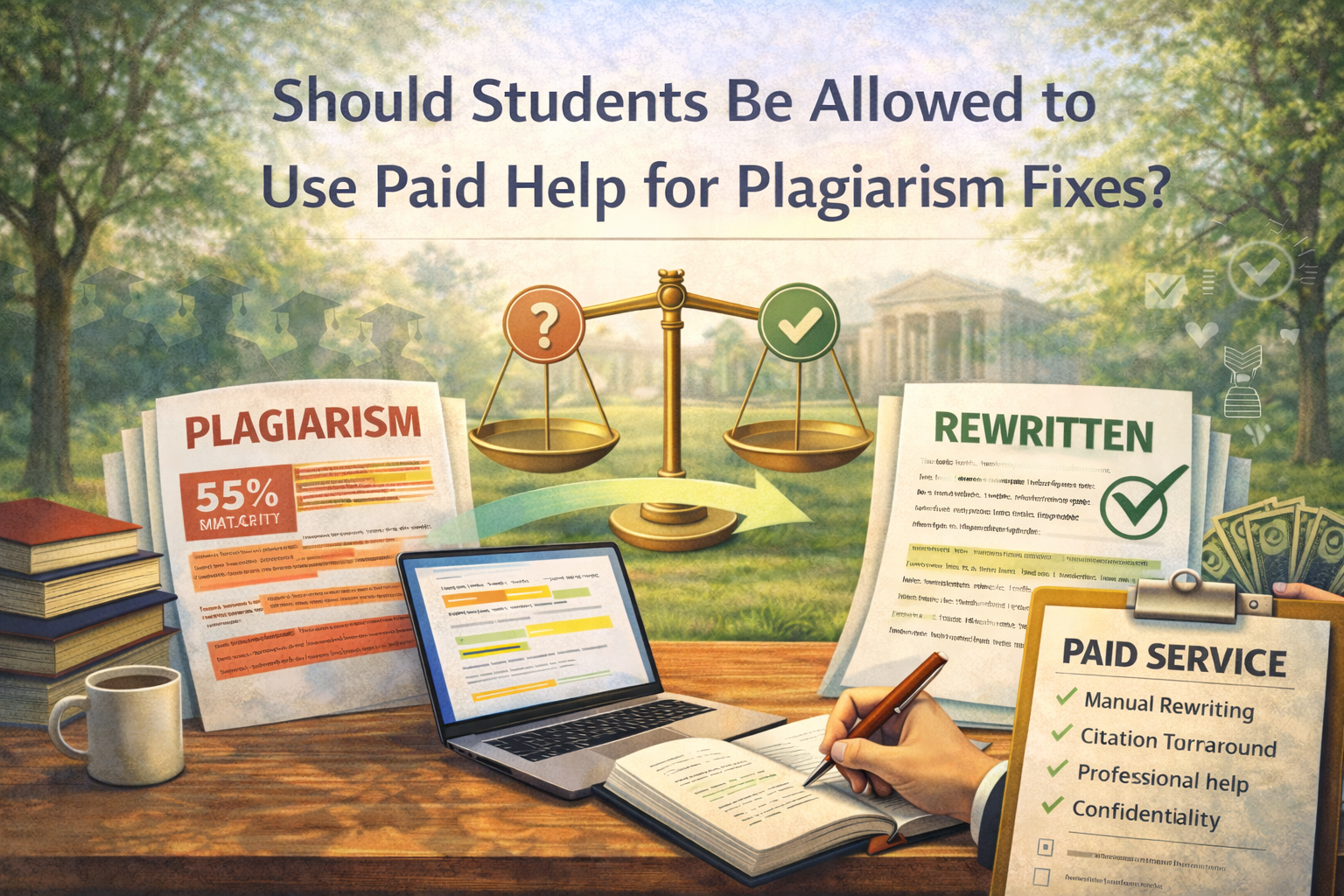
Paid plagiarism removal services offer professional rewriting, paraphrasing, and sometimes editing to reduce similarity scores without altering the meaning of the content. These services claim to make the work “Turnitin-ready” by rewording text, replacing direct matches, and improving sentence structure. Unlike simple software tools that mechanically replace words, professional services usually involve human editors who understand academic writing norms.
Why Students Consider Paid Help
Many Indian students struggle to manage research, writing, and personal responsibilities simultaneously. Paid services are often sought when:
- The deadline for submission is approaching and rewriting from scratch is not feasible.
- Students are unfamiliar with academic paraphrasing and citation techniques.
- The similarity percentage is much higher than acceptable university limits (usually below 10-15%).
- Supervisors expect fast revisions but do not have time for detailed guidance.
For students juggling jobs, family responsibilities, or limited language skills, hiring help may appear to be the most practical solution.
The Academic Integrity Debate
Opponents of paid plagiarism help argue that rewriting services blur the line between legitimate assistance and academic dishonesty. Their main concerns include:
- Students may outsource large portions of their work without understanding the content.
- Overreliance on external help can hinder academic skill development.
- Some services may engage in unethical practices, such as replacing content with poorly researched material or reusing previously modified texts.
Supporters, on the other hand, argue that these services can be ethical if they focus on improving clarity, paraphrasing correctly, and teaching students how to avoid plagiarism in the future. They compare it to hiring a language editor for grammar corrections — the key difference lies in whether the intellectual content remains the student’s own.
UGC Guidelines and the Indian Context
UGC guidelines do not explicitly ban the use of paid services for plagiarism removal. However, they stress that students are responsible for ensuring originality in their submissions. If a rewritten document still contains plagiarised content, the student is held accountable, regardless of who made the changes.
In India, where many students write in English as a second language, there is a cultural context to this debate. Language barriers, lack of formal training in citation styles, and minimal emphasis on research ethics during early education often make plagiarism an unintentional mistake rather than deliberate cheating. Paid help, when used responsibly, can address these gaps.
Ethical Ways to Use Paid Services
If a student decides to use a paid plagiarism removal service, certain ethical safeguards can ensure that it aligns with academic standards:
- The service should focus on paraphrasing without adding or removing ideas from the original research.
- The student must review and approve all changes to maintain ownership of the work.
- All sources should be properly cited and referenced after rewriting.
- The process should be transparent — students should inform their supervisors about seeking language or paraphrasing assistance.
This approach treats the service as a form of professional editing rather than ghostwriting.
Risks of Using Paid Plagiarism Help
While there are benefits, the risks are equally significant:
- Quality Issues: Poor paraphrasing can lead to nonsensical sentences or altered meanings.
- Data Security: Sharing unpublished research with unknown agencies can risk intellectual property theft.
- Compliance Problems: Not all services understand UGC and institutional plagiarism limits, leading to possible rejection.
- Financial Loss: Some services make promises of drastic similarity reduction but fail to deliver, leaving students with both a high similarity score and less money.
Students must carefully verify the credibility of a service before paying for it.
Balancing Fairness and Support
The question of whether students should be “allowed” to use paid help is not straightforward. If the aim is skill-building, outright bans may not be productive. Instead, universities could:
- Offer in-house plagiarism removal workshops.
- Provide affordable editing services within campus guidelines.
- Teach paraphrasing and citation as part of the research methodology curriculum.
This way, students who need help can access it ethically without risking violations of academic integrity.
Conclusion
Paid plagiarism removal services exist because students often lack the time, skills, or resources to fix similarity issues themselves. Whether they should be allowed to use such help depends on how it is applied. When used as a tool for improving clarity, learning proper citation, and reducing unintentional plagiarism — without outsourcing the intellectual effort — these services can be ethical. However, blind dependence or hiring unethical agencies can lead to academic misconduct and reputational harm. Ultimately, responsibility lies with the student to ensure that their work reflects their own understanding and contribution.