
Introduction
Plagiarism remains a significant challenge for many PhD scholars in India, especially those enrolled in private universities where academic writing support may not always be readily available. To ensure originality and avoid rejection, some scholars turn to paid plagiarism support providers. However, choosing the right service can be confusing and risky. This blog highlights essential factors to consider before selecting a paid plagiarism support provider, helping Indian researchers make informed and ethical choices.
Understanding Paid Plagiarism Support Services
Paid plagiarism support services typically offer assistance such as plagiarism checking, rewriting, paraphrasing, citation correction, and report interpretation. These providers promise to help scholars reduce similarity percentages in their theses or research papers while maintaining academic integrity. However, not all providers operate with the same quality or ethical standards.
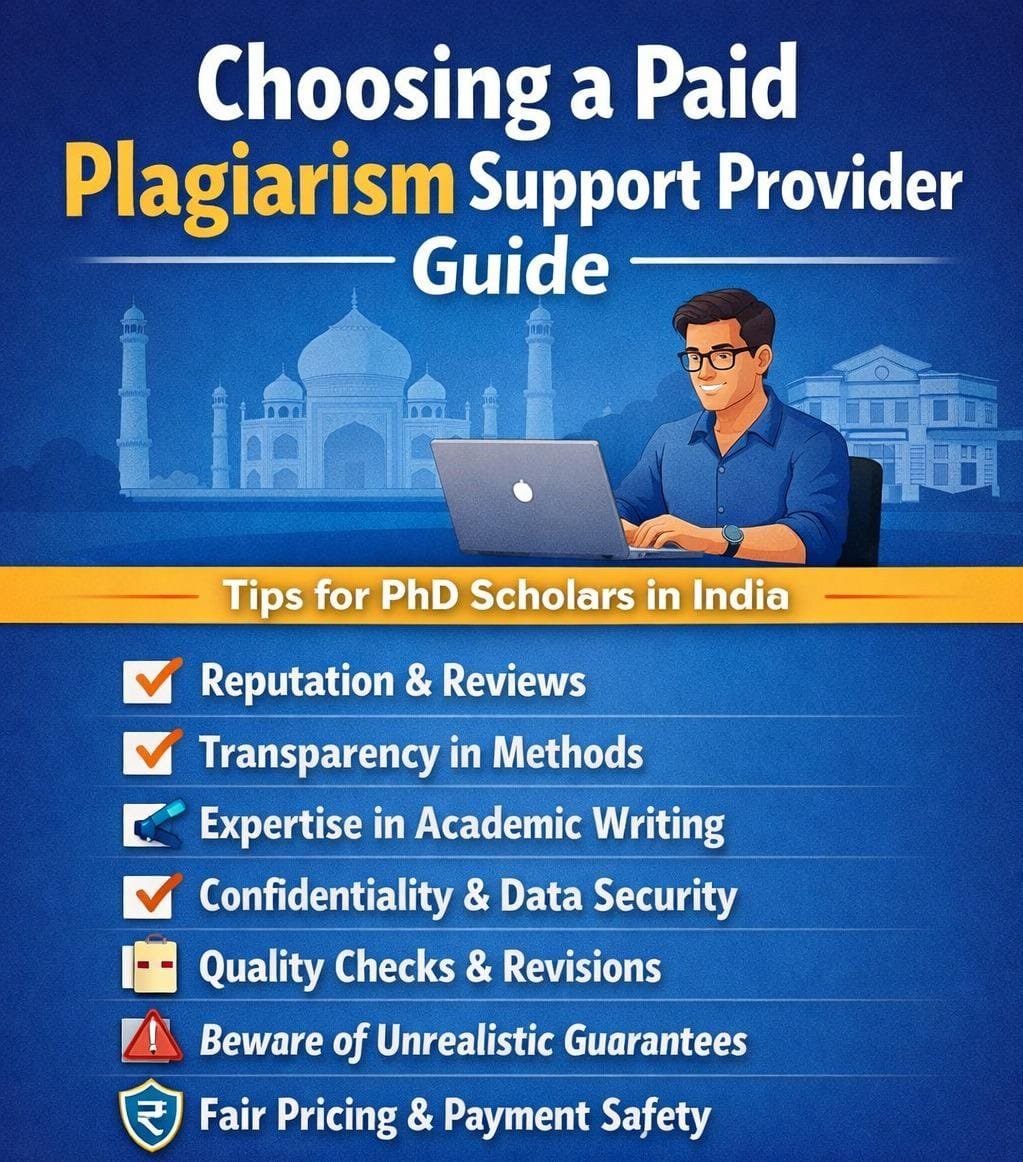
Key Factors to Consider
- Reputation and Reviews
Look for providers with strong positive feedback from Indian PhD scholars, especially those in private universities. Genuine testimonials, verified reviews on academic forums, and word-of-mouth recommendations indicate reliability. - Transparency in Methods
A trustworthy provider clearly explains how they reduce plagiarism. Ethical services focus on helping scholars understand plagiarism rules, improve citations, and paraphrase properly—not simply rewriting text mechanically. - Expertise in Academic Writing and Indian Context
The provider should have experience working with academic documents, preferably familiar with the standards and regulations of Indian higher education, including private university requirements. This ensures their advice aligns with university plagiarism policies. - Confidentiality and Data Security
Your thesis is a confidential document. Check that the provider has clear privacy policies to protect your data from unauthorized sharing or misuse. - Quality Assurance and Revision Policies
Ensure the provider offers quality checks and allows revisions if the similarity score remains high or if you find the rewriting unsatisfactory. Clear refund or correction policies reflect confidence in their service. - Avoid Unrealistic Guarantees
Be cautious of providers promising zero plagiarism or “complete removal” of similarity. No legitimate service can guarantee 0% similarity without risking ethical breaches. Instead, focus on those emphasizing improvement and compliance with academic norms. - Pricing and Payment Terms
While affordability is important, extremely low prices might indicate subpar quality or unethical practices. Choose a service with transparent pricing and secure payment methods.
Red Flags to Watch For
- Providers who claim to “remove plagiarism” without explaining their process.
- Freelancers or companies that offer bulk rewriting with no customization.
- Lack of clear contact information or unwillingness to provide samples.
- Pressure to pay upfront without contract or agreement.
- Use of machine-generated paraphrasing that compromises meaning.
How to Evaluate a Paid Plagiarism Support Provider
- Ask for Sample Work: Request examples of rewritten documents relevant to your field.
- Clarify Turnaround Time: Make sure their timelines fit your submission deadlines.
- Seek Recommendations: Connect with senior scholars or supervisors who may suggest trusted providers.
- Check Communication: A professional service responds clearly and promptly to queries.
Using Paid Support Responsibly
Paid plagiarism support should complement your efforts, not replace them. Use these services to:
- Understand how to paraphrase correctly.
- Learn about proper citation styles.
- Improve language clarity and structure.
- Get professional feedback to enhance originality.
Remember, your PhD thesis is your intellectual contribution, and ethical standards must never be compromised.
Conclusion Choosing a paid plagiarism support provider demands careful evaluation, especially for Indian PhD scholars navigating the complexities of private university regulations and academic integrity. By prioritizing reputation, transparency, expertise, confidentiality, and realistic expectations, you can select a service that genuinely helps you improve your research work. Above all, combine paid support with your own commitment to learning and originality, ensuring your thesis stands as a true reflection of your scholarship. Responsible use of such services can ease the pressure of plagiarism concerns while upholding the academic values essential to your doctoral journey.