
Introduction
For many Indian PhD scholars, especially those in private universities, dealing with plagiarism is a stressful part of the research process. This has led to a rising demand for plagiarism services online—ranging from checking similarity to rewriting text. However, the internet is flooded with fake or low-quality providers that can do more harm than good. Knowing how to identify trustworthy services is essential to protect your academic integrity and investment. This blog outlines practical tips for spotting fake or low-quality plagiarism services online.
Why Fake and Low-Quality Services Are a Concern
Fake plagiarism services often promise “guaranteed plagiarism removal” or “100% unique content” for suspiciously low prices. Low-quality providers may deliver poorly paraphrased or copied content, exposing scholars to the risk of rejection or disciplinary action. For Indian students balancing limited budgets and academic pressure, falling into these traps can be costly in terms of time, money, and reputation.
Signs of Fake or Low-Quality Plagiarism Services
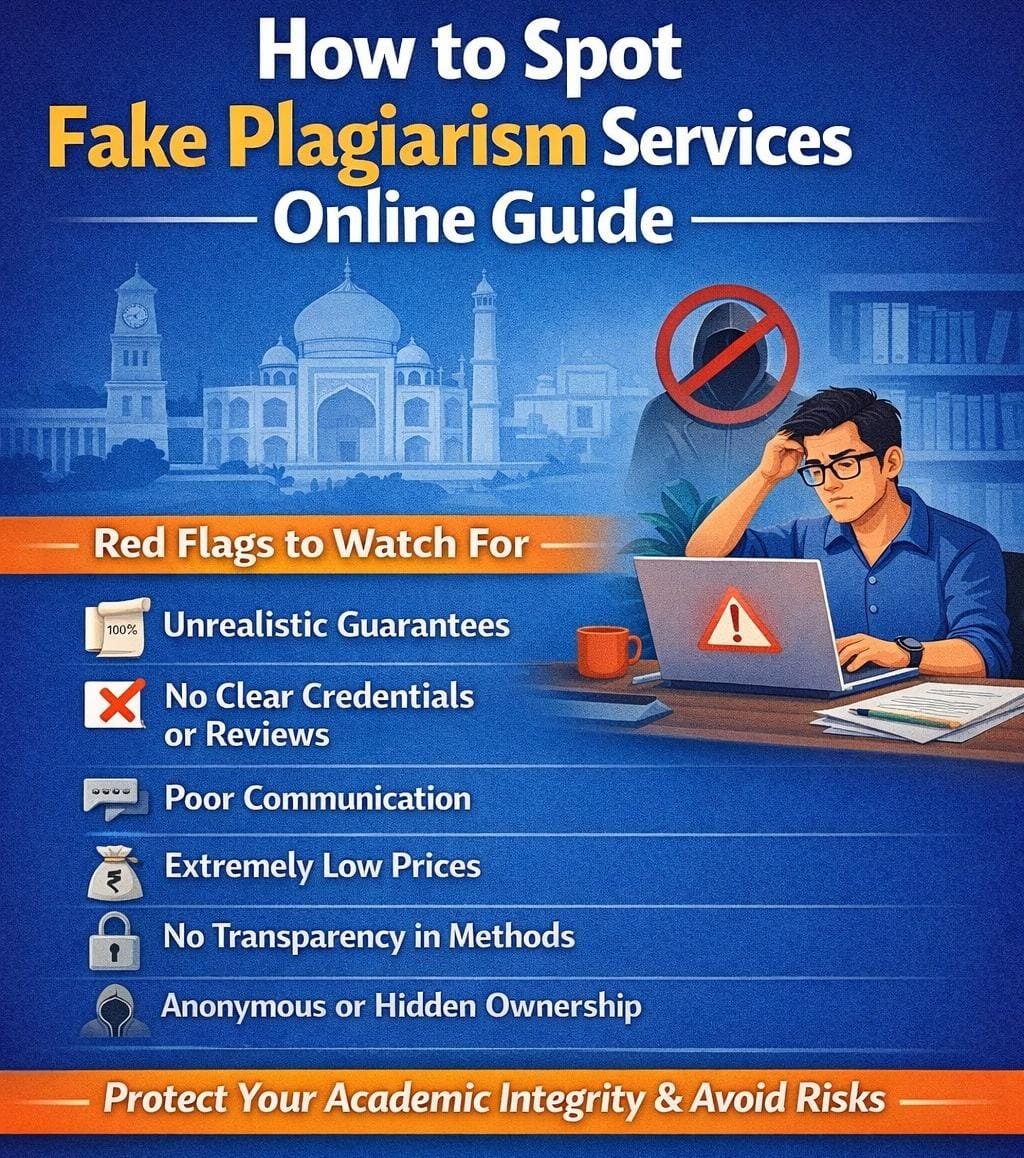
- Unrealistic Promises
Services that claim to completely eliminate plagiarism or guarantee zero similarity scores are likely dishonest. Genuine plagiarism checking and rewriting can reduce similarity but cannot erase copied ideas without proper citation. - No Clear Credentials or Reviews
Lack of verifiable testimonials or reviews from actual clients, especially from Indian academia, is a warning sign. Fake sites often have generic testimonials or none at all. - Poor Communication
If the service is slow to respond, vague in answers, or unwilling to clarify methods, it indicates unprofessionalism. - Extremely Low Prices
While affordability matters, prices that are too low to be realistic often reflect substandard work or automated rewriting tools that harm quality. - No Transparency About Methods
Legitimate services explain how they handle plagiarism checking and rewriting, including tools used and ethical guidelines. Lack of transparency is suspicious. - Anonymous or Hidden Ownership
Services that hide their company details, contact information, or physical address should be avoided.
How to Verify a Plagiarism Service
- Check for Verified Reviews: Look on independent platforms or academic forums for genuine user feedback.
- Request Sample Reports: Ask for plagiarism reports or rewritten samples relevant to your field.
- Assess Website Quality: Professional services invest in clear, well-written websites without spelling or grammatical errors.
- Test Customer Support: Contact them with specific questions and evaluate their responsiveness and clarity.
Tips for Indian PhD Scholars
- Prefer services recommended by your university, supervisors, or peers.
- Avoid quick fixes; take time to research and compare providers.
- Use plagiarism detection tools yourself (many free versions exist) to cross-check results.
- Remember that ethical academic writing and proper citation are your best defenses against plagiarism.
Conclusion
In India’s growing academic market, fake or low-quality plagiarism services online pose serious risks to scholars’ work and reputation, especially in private universities where guidance might be limited. By recognizing warning signs like unrealistic promises, poor communication, and lack of transparency, you can protect yourself from falling victim to these services. Always verify providers thoroughly and prioritize ethical approaches to plagiarism support. In the end, careful selection of trustworthy services combined with your own efforts toward originality is the surest path to academic success.