Introduction
Balancing professional responsibilities with academic aspirations is one of the biggest challenges faced by working individuals in India. Traditional classroom programs often demand full-time attendance, making it nearly impossible for employees, entrepreneurs, or homemakers to pursue higher studies without pausing their careers. This is where distance education emerges as a practical alternative. By allowing students to study at their own pace, distance programs create opportunities for career growth and personal development without forcing them to choose between work and education.
The Flexibility of Learning Schedules
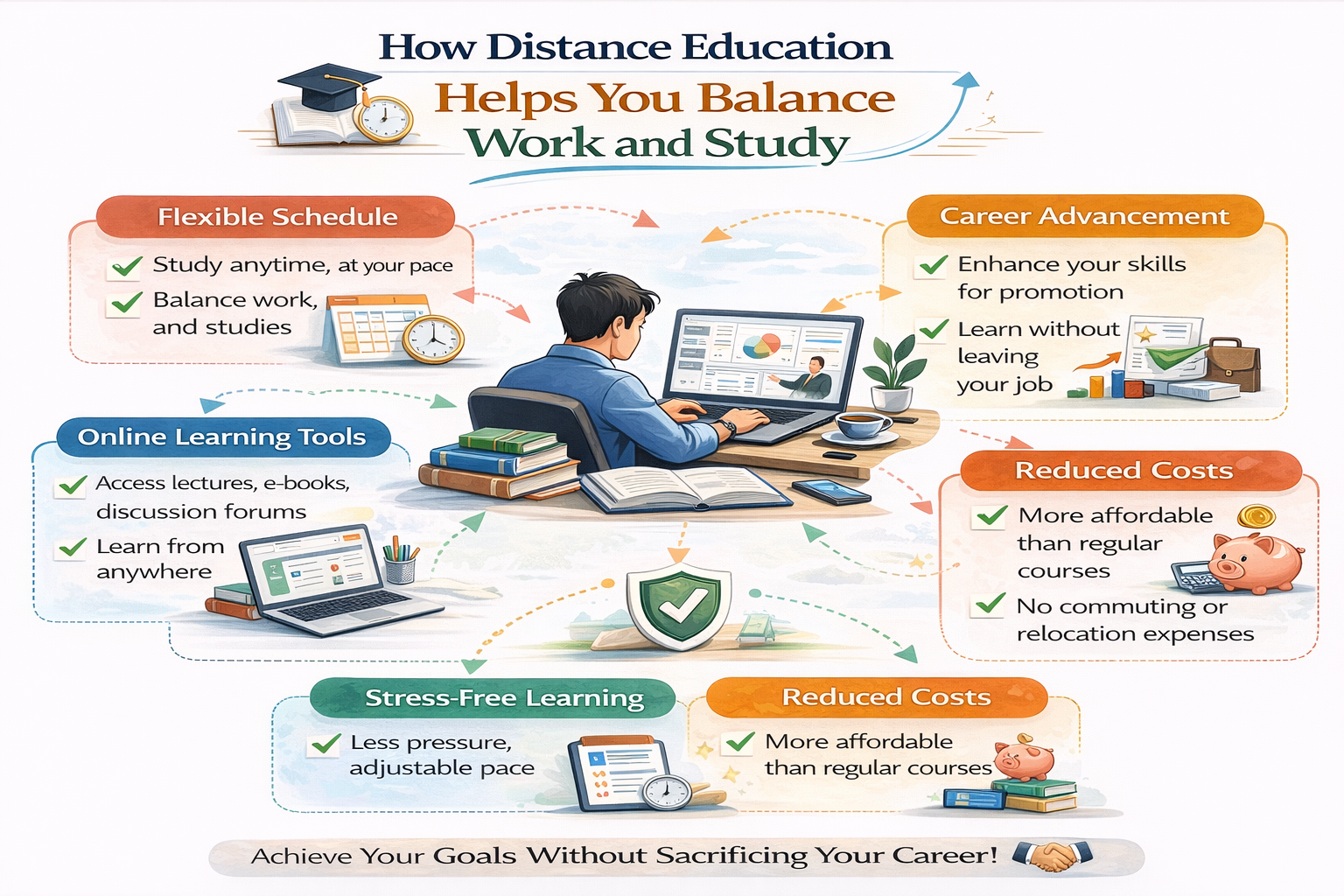
One of the most important ways distance education helps working professionals is through flexibility. Unlike regular programs, which follow rigid timetables, distance education allows students to design their study hours around work shifts, family responsibilities, or personal commitments. For example, someone working in the IT sector may study late at night, while a government employee might prefer early mornings. This adaptability ensures that education fits into life rather than the other way around.
Most universities offering distance programs provide structured study materials, including printed modules, recorded lectures, and online resources. These materials are accessible at any time, reducing the stress of keeping up with live classroom sessions. Students can pause, revisit, and revise content based on their pace, which is particularly beneficial for learners balancing hectic professional routines.
Technology as an Enabler
The evolution of digital learning platforms has transformed distance education into a more interactive and manageable experience. Today, many universities offer access to Learning Management Systems (LMS), where students can track their progress, submit assignments, and engage with faculty. Features such as recorded video lectures, e-books, and discussion forums reduce the sense of isolation that distance learners once faced.
For working professionals, these tools mean that even during busy work weeks, they can log in for short study sessions without needing to commute to a physical classroom. Over time, small but consistent learning hours add up to meaningful progress. This model supports sustained engagement, making it easier to balance both responsibilities.
Career Advancement Without a Break
For many professionals, the biggest benefit of distance education is the ability to continue working while studying. Traditional higher education often requires taking a break from employment, which can mean loss of income, missed career opportunities, and disruption of professional networks. Distance learning removes this barrier.
A bank employee can pursue an MBA, a school teacher can complete a postgraduate degree in education, and an IT professional can enroll in a specialized certification—all without resigning from their jobs. This continuity ensures that individuals not only enhance their qualifications but also apply new knowledge directly to their workplace. Employers often value this immediate application of skills, as it demonstrates both initiative and relevance.
Reducing Stress and Enhancing Productivity
Another overlooked advantage of distance education is how it helps manage stress. For full-time students in regular programs, strict schedules and exams can become overwhelming. Working professionals, however, cannot afford this kind of pressure, as they must also meet deadlines at their jobs. Distance learning offers the possibility of pacing one’s academic journey—taking fewer courses per semester or extending timelines if necessary.
This flexibility reduces burnout and allows individuals to perform better both at work and in academics. In fact, many distance learners report that their studies complement their jobs, giving them new motivation and confidence in their professional lives.
Accessibility for Diverse Learners
Distance education is not just for urban professionals. It also benefits individuals in rural or semi-urban areas who work locally but aspire for higher education. Many cannot relocate to metro cities for full-time programs due to financial or family reasons. With distance learning, they can continue contributing to their households while upgrading their academic credentials.
For women, especially homemakers and mothers, distance education provides an empowering platform to balance family responsibilities with personal growth. By studying at home, they can pursue degrees that may open doors to teaching, entrepreneurship, or part-time careers without disrupting household routines.
Financial Practicality
Another factor that helps in balancing work and study is cost-effectiveness. Distance education programs are generally more affordable than full-time regular courses. For working individuals, this means they can continue earning and studying without putting financial strain on their families. Many universities also allow payment in installments, which further eases the burden.
The savings are not only in tuition fees but also in avoiding relocation, accommodation, and commuting costs. This makes distance education a realistic option for thousands of students across India who are striving for career advancement without excessive financial sacrifice.
Building Discipline and Self-Management
While distance education provides flexibility, it also demands discipline. Working professionals must develop time-management skills to balance assignments, examinations, and professional tasks. This requirement, however, becomes a positive outcome in itself. Over time, learners gain greater self-confidence, better organizational skills, and an improved ability to manage multiple responsibilities.
Employers recognize these qualities as valuable. When employees successfully complete a degree while working, it signals commitment, perseverance, and a capacity to handle pressure—qualities that often translate into promotions or leadership roles.
Conclusion
Distance education has transformed the way Indians approach higher learning, especially for those already engaged in professional or personal responsibilities. By offering flexibility, affordability, and digital support, it makes it possible to balance work and study without compromising either.
The system is not without challenges—it requires discipline and self-motivation—but for those willing to commit, the rewards are significant. Students can grow academically, apply new knowledge directly in their jobs, and enhance career prospects, all while maintaining financial and personal stability. In a country where balancing responsibilities is often a way of life, distance education offers the most practical path to achieving academic aspirations without pressing pause on work.