
Introduction
When a student begins their doctoral journey in India, most of their energy is directed toward building a strong research proposal, reviewing literature, and shaping methodology. The years ahead are often marked by deep focus on the thesis, but academic growth requires more than writing chapters in silence. One of the clearest ways to demonstrate scholarly seriousness is through conference presentations. Whether a candidate is pursuing a PhD in a private university, a central institution, or balancing research with a professional career, presenting at conferences is increasingly seen as an essential part of the doctoral experience. It reflects not only the quality of research but also the ability to communicate and defend it before an audience.
Why Presenting Matters Beyond the Thesis
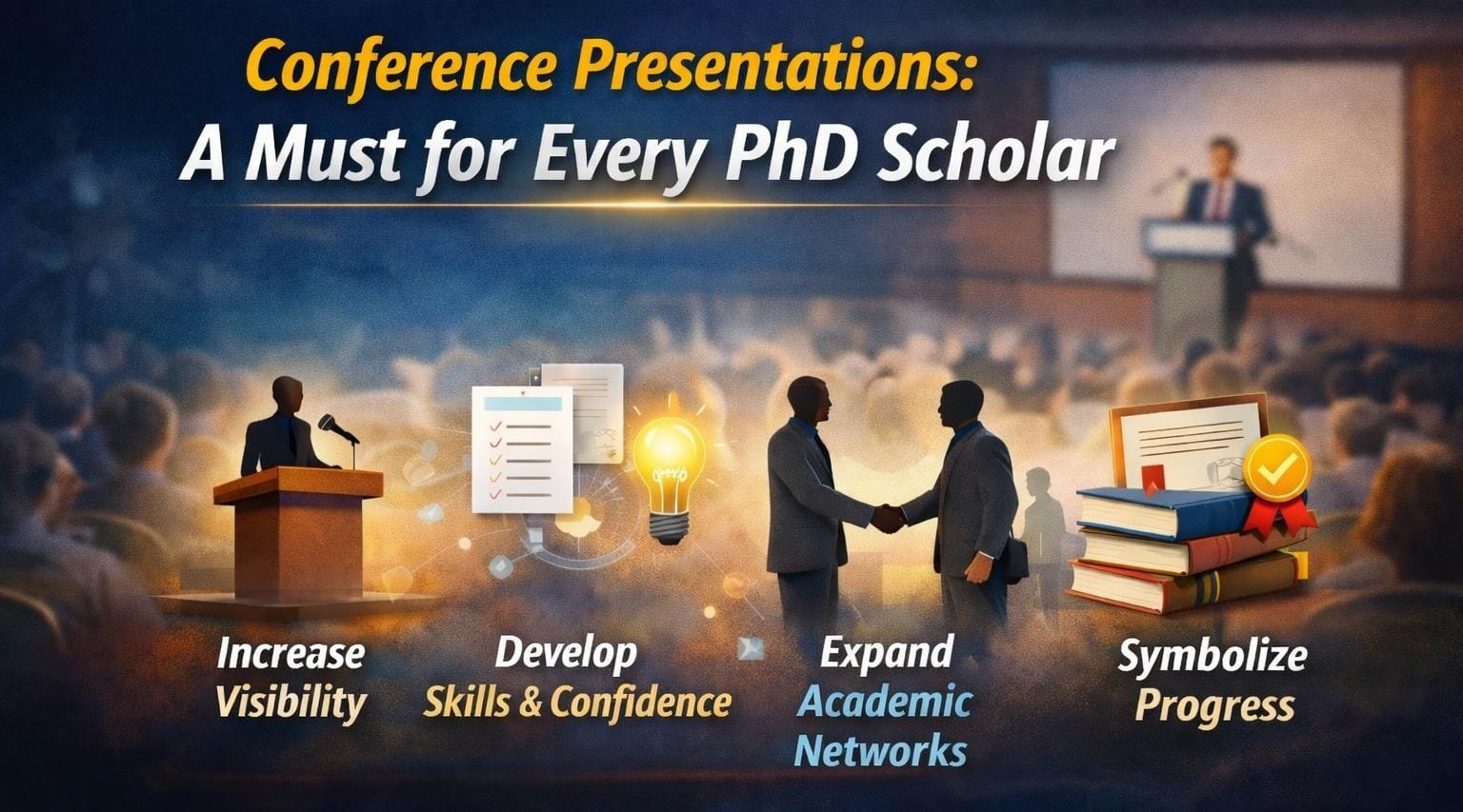
For many Indian PhD scholars, the thesis feels like the only goal. However, the academic community recognises contributions in stages, and conference presentations provide those milestones. When a scholar presents a paper at a respected gathering, it shows that their work has progressed to a stage worth sharing. This is particularly significant in a system where doctoral timelines often stretch over several years. A presentation signals seriousness and ongoing engagement, which is valued by both supervisors and institutions.
Unlike thesis submission, which is reviewed by examiners in a closed setting, conferences bring immediate, public recognition. A paper on educational reforms, for example, may attract interest from sociologists, policymakers, and practitioners who see its relevance beyond the narrow research question. These interactions shape how the work is perceived and can spark collaborations that enrich the research journey.
Skill Development Through Presentations
Preparing for a presentation requires compressing months of research into a clear and accessible narrative. This exercise improves academic writing, because scholars learn to select arguments, structure evidence, and highlight the most relevant findings. At the same time, the act of presenting develops communication skills that are crucial in teaching, publishing, and public engagement.
In India, where viva examinations are often considered the most daunting stage of the PhD, the experience of handling audience questions at a conference acts as rehearsal. A scholar who has defended their arguments in front of unfamiliar audiences is better equipped to handle examiners’ probing questions with confidence. Over time, these experiences transform students into well-rounded academics who can communicate complex ideas with clarity.
Expanding Networks and Opportunities
A major strength of conference presentations lies in the networks they create. Indian academia, like much of the world, functions not only through publications but also through professional connections. Meeting other scholars, engaging with senior faculty, and interacting with industry experts can open doors to collaborations. Many PhD candidates discover calls for journal papers, research grants, or teaching opportunities through conversations that begin after a presentation.
This networking is especially valuable for those enrolled in private universities, where students sometimes worry about limited exposure compared to older public institutions. By presenting at national or international conferences, they position themselves alongside peers from across institutions, reducing the gap that institutional reputation alone might create.
The Symbolic Value in Indian Academic Culture
In India, academic recognition carries strong cultural weight. Families often look for visible proof of progress when a member is engaged in long years of doctoral research. Presenting at a conference provides such evidence — something concrete to share beyond saying, “I am still writing my thesis.” For working professionals who pursue a PhD mid-career, conference presentations also reassure colleagues and employers that their research is active and relevant.
There is also the matter of the curriculum vitae. In a competitive academic environment, having multiple conference papers listed alongside publications signals consistent engagement. Universities often require evidence of participation in scholarly activities for promotions, fellowships, and even teaching appointments. A conference presentation adds immediate value to one’s profile, bridging the gap until peer-reviewed publications are achieved.
Acknowledging the Challenges
Of course, the path is not without obstacles. Costs of registration, travel, and accommodation can be significant, and not every scholar secures funding. Some hesitate because they fear language barriers or stage fright. Yet, even smaller regional conferences provide meaningful experience. What matters is the act of presenting, listening, and engaging, rather than waiting for the most prestigious event. Over time, each presentation builds both confidence and credibility.
Conclusion
For a PhD scholar in India, conference presentations are not optional extras but an integral part of research development. They create opportunities for recognition, sharpen communication skills, and establish professional networks that outlast the thesis. More importantly, they signal to the academic community — and to oneself — that research is not confined to written chapters but is part of a living, ongoing dialogue. In a higher education system where visibility matters as much as hard work, presenting at conferences remains one of the most effective ways to strengthen a scholar’s academic journey.