
Introduction
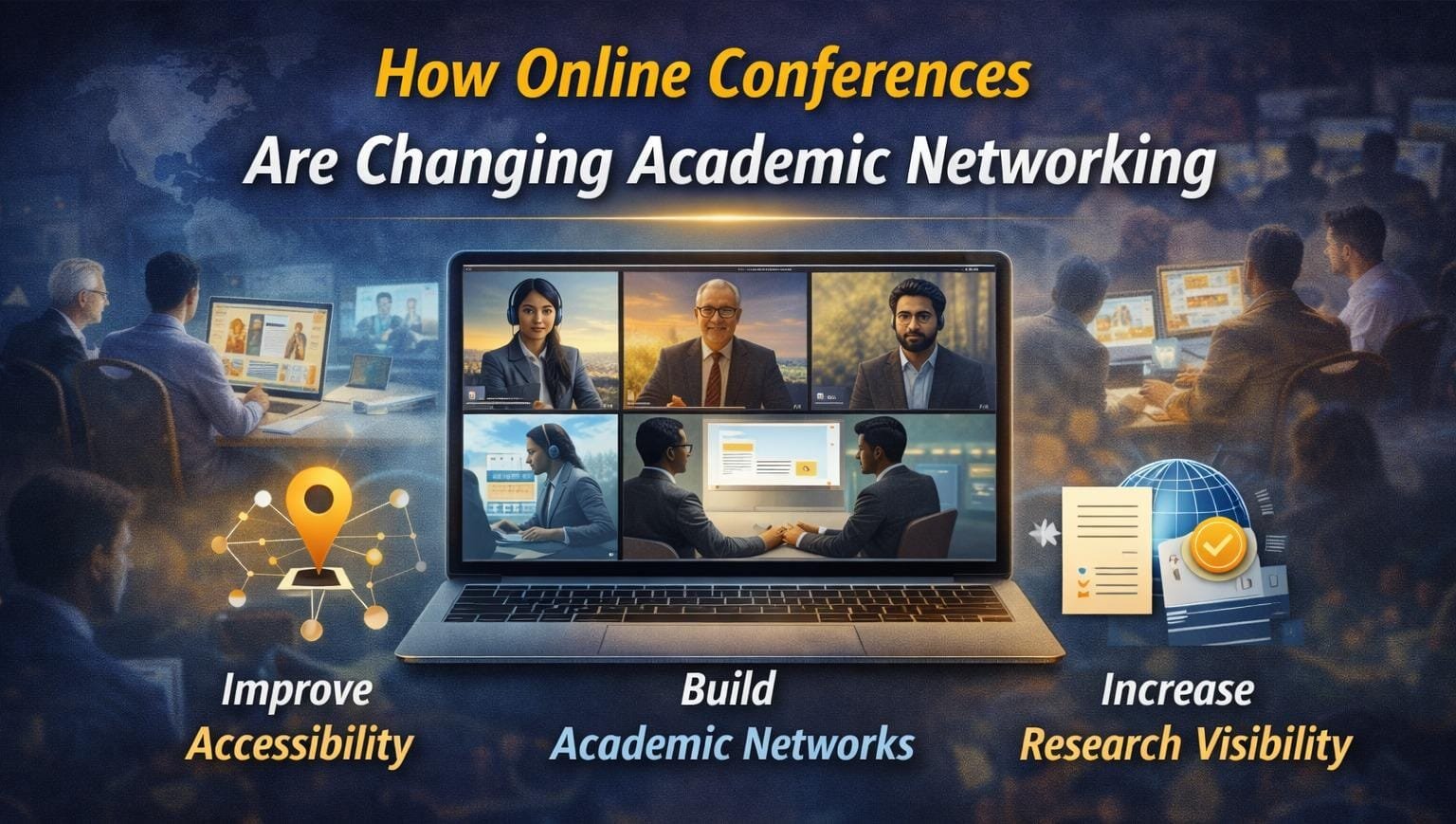
For Indian PhD scholars, the landscape of academic engagement has changed dramatically in recent years. Where in-person conferences once dominated, online conferences have emerged as a viable alternative, connecting researchers across cities, states, and even countries. Especially for those pursuing a PhD in a private university or balancing research with professional commitments, online conferences have opened new doors. They allow participation without the time, travel, and financial constraints that previously limited exposure. Understanding how these virtual gatherings influence academic networking is essential for scholars seeking to strengthen their research profiles.
The Shift from Physical to Virtual Spaces
Online conferences offer flexibility that traditional events cannot match. A doctoral candidate in Bangalore, for example, can attend a seminar hosted by a university in Delhi or even abroad without leaving home. This has been particularly significant for working professionals returning to research mid-career, who may struggle to take extended leave for in-person events. Online platforms allow presentations, panel discussions, and Q&A sessions to occur virtually, ensuring scholars can participate actively and gain feedback on their work.
The virtual format also increases accessibility for Indian scholars from smaller towns or emerging universities. Previously, attending a national conference might have required travel costs, accommodation, and registration fees that were prohibitive. Online conferences reduce these barriers, democratizing access and allowing a more diverse set of voices to participate. For researchers pursuing academic recognition in India, this means their work can be seen and evaluated alongside peers from prestigious institutions, irrespective of geographical location.
Networking in the Digital Age
A common concern about online conferences is the perception that networking suffers in the absence of in-person interactions. While it is true that informal hallway conversations or coffee-break chats are harder to replicate, online platforms have introduced creative solutions. Breakout rooms, discussion forums, and scheduled virtual meetups allow scholars to connect with experts, share ideas, and explore collaborations. Social media integrations and conference apps make it easier to follow up with peers and maintain long-term academic contacts.
For Indian PhD scholars, these digital interactions are increasingly valuable. A student researching education policy in Pune can engage with peers working on similar issues in Mumbai, Hyderabad, or even London. The ability to reach beyond local networks fosters interdisciplinary discussions, which are essential for research that aims to contribute to contemporary debates. Even regional conferences have adopted hybrid elements, allowing students to present online while still receiving formal recognition in their academic communities.
Skill Development and Exposure
Presenting at an online conference also develops a distinct set of skills. Scholars must adapt their communication for virtual audiences, learning to convey ideas clearly through slides, voice, and digital interactions. Handling questions via chat or live video requires concise responses and thoughtful engagement. These skills translate into improved academic writing, teaching, and public engagement — all of which enhance a scholar’s research profile.
Moreover, online conferences provide exposure to current research trends. Sessions are often recorded and made available for later viewing, allowing participants to revisit discussions, learn from multiple presentations, and refine their own research approach. For Indian researchers who may not have easy access to international journals or global academic events, this offers an invaluable window into contemporary debates and methodologies.
Challenges and Considerations
Despite the advantages, online conferences come with their own challenges. Technical issues such as internet connectivity, software familiarity, and time-zone differences can hinder participation. Engagement can feel less personal, and building trust or mentorship relationships virtually may take longer. However, for scholars committed to expanding their networks and staying current, the benefits outweigh these hurdles. Participating consistently, contributing to discussions, and following up with fellow attendees ensures meaningful professional connections even in digital spaces.
Conclusion
Online conferences have transformed how Indian PhD scholars engage with the broader academic community. They offer accessibility, flexibility, and exposure that were previously limited by geography or resources. While virtual networking differs from in-person interactions, it enables scholars to connect, collaborate, and gain feedback on their research. In a higher education system where visibility and engagement are crucial, online conferences complement traditional academic pathways, ensuring that research continues to thrive even in a digital age.