
Introduction
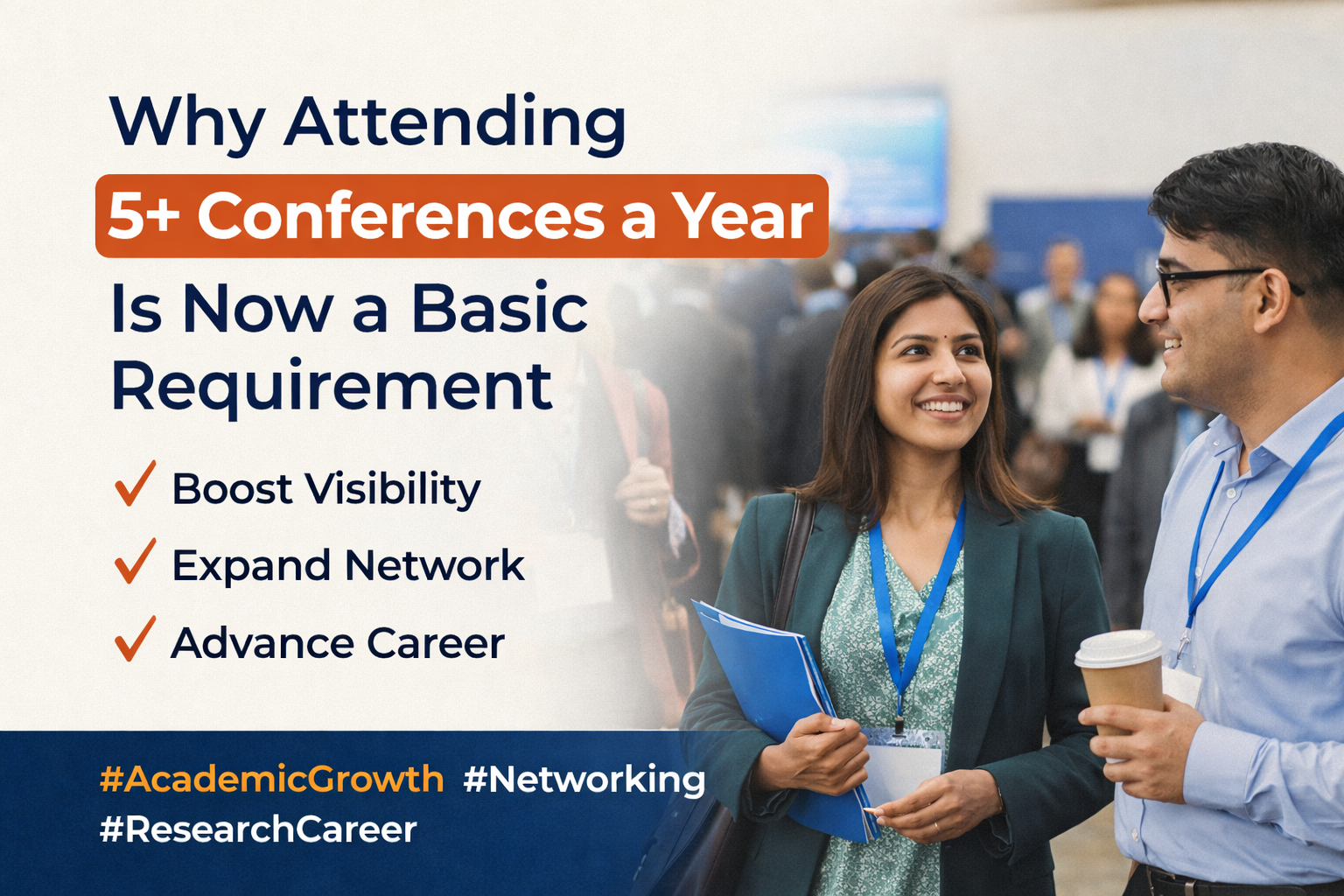
For Indian PhD scholars and faculty, the academic calendar is increasingly competitive. Beyond publications and classroom teaching, consistent engagement in conferences is becoming a critical benchmark for career growth. The idea that attending a single conference per year suffices is outdated. Today, attending five or more conferences annually has emerged as a practical necessity for maintaining visibility, enhancing research profiles, and fostering professional networks. Especially for those in private universities or balancing work and research, understanding why this frequency matters can clarify how to strategically invest time and resources.
Visibility and Academic Recognition
Regular participation in multiple conferences signals active engagement with the academic community. Indian universities, faculty appraisal committees, and research boards increasingly value sustained contributions over isolated achievements. Presenting research at several conferences in a year demonstrates commitment, initiative, and the ability to manage multiple scholarly responsibilities. It also ensures that a scholar’s work reaches diverse audiences, which is particularly beneficial for those in private institutions seeking broader recognition and credibility.
Beyond personal visibility, repeated conference participation helps in building a recognizable academic footprint. A scholar presenting research in different cities or regions gains exposure to varied peer groups and experts. This repeated presence strengthens the perception of expertise, signaling that the researcher is contributing consistently to discussions in their field. For Indian PhD students, this can translate into better guidance opportunities, invitations to collaborate, and even future teaching or consultancy roles.
Networking and Collaborative Opportunities
Attending five or more conferences in a year exponentially increases networking potential. Each event brings new peers, mentors, and potential collaborators into the scholar’s professional circle. In India, where academic collaborations often arise from personal contacts, repeated participation creates multiple touchpoints for meaningful interactions. Faculty members and doctoral students benefit from both formal discussions during sessions and informal interactions during breaks, workshops, and social gatherings. These connections often lead to joint research projects, co-authored papers, and interdisciplinary ventures that elevate both research quality and academic reputation.
Skill Development and Professional Confidence
Frequent conference participation also hones crucial academic skills. Scholars repeatedly presenting research learn to condense complex work into accessible narratives, handle diverse questions, and communicate effectively across audiences. In the Indian context, where viva examinations, thesis defenses, and peer reviews are rigorous, these experiences build confidence and preparedness. Additionally, exposure to multiple research methodologies, presentations, and feedback cycles enriches analytical skills and ensures scholars remain current with emerging trends.
Listening and observing at conferences, not just presenting, is equally valuable. Scholars attending multiple events gain insights into how others structure arguments, present data, and respond to critique. This dual experience—active participation and observational learning—provides comprehensive skill development that strengthens research output and overall academic competence.
Strategic Planning for Conference Attendance
While attending multiple conferences may seem daunting due to financial, logistical, or professional constraints, strategic planning can make it manageable. Indian scholars can prioritize a mix of regional, national, and international events aligned with their research interests. Combining online and offline participation optimizes accessibility while ensuring meaningful engagement. Preparing presentations in advance, selecting conferences with high academic relevance, and scheduling participation across the year ensures that each event adds measurable value without overwhelming the scholar.
Conclusion
Attending five or more conferences in a year has become a baseline expectation for Indian PhD scholars and faculty seeking to grow academically and professionally. Regular participation enhances visibility, strengthens networks, and builds the skills necessary for research, presentations, and evaluations. Beyond numbers, frequent engagement signals dedication and consistency, qualities that are highly regarded in the Indian academic ecosystem. For those aiming to maintain a credible and active presence in their field, multiple conferences are not just optional—they are essential for sustained academic development.