
Introduction
For Indian PhD scholars and faculty, attending conferences is an essential component of research visibility and professional growth. However, not all conferences offer the same benefits. Scholars often face the challenge of deciding between purely academic events and commercially organized conferences. Understanding the differences and aligning choices with research goals is crucial for maximizing the value of participation, building a credible CV, and enhancing academic networks.
Academic Conferences: Depth and Credibility
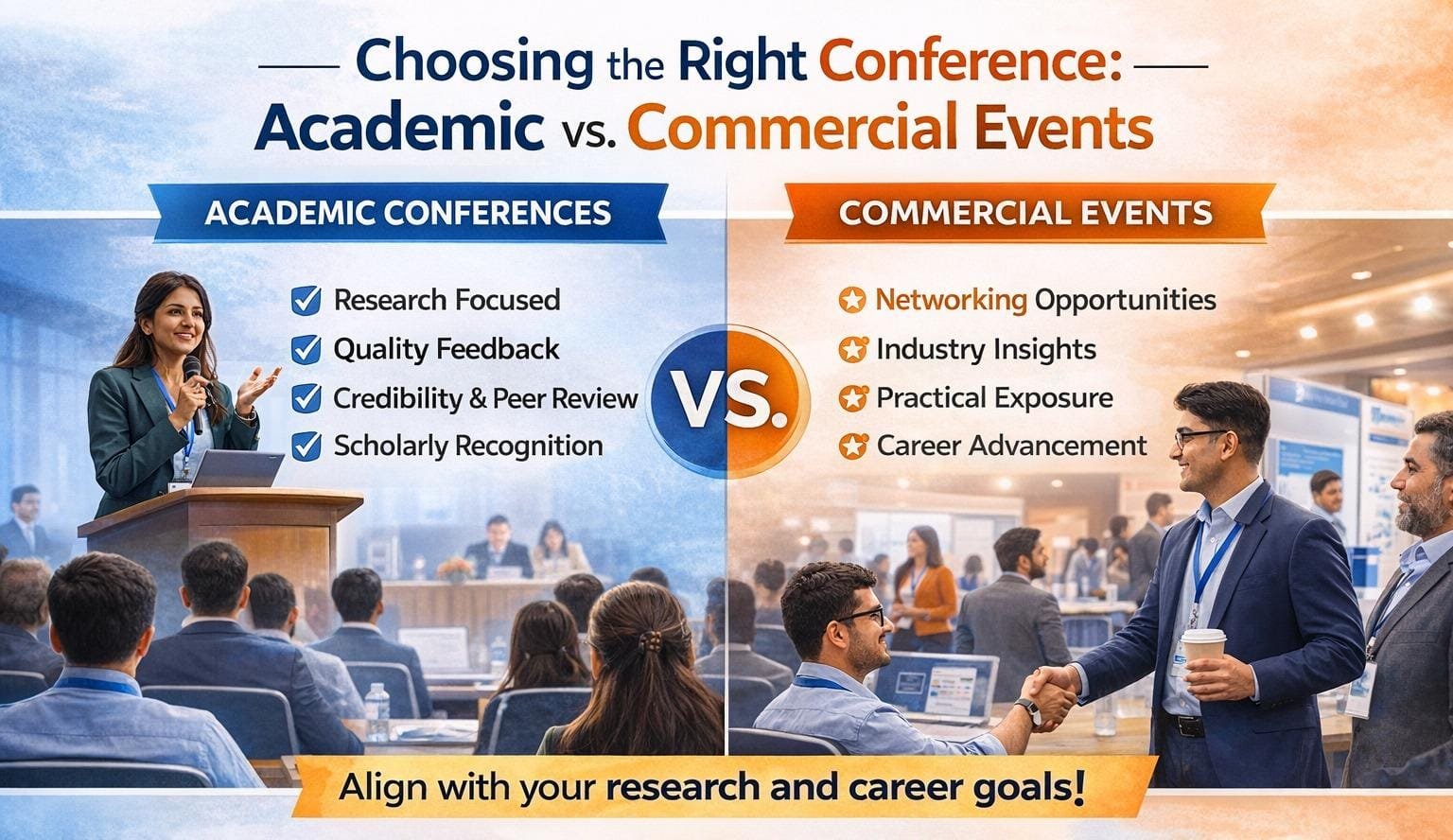
Academic conferences focus primarily on research dissemination, knowledge exchange, and scholarly debate. These events are usually organized by universities, professional societies, or research associations, and they prioritize quality over commercial gain. Presenting at such conferences allows Indian PhD students to receive critical feedback from peers and senior researchers, refine methodologies, and stay updated on emerging trends in their discipline.
The credibility of academic conferences is often reflected in the selectivity of paper acceptance, the presence of renowned keynote speakers, and the publication of proceedings. Participation demonstrates engagement with rigorous scholarship, which is particularly important for scholars from private universities seeking to establish credibility alongside peers from established institutions. Academic conferences often foster interdisciplinary discussions, enabling researchers to broaden perspectives and identify potential areas for collaboration.
Commercial Conferences: Networking and Exposure
Commercially organized conferences, while not always academically rigorous, offer valuable opportunities for networking and exposure. These events are typically hosted by industry associations, professional bodies, or event management firms, and they often include workshops, exhibitions, and sessions on applied research. For Indian faculty or PhD students working on industry-relevant topics, commercial conferences can provide insights into practical applications, market trends, and professional standards beyond the university context.
These events also facilitate networking with practitioners, entrepreneurs, and policy makers. Such interactions can lead to collaborations, funding opportunities, or consultancy projects that complement academic research. For early-career researchers, exposure to applied settings broadens understanding and can inform thesis work with practical relevance.
Balancing Academic and Commercial Participation
Choosing the right conference requires clarity of purpose. Academic conferences are ideal for knowledge validation, peer review, and skill development, whereas commercial conferences are better suited for networking, professional visibility, and applied research engagement. For Indian PhD scholars balancing limited resources, combining participation strategically can maximize benefits. For example, presenting at two academic conferences for feedback and attending one commercial conference for exposure ensures a balance of rigor and relevance.
Assessing factors such as event reputation, speaker profiles, thematic alignment, and potential outcomes helps in making informed choices. Indian scholars should also consider financial and logistical constraints, opting for events that provide meaningful opportunities for both professional growth and tangible career milestones.
Long-term Benefits of Strategic Selection
The impact of attending the right mix of conferences extends beyond immediate learning. Academic conferences contribute to a stronger research portfolio, peer recognition, and future publication opportunities. Commercial events build professional networks, expose scholars to applied perspectives, and open doors for collaborations or funding. A thoughtful combination enhances the CV, strengthens credibility, and ensures that conference participation directly supports research and career objectives.
Conclusion
Selecting the right conferences is a strategic decision that shapes a scholar’s professional journey. For Indian PhD candidates and faculty, balancing academic rigor with applied exposure ensures comprehensive growth. By aligning participation with research goals, maximizing learning opportunities, and engaging meaningfully with both academic and commercial events, scholars can enhance their visibility, expand networks, and strengthen their academic profile. Thoughtful conference choices become not just milestones but stepping stones in a well-rounded and impactful research career.