Introduction
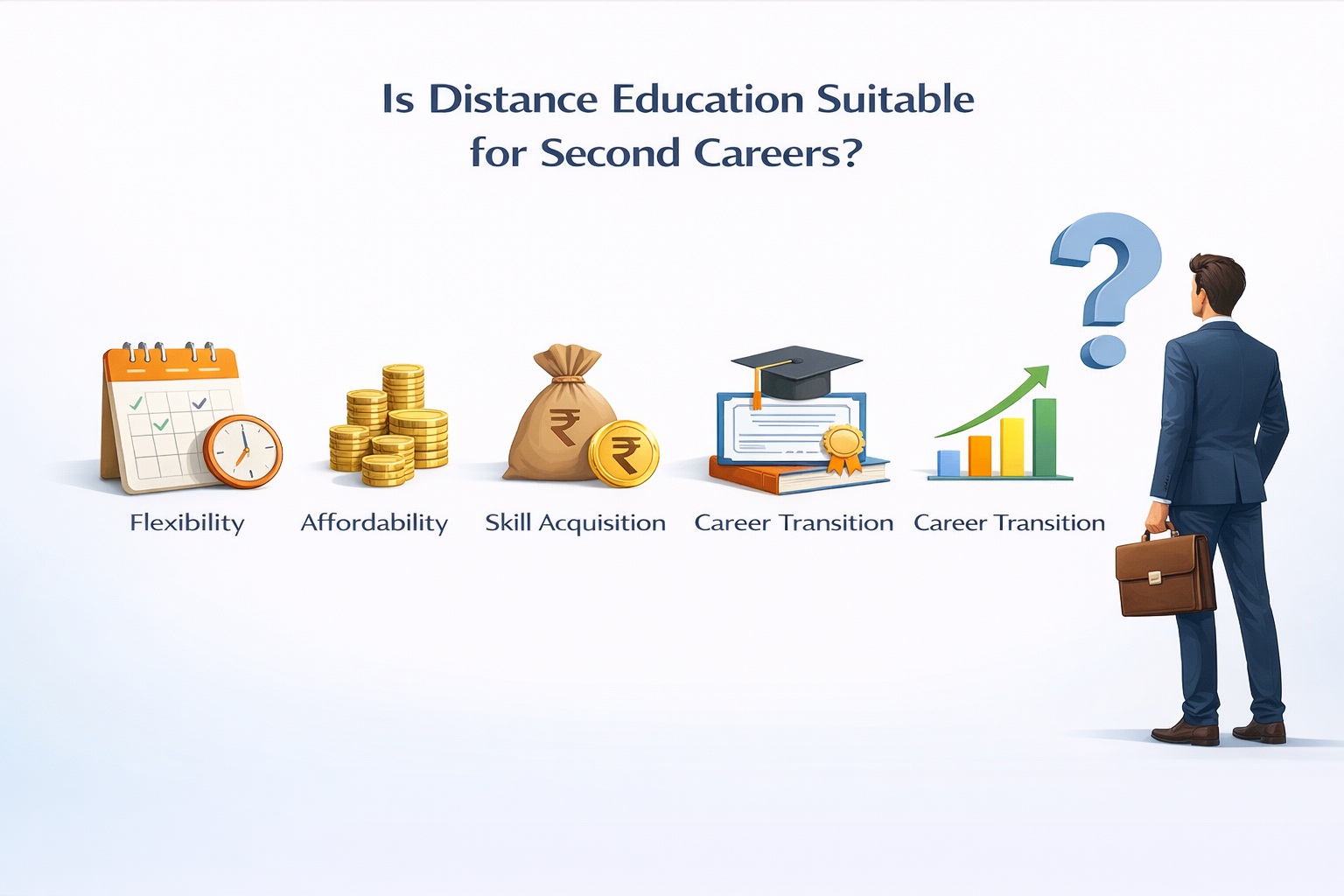
In India, career changes are increasingly common. Professionals may shift fields due to evolving interests, better opportunities, or life circumstances. For many considering a second career, distance education emerges as an attractive option. It offers flexibility, affordability, and the possibility of earning a degree without leaving an existing job. However, questions arise about whether distance programs truly prepare learners for a new career path. Understanding the strengths and limitations of distance education is essential before embarking on this journey.
Why Distance Education Appeals to Career Changers
Second-career learners often have existing responsibilities—full-time jobs, family obligations, or financial commitments. Traditional full-time programs may be impractical, making distance learning a convenient alternative. It allows learners to study during evenings, weekends, or any available time, enabling skill acquisition without disrupting current income sources.
Distance programs also provide opportunities for academic refreshment. Professionals who have been out of formal education for years can gradually re-enter an academic environment without the pressure of on-campus schedules. This flexibility is particularly valuable for Indian learners, where societal and family responsibilities often demand careful balancing of time and priorities.
Skill Acquisition and Relevance
One key consideration for second-career learners is whether the program provides relevant skills for the intended field. Many Indian universities now offer specialized distance programs in management, IT, education, healthcare, and other professional areas. These courses often include practical assignments, case studies, and project work designed to develop competencies directly applicable in the workplace.
For example, a marketing professional seeking to transition into human resources can choose a distance program in HR management. Assignments on workforce planning, performance appraisal, and labour laws allow the learner to gain knowledge and develop problem-solving skills relevant to the new field. Similarly, IT certifications or diploma courses delivered via distance mode offer hands-on projects and software practice that bridge the gap between theory and application.
Flexibility Versus Networking Opportunities
Distance education provides flexibility, but one limitation is reduced networking compared to full-time programs. Second-career learners must proactively seek industry connections, mentorships, or peer interactions to compensate for this. Online forums, social media groups, and virtual workshops can help build professional networks. Additionally, some universities organise optional contact sessions or practical workshops to supplement remote learning.
Despite this limitation, many learners find that the combination of flexible study and active networking allows them to transition smoothly into a new career. The key is intentionality—using available tools and platforms to create opportunities that traditional classrooms often provide automatically.
Challenges Specific to Second-Career Learners
Second-career learners face unique challenges. Balancing job, family, and study requires excellent time management. Motivation may waver, especially when initial results are slow or when the learner encounters unfamiliar subjects. Indian students often also confront societal expectations, such as family pressure to prioritise earning over study, which can create emotional stress.
To overcome these challenges, distance learners must set realistic goals, establish a consistent study routine, and seek support from family or peers. Small successes—completing a module, submitting assignments on time, or passing exams—can sustain motivation and reinforce the decision to pursue a second career.
Success Stories and Practical Tips
Many Indian professionals have successfully leveraged distance education to launch second careers. A teacher pursuing a management degree via distance mode may move into educational administration. A software engineer studying finance through a distance MBA can transition into corporate finance roles. These examples demonstrate that distance education, when chosen carefully and approached diligently, equips learners with both knowledge and credibility.
Practical tips include researching programs thoroughly to ensure they are recognized and relevant, evaluating the balance between flexibility and workload, and leveraging online resources to supplement learning. Internships or volunteer work in the new field, even on a part-time basis, can further enhance employability and practical experience.
Conclusion
Distance education is highly suitable for those pursuing a second career, provided the learner is disciplined, intentional, and proactive. It offers the flexibility necessary to manage existing commitments while acquiring new skills, knowledge, and credentials. While networking opportunities and hands-on exposure may require extra effort, modern distance programs increasingly address these gaps through projects, workshops, and online forums. For Indian learners, who often balance multiple responsibilities, distance education provides a credible, practical, and accessible pathway to reinvent one’s career, turning ambition into tangible professional outcomes.