Introduction
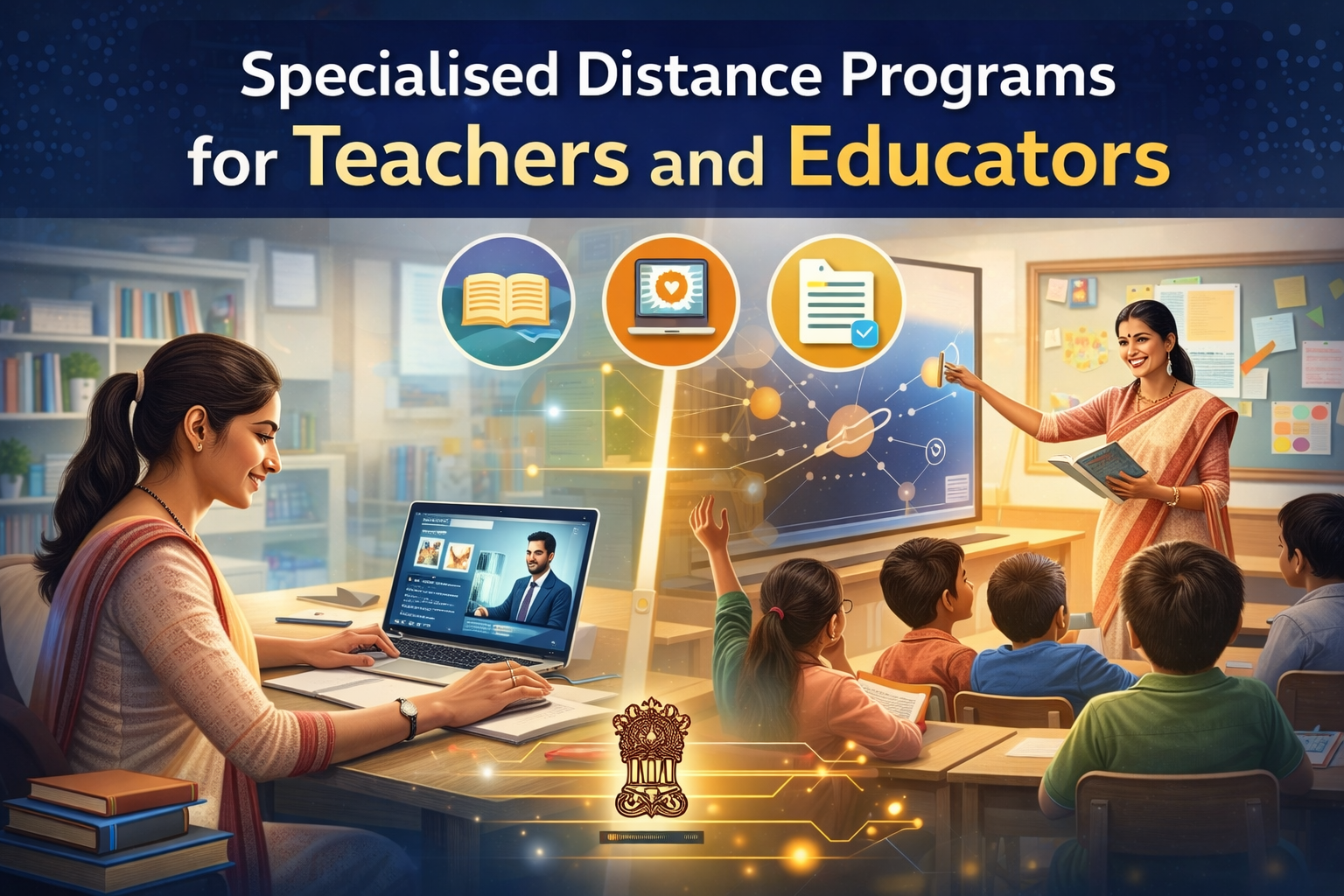
In India, the role of teachers is deeply respected, yet their professional growth often faces practical hurdles. Many educators, especially in rural and semi-urban areas, find it difficult to pursue further studies while managing full-time teaching responsibilities. For them, specialised distance education programs open doors to career advancement, skill enhancement, and academic recognition without requiring them to leave their classrooms. These programs are not just about earning degrees—they are about empowering educators to adapt to changing times and improving the quality of teaching across the country.
The Growing Need for Professional Development
Education in India is rapidly evolving. The introduction of the National Education Policy (NEP) 2020, increasing emphasis on digital literacy, and the demand for child-centric, skill-based learning have made teacher development more crucial than ever. Traditional teacher training is no longer sufficient; educators now require continuous upgrading of skills. Distance learning offers a flexible and accessible way to achieve this.
Teachers in government and private schools, as well as those working in early childhood education, can use distance programs to acquire new pedagogical approaches, learn about curriculum design, or specialise in areas like inclusive education, counselling, or educational technology. This ensures that teachers remain relevant and effective in classrooms that are becoming more diverse and technology-driven.
Types of Specialised Distance Programs
Indian universities and institutions offer a wide range of distance education programs designed specifically for teachers. The most common include diplomas and master’s degrees in education (B.Ed. and M.Ed. through distance mode), postgraduate diplomas in educational management, and certificate courses in areas such as special education or early childhood care.
For example, the Indira Gandhi National Open University (IGNOU) and several state open universities offer programs tailored for in-service teachers. These are designed to build competencies in both subject knowledge and teaching methodology. Some universities also provide niche courses in areas like school leadership, guidance and counselling, or educational administration, enabling teachers to move into roles beyond classroom teaching.
In recent years, online certification courses offered in collaboration with ed-tech platforms have also gained popularity. Short-term programs on digital pedagogy, classroom management, and ICT integration allow teachers to upgrade skills without committing to a long degree program.
Balancing Work and Study
One of the biggest advantages of specialised distance programs is flexibility. Teachers, who already spend significant time preparing lessons, correcting papers, and engaging with students, cannot always attend full-time training programs. Distance education allows them to study at their own pace—after school hours, on weekends, or during vacations.
Assignments and internal assessments are usually designed with practicality in mind. For instance, a teacher pursuing a diploma in inclusive education may be asked to apply strategies in their own classroom and reflect on the outcomes. This approach makes learning directly relevant to their daily work.
Impact on Careers
For teachers, distance education programs are not merely academic achievements; they directly impact career progression. Many state governments and private institutions consider additional qualifications when granting promotions or salary increments. For example, a teacher with a master’s degree in education through distance mode may qualify for administrative positions such as head of department, vice-principal, or academic coordinator.
Moreover, specialised qualifications increase employability in private schools and international schools that seek teachers with advanced training. Those interested in shifting to higher education can use distance programs as stepping stones toward lecturerships or research roles.
Challenges and Solutions
While specialised distance programs are highly beneficial, they are not without challenges. Teachers often struggle with time management, balancing their classroom responsibilities with assignments and examinations. Limited internet connectivity in rural areas can make online components difficult to access.
However, most universities provide printed study material, contact classes, and flexible submission schedules to accommodate these realities. Teachers who build consistent study routines and seek peer support—often through online groups or local teacher associations—find it easier to stay motivated.
Contribution to Indian Education
Beyond individual benefits, specialised distance programs contribute significantly to the broader education system. By upgrading skills of in-service teachers, they ensure that students across India—whether in urban centres or remote villages—receive quality instruction. Distance programs make professional development more inclusive, ensuring that teachers from all backgrounds have access to opportunities that were once limited to those in big cities.
Conclusion
Specialised distance programs for teachers and educators are more than degrees; they are instruments of transformation. They help teachers adapt to changing educational needs, advance in their careers, and enrich their classrooms with new perspectives. While challenges of time and resources remain, the flexibility and relevance of these programs make them highly effective in the Indian context. For teachers committed to lifelong learning, distance education offers a practical and respected pathway to professional growth, ensuring that their influence on students continues to evolve in meaningful ways.