
Introduction
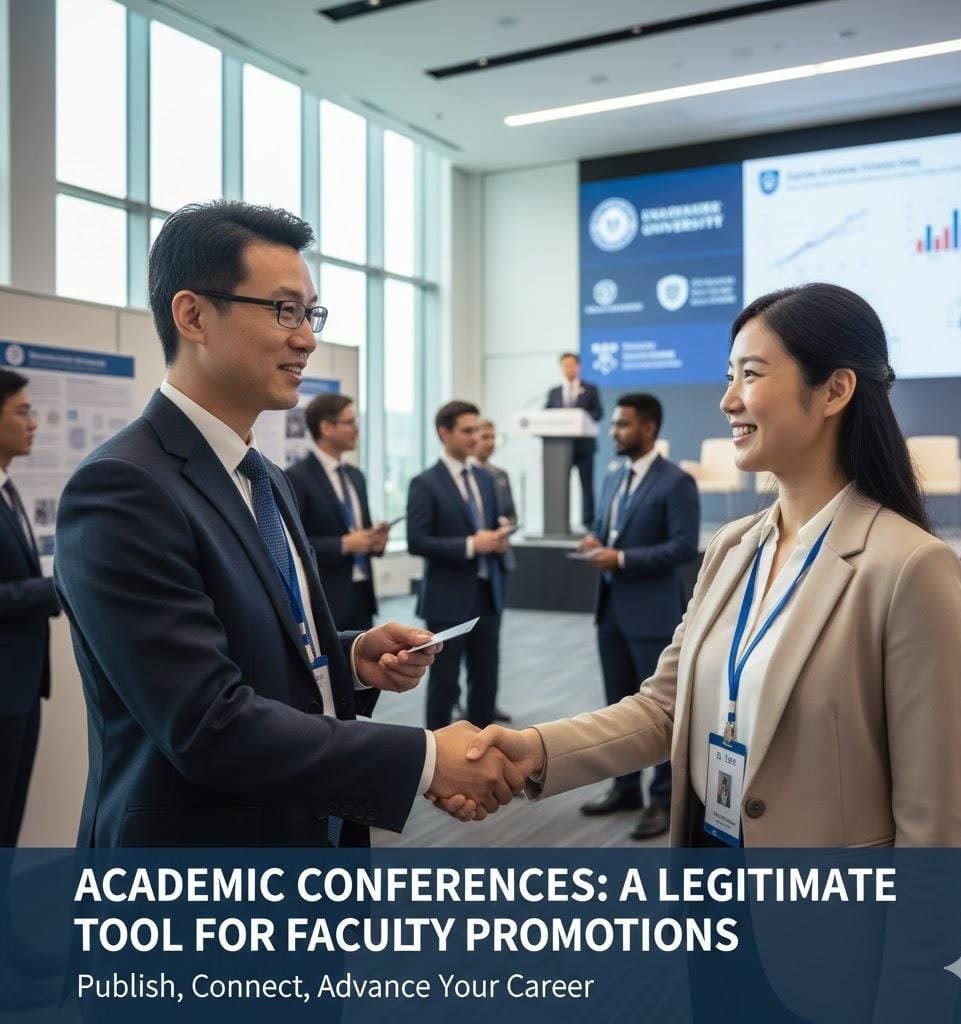
In India, faculty promotions are often tied to measurable achievements such as research publications, teaching experience, and contributions to academic development. One area that is sometimes underestimated, yet highly impactful, is participation in academic conferences. Attending and presenting at conferences is not merely a formality; it is a legitimate tool that contributes directly to a scholar’s professional growth, visibility, and promotion prospects. Understanding how conferences influence faculty evaluations helps researchers strategically plan their engagement in these academic events.
Conferences as Academic Contributions
Faculty promotions increasingly consider holistic contributions beyond classroom teaching. Conferences allow scholars to disseminate research, demonstrate active engagement in their field, and establish themselves as credible contributors. In India, both private and public universities acknowledge participation in national and international conferences as part of Academic Performance Indicators (API). Each presentation, session chairing, or panel participation adds quantifiable value to a faculty member’s profile, reinforcing their suitability for promotion.
Moreover, conferences serve as platforms for showcasing ongoing research projects and innovative methodologies. When promotion committees review faculty records, consistent conference participation signals initiative, commitment, and sustained scholarly activity. It demonstrates that a faculty member is actively involved in knowledge creation, dissemination, and professional dialogue—factors that are essential for career advancement.
Skill Development and Professional Visibility
Conferences contribute to skill development in ways that directly impact promotion evaluations. Presenting research, responding to peer questions, and engaging in panel discussions strengthen communication, analytical, and leadership skills. For Indian faculty, these competencies are increasingly recognized as part of professional growth. Attending conferences regularly also enhances visibility among peers, senior researchers, and potential collaborators. A faculty member who participates consistently is perceived as an active, credible, and engaged scholar, making a strong case for career progression.
In addition, interacting with academics from other institutions exposes faculty to diverse research perspectives, teaching methodologies, and interdisciplinary approaches. This exposure improves the quality of research supervision, curriculum design, and departmental contribution—all factors that committees consider during promotion assessments.
Networking and Collaboration Opportunities
Conferences are also invaluable for networking. For Indian faculty, establishing connections with peers, mentors, and senior researchers can lead to collaborative projects, joint publications, and participation in funded research programs. These collaborations enhance a faculty member’s research output and reputation, which are often crucial criteria in promotion evaluations.
Networking through conferences provides a strategic advantage by increasing the scholar’s presence in broader academic communities. Invitations to speak at other events, co-author research articles, or participate in expert panels often stem from visibility achieved at conferences. Such activities reinforce the faculty member’s profile, demonstrating leadership and proactive engagement in academia.
Strategic Participation for Maximum Impact
Faculty seeking promotion should approach conferences strategically. Choosing events aligned with research specialization, preparing high-quality presentations, and actively engaging with peers ensures that each conference contributes meaningfully to professional development. For Indian faculty balancing teaching, research, and administrative responsibilities, planning participation over the year allows sustainable involvement without overcommitment.
Combining online and offline conferences can also maximize exposure. While offline events offer direct interaction and networking, online conferences provide flexibility and accessibility. Strategic engagement in both formats ensures broader academic presence and strengthens the case for promotion.
Conclusion
Academic conferences are more than platforms for presenting research—they are legitimate tools for faculty promotions in India. Participation demonstrates engagement, enhances visibility, develops critical skills, and fosters professional networks that contribute to measurable academic achievements. For faculty members aiming for career advancement, conferences offer tangible evidence of scholarly activity, leadership, and dedication to the field. By approaching these events thoughtfully and consistently, Indian academics can strengthen their profiles and navigate promotion pathways with confidence, turning each conference into a meaningful step in their professional journey.