
Introduction
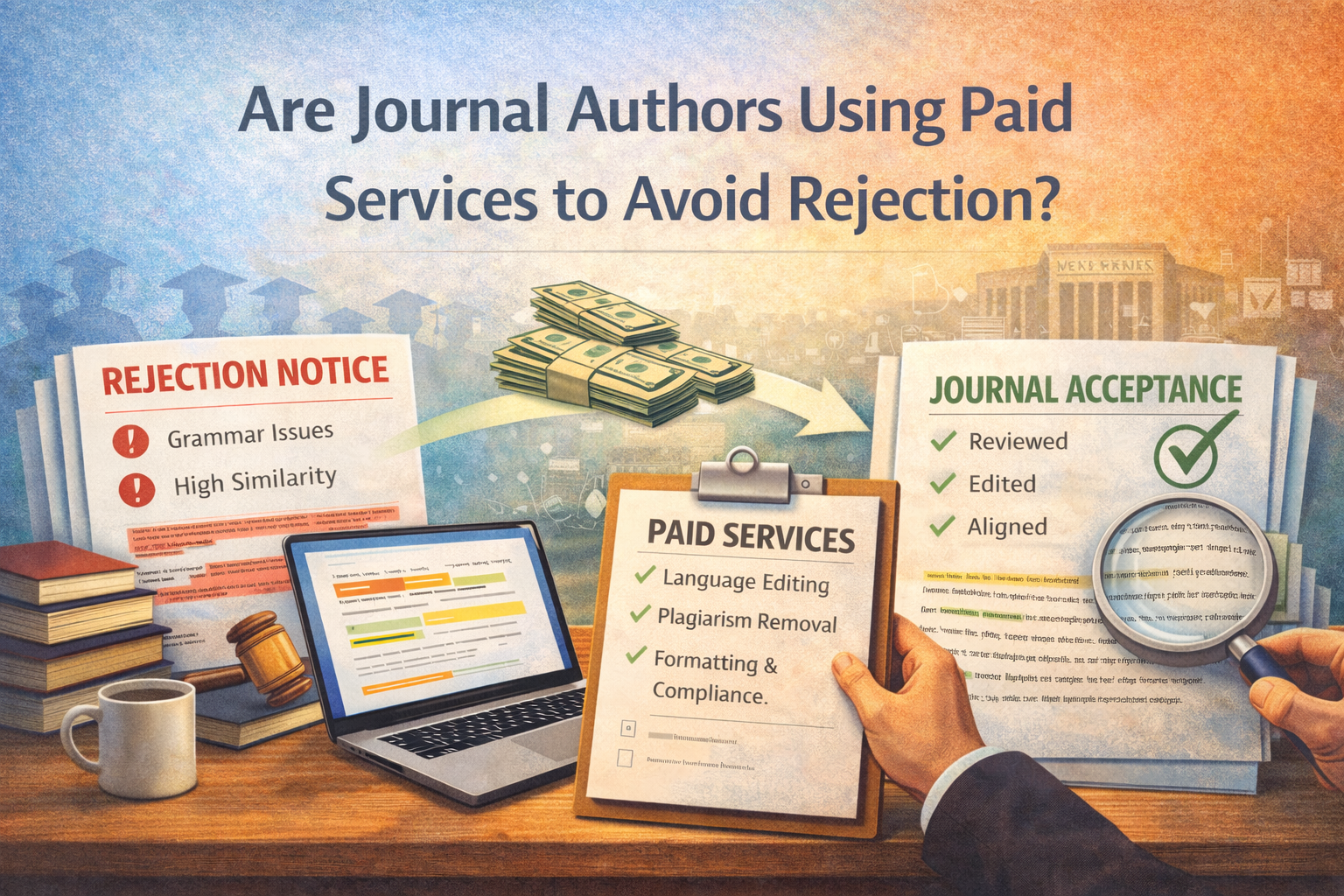
Journal rejections are a common part of academic publishing, but for many scholars, especially in India, repeated rejections can be discouraging. With strict quality standards set by UGC-CARE, Scopus, and other indexing bodies, authors face mounting pressure to refine their manuscripts. As a result, many turn to paid academic services to improve the chances of acceptance. This raises questions about the extent to which such services are used, their impact on quality, and whether they can truly help avoid rejection.
Why Journal Rejections Happen
Before looking at the role of paid services, it’s important to understand why manuscripts are rejected in the first place. Common reasons include:
- Language and grammar issues that reduce clarity.
- Poor structure or missing sections like methodology, literature review, or conclusion.
- Plagiarism or high similarity scores detected through Turnitin.
- Weak data analysis or unsupported claims.
- Mismatch with the journal’s scope or guidelines.
In India, many scholars work under time constraints, lack access to advanced editing tools, or have limited academic writing training. These factors increase the likelihood of rejection, making paid assistance an appealing option.
Types of Paid Services Used by Journal Authors
Journal authors typically use paid services in three main categories:
- Language Editing Services – Professional editors improve grammar, vocabulary, and sentence flow to meet the standards of international journals. This is particularly important when authors are writing in English as a second language.
- Plagiarism Removal Services – Specialists rewrite content to reduce Turnitin similarity while preserving meaning and citations, ensuring compliance with plagiarism policies.
- Formatting and Compliance Checks – These services align manuscripts with journal-specific styles, including citation formats, section headings, and reference styles like APA, MLA, or Chicago.
Some authors also use statistical analysis consultants or peer review simulations to strengthen their work before submission.
Why Authors Choose Paid Help to Avoid Rejection
The decision to invest in such services is often driven by:
- Time pressure to publish for academic promotions, PhD submission, or job applications.
- High competition for publication slots in reputable journals.
- Previous rejections that highlight recurring weaknesses in their manuscripts.
- Desire for UGC-CARE or Scopus indexing, which requires stricter adherence to quality benchmarks.
For Indian scholars in particular, where publishing in approved journals can significantly influence academic careers, the perceived value of professional assistance can outweigh the costs.
Does Paid Assistance Guarantee Acceptance?
A key misconception is that paying for services guarantees publication. While professional editing or rewriting can greatly improve a manuscript’s readability and compliance, final acceptance still depends on the originality, relevance, and academic merit of the research. Journals maintain independent peer review processes, and editors will reject manuscripts that do not meet scholarly standards, regardless of how well they are polished.
However, authors who use these services often report fewer rejections due to technical or formatting issues, as these are resolved before submission. By eliminating avoidable errors, they increase their chances of passing the initial screening phase.
Ethical Considerations
The use of paid services raises ethical questions in academic circles. The distinction lies between improving presentation and altering research content. Editing for clarity, structure, and compliance is widely accepted. However, ghostwriting or substantial rewriting that changes the academic contribution can breach ethical norms.
UGC and other academic bodies generally do not prohibit professional editing, but authors are expected to disclose such assistance if required and ensure that the core research remains their own work.
Risks of Using Low-Quality or Predatory Services
Not all paid services are trustworthy. Some operate without proper academic expertise and may:
- Produce poor-quality rewrites that distort meaning.
- Fail to meet plagiarism reduction targets.
- Engage in unethical practices like submitting work to predatory journals without the author’s consent.
This is why scholars are advised to verify a service’s credibility by checking reviews, sample work, and references before engaging them.
Impact on the Publishing Landscape
The growing reliance on paid services has two sides. On one hand, it levels the playing field for scholars who may not have access to institutional writing support. On the other hand, it risks creating a dependency where authors focus more on outsourcing than on developing their own writing skills.
For long-term academic growth, researchers benefit from learning proper writing, citation, and plagiarism prevention techniques, even if they occasionally use paid assistance.
Conclusion
Yes, many journal authors—both in India and abroad—use paid services to avoid rejection. These services can address language issues, reduce plagiarism, and ensure compliance with journal guidelines, thereby improving the odds of acceptance. However, they do not replace the need for strong, original research.
For Indian scholars aiming for UGC-CARE or Scopus-indexed journals, the wise approach is to use professional help as a supplement, not a substitute, for academic skill development. Choosing credible providers, understanding ethical boundaries, and maintaining ownership of one’s research are essential to using such services responsibly.