
Introduction
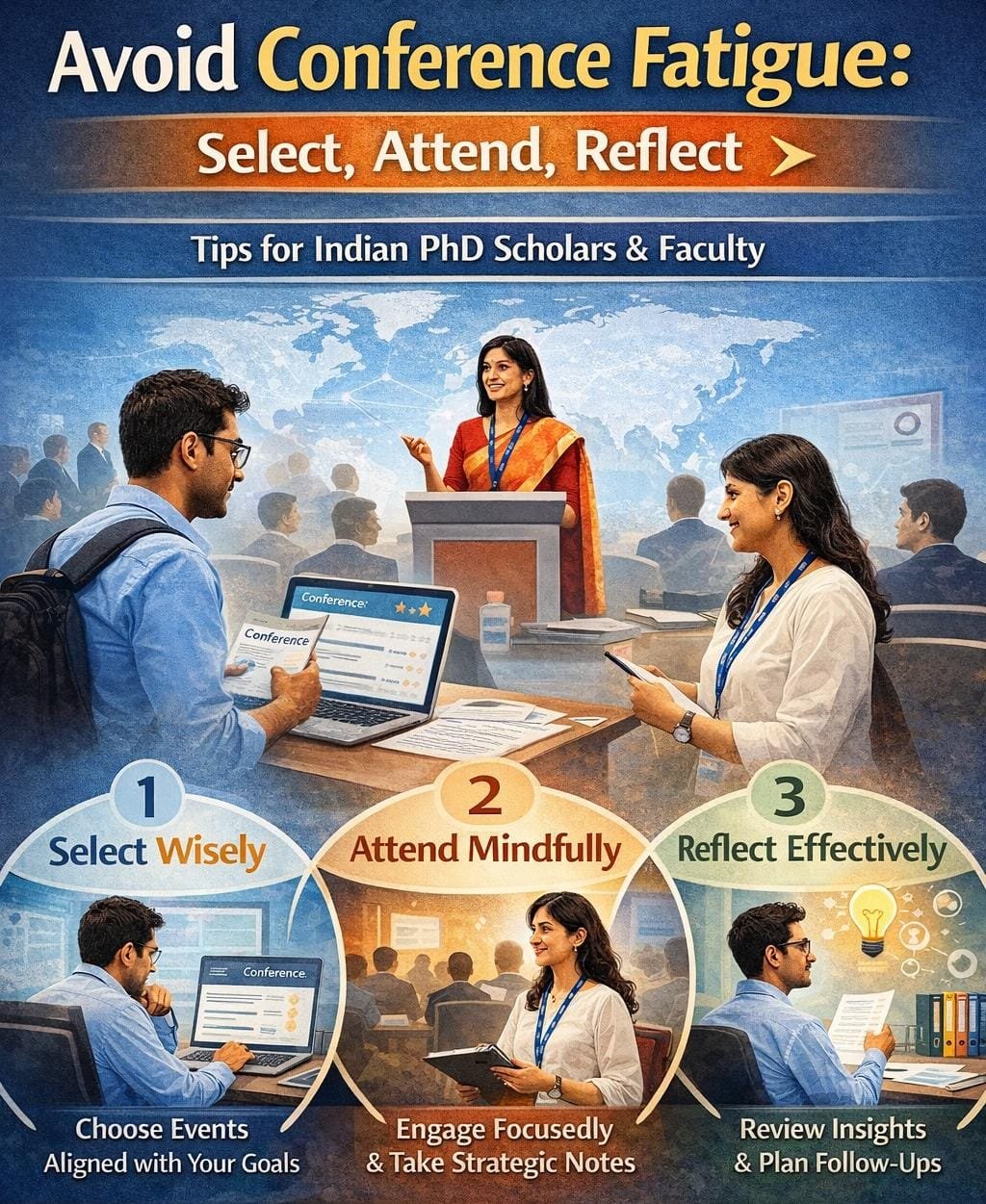
For Indian PhD scholars and faculty, conferences are essential for professional growth, networking, and research visibility. However, attending too many events without planning can lead to conference fatigue, reducing the effectiveness of participation. Fatigue can manifest as reduced focus during sessions, limited engagement, and diminished learning outcomes. Recognizing how to select conferences strategically, attend mindfully, and reflect afterward can help scholars maintain energy, extract maximum value, and sustain long-term professional growth.
Selecting the Right Conferences
Conference fatigue often begins with poor selection. Not every event contributes equally to a scholar’s goals. Indian researchers, especially those juggling teaching, research, and administrative responsibilities, should prioritize conferences aligned with their field and professional objectives. Nationally or internationally recognized conferences, events featuring relevant themes, or gatherings with high-quality speakers offer the greatest academic benefit. By carefully choosing conferences, scholars can avoid overcommitting and focus on engagements that genuinely enhance their research profile.
Quality over quantity is key. Attending numerous conferences merely to increase visibility can backfire, leading to stress and diminished learning. Thoughtful selection ensures that each conference attended is purposeful, contributing meaningfully to academic growth rather than becoming a repetitive obligation.
Attending Mindfully
Once a conference is selected, active and mindful participation is critical. Fatigue often arises when attendees try to attend every session or multitask during presentations. Indian scholars benefit from planning a schedule that balances sessions, networking opportunities, and personal downtime. Prioritizing sessions that align with research interests, preparing questions in advance, and taking notes strategically allows scholars to remain engaged without overwhelming themselves.
Mindful attendance also includes interacting thoughtfully with peers and experts. Instead of superficially exchanging contacts, meaningful engagement during Q&A sessions or informal discussions enhances learning and creates lasting professional connections. Observing presentations carefully and reflecting on methodologies or findings strengthens understanding and provides inspiration for one’s own research.
Reflecting and Applying Learnings
Reflection after the conference is often overlooked but is essential for avoiding fatigue and maximizing impact. Indian faculty and PhD students should review notes, summarize key takeaways, and consider how insights can be applied to ongoing research or teaching. Reflection helps internalize knowledge, identify gaps, and integrate new perspectives into academic work.
Moreover, reflecting on networking interactions ensures that contacts made during the conference are nurtured. Following up with peers, discussing collaborative opportunities, or implementing suggestions received during sessions strengthens professional relationships and reinforces the value of each conference. This post-event reflection transforms participation from a passive activity into a productive and strategic professional exercise.
Balancing Conference Engagement with Responsibilities
Avoiding fatigue also requires balancing conference participation with other academic commitments. Overextending to attend multiple events in a short period can compromise teaching, research, or personal well-being. Indian scholars can benefit from spacing conferences throughout the year, combining online and offline events, and setting realistic goals for each participation. By managing time and energy effectively, attendees maintain productivity while benefiting from professional exposure.
Conclusion
Conference fatigue is avoidable when scholars adopt a strategic approach: select the right events, attend mindfully, and reflect afterward. For Indian PhD students and faculty, this approach ensures meaningful engagement, sustained learning, and productive networking. Conferences are powerful tools for research visibility and professional development, but their value depends on thoughtful participation. By balancing energy, focus, and reflection, scholars can make each conference a rewarding and impactful experience, supporting both career growth and academic excellence.