
Introduction
With the rise of AI writing tools, many PhD students in India—especially those in private universities—are experimenting with them to draft or improve parts of their thesis. While these tools can help with grammar, structure, and clarity, there is growing concern about whether they can increase the similarity percentage in plagiarism detection reports like Turnitin or Urkund. Understanding how AI-generated text interacts with plagiarism checkers can save you from unintentional academic issues.
Why AI-Generated Text May Get Flagged
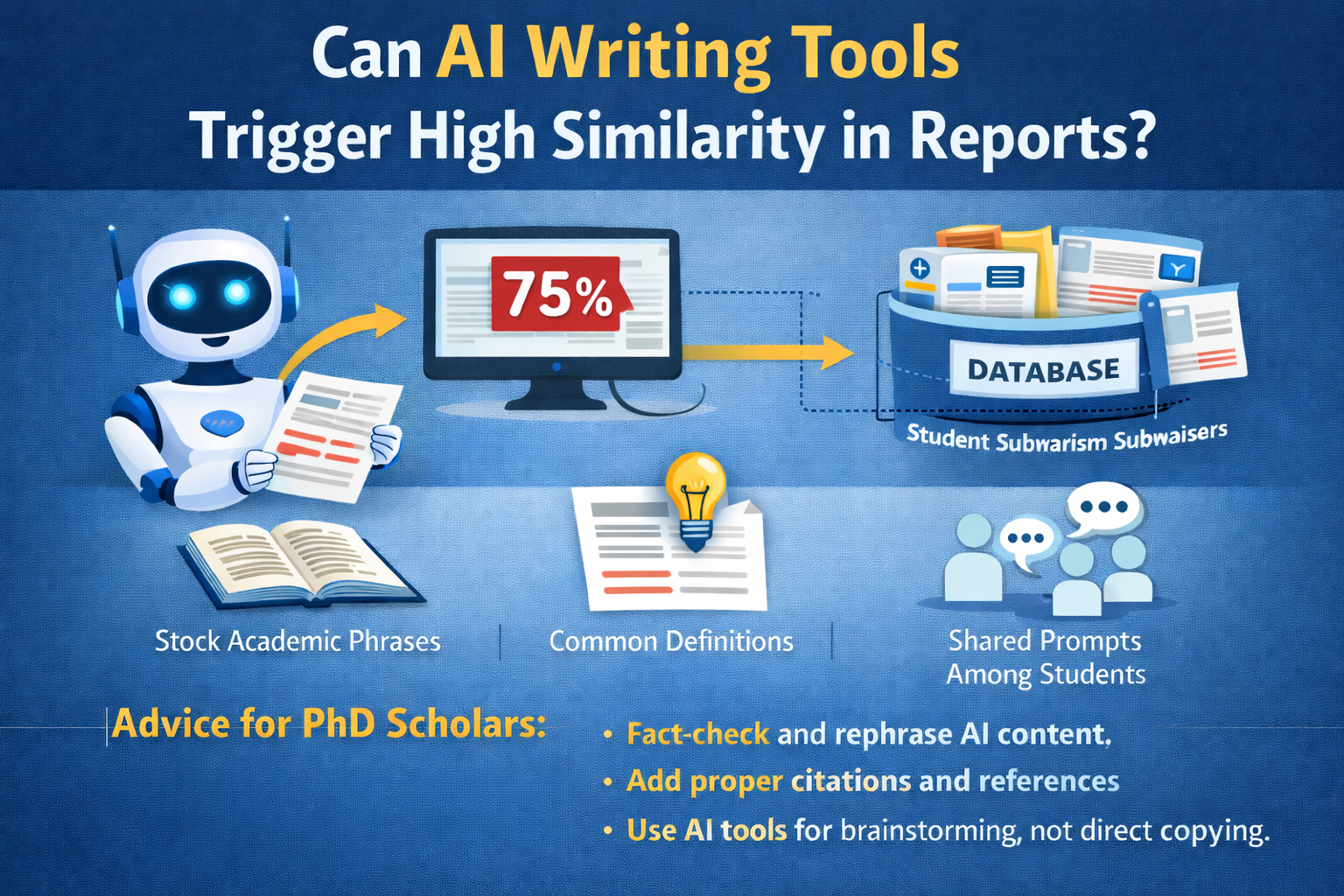
Plagiarism tools compare your work to a massive database of published material, student submissions, and web content. If an AI tool uses phrasing or sentences that already exist online, these can be detected as matches. This is particularly true when:
- The AI tool uses stock phrases common in academic writing.
- The tool draws from well-known definitions, theories, or explanations.
- Multiple students use the same AI prompts, producing similar text.
The Difference Between Similarity and Plagiarism
It’s important to note that a high similarity score does not always mean plagiarism. AI-generated text may have legitimate matches with publicly available information, but if you do not add your own interpretation or citation where needed, it becomes problematic. For example:
- A generic definition from AI that matches a Wikipedia page will still be flagged.
- A paraphrased concept without citation may look “different” but still match the source.
How to Use AI Tools Without Triggering High Similarity
To minimise issues, PhD scholars should:
- Use AI tools for brainstorming, not for copying exact sentences into the thesis.
- Always fact-check and rephrase AI-generated content in their own words.
- Add proper references for definitions, data, and established theories.
- Mix AI suggestions with their own critical analysis to maintain originality.
Private Universities’ Stance on AI Use
Many private universities in India are still forming policies on AI use. Some accept AI tools for editing, grammar improvement, and idea generation, but not for producing original research content. Others have strict bans on AI-generated text. Checking your university’s guidelines before using these tools is essential.
Conclusion
AI writing tools can be helpful allies in thesis preparation, but if used carelessly, they can cause high similarity scores in plagiarism reports. For Indian PhD scholars, the safest approach is to treat AI as a support tool rather than a content creator. By combining AI assistance with your own critical thinking, you can produce original, credible work that meets both academic and ethical standards.