
Introduction
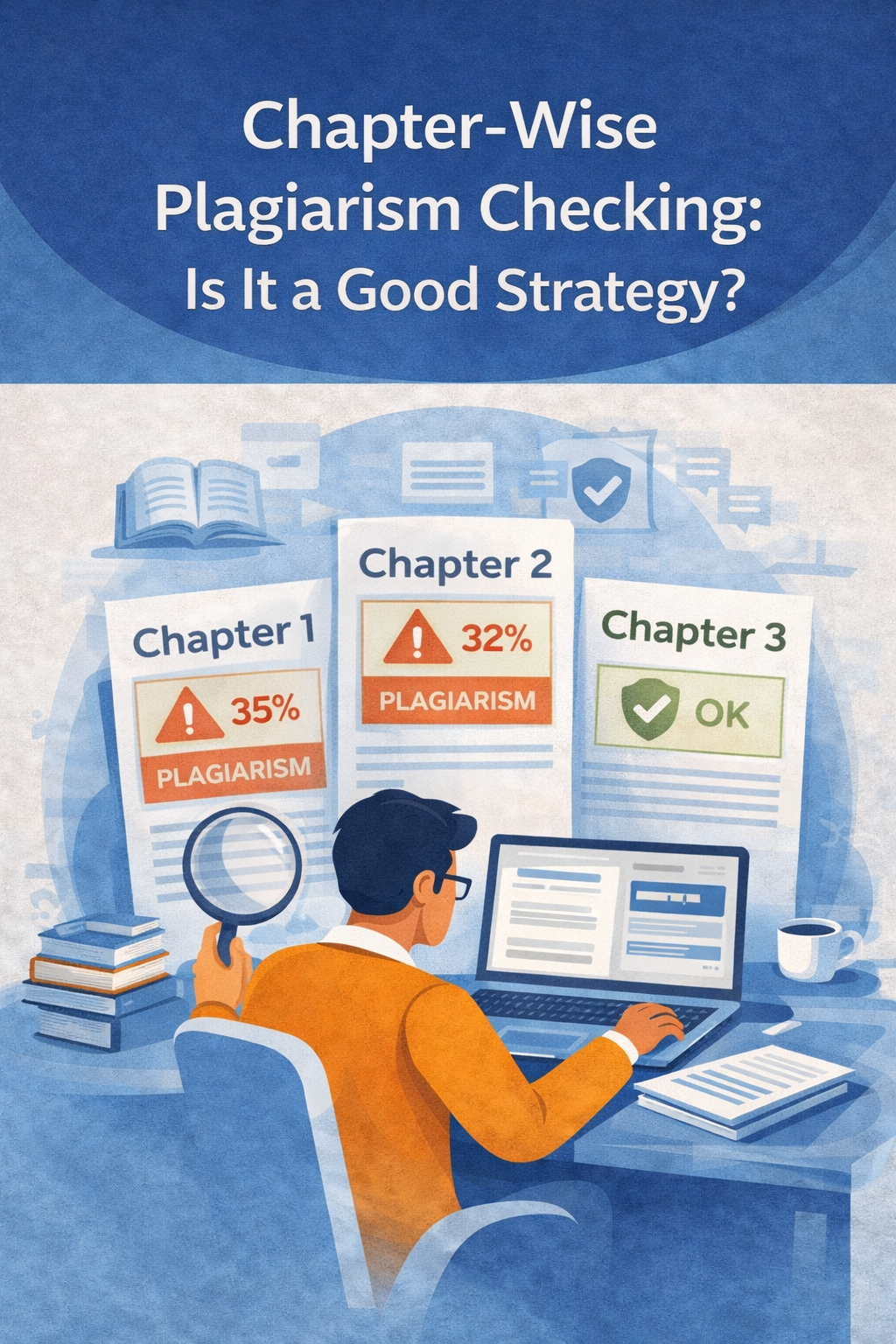
Plagiarism checking has become a routine part of thesis writing in Indian private universities. With strict UGC guidelines, scholars must ensure their similarity index stays within the acceptable range. While many institutions run plagiarism checks on the complete thesis, some scholars and supervisors prefer a chapter-wise approach. This method involves checking each chapter individually before compiling the final draft. But is it really an effective strategy? Understanding its pros and cons can help scholars decide whether to adopt it during their writing process.
Why Some Scholars Prefer Chapter-Wise Checking
One reason chapter-wise checking is popular is that it allows for early identification of plagiarism issues. Instead of waiting until the end, scholars can detect high similarity in specific sections—such as literature review or methodology—and correct them before they become a bigger problem. This approach also reduces the stress of making large-scale revisions at the final stage.
Benefits of Chapter-Wise Plagiarism Checking
- Early detection of issues—problems can be resolved before they spread across multiple sections.
- Better time management—allows for gradual editing instead of last-minute rewriting.
- Focused feedback from supervisors—supervisors can pinpoint problem areas and suggest corrections before moving forward.
- Higher overall originality—maintaining low similarity in each chapter usually results in a low final similarity score.
Limitations of This Approach
While chapter-wise checking can be useful, it’s not without drawbacks. When chapters are combined into a single document, repeated phrases, definitions, or citations can still increase the overall similarity percentage. Additionally, some plagiarism detection tools used in private universities do not allow unlimited checks, meaning excessive testing could exhaust the allotted attempts.
Common Misunderstandings About Chapter-Wise Checking
Some scholars assume that if each chapter individually has low similarity, the final thesis will automatically pass the plagiarism check. This is not always true. Overlapping content—such as repeated background information or common research terminology—can increase the similarity score when all chapters are merged. Another misunderstanding is treating plagiarism checks as the main writing tool, rather than focusing on proper paraphrasing and citation from the start.
Best Practices for Using This Strategy
- Run checks at logical intervals—after completing a full chapter draft, not every few paragraphs.
- Track repeated sections—avoid duplicating large chunks of text across multiple chapters.
- Save the main check for the end—always run a final plagiarism check on the complete thesis.
- Paraphrase as you go—don’t rely on last-minute edits to fix similarity issues.
A Balanced Approach
For many PhD candidates in private universities, the most effective method is a combination—perform chapter-wise checks to maintain originality during writing, but also run a full thesis check before submission. This way, both individual sections and the complete work meet the plagiarism standards.
Conclusion
Chapter-wise plagiarism checking can be a valuable tool for maintaining originality, especially in lengthy research projects like a PhD thesis. However, it should not replace careful paraphrasing, proper citation, and a final comprehensive check. By using this strategy wisely, scholars can reduce the risk of accidental plagiarism and improve the overall quality of their work, ensuring it meets the academic integrity standards of Indian private universities.