
Introduction
For Indian students and working professionals, postgraduate education is often a critical step toward career advancement, academic growth, or specialization in a chosen field. With the rise of digital learning, two options have become especially popular—online PG degrees and traditional distance PG degrees. At first glance, the two may appear similar because both allow learners to study without attending full-time on-campus classes. Yet, the structure, delivery, and outcomes of these programs can differ significantly. Choosing between the two requires careful thought, as the decision has long-term implications for academic recognition and employability. This blog examines how online and distance PG degrees compare in the Indian context and what factors students should consider before making a choice.
Understanding Distance PG Degrees
Distance PG programs have a long history in India, offered by institutions like IGNOU and state universities for decades. Traditionally, these programs relied on printed study materials, postal assignments, and occasional contact classes. Over time, many universities have integrated digital tools such as recorded lectures, online portals, and email communication. Despite these updates, distance education is often self-paced, with limited real-time interaction between students and faculty. Its biggest advantage remains accessibility, as it allows students from remote areas or those balancing work and family to continue higher education at a lower cost.
Understanding Online PG Degrees
Online PG programs, on the other hand, represent a newer model that makes full use of technology. They rely on learning management systems, live interactive classes, virtual group discussions, and digital assessments. The experience is closer to regular classroom learning but delivered virtually. Universities offering online PG programs often schedule live sessions, recorded lectures, and assignments with strict deadlines, creating a more structured academic environment. With recognition from UGC and AICTE for approved institutions, online PG degrees are now accepted as equivalent to regular degrees in terms of validity.
Key Differences Between Online and Distance PG Degrees
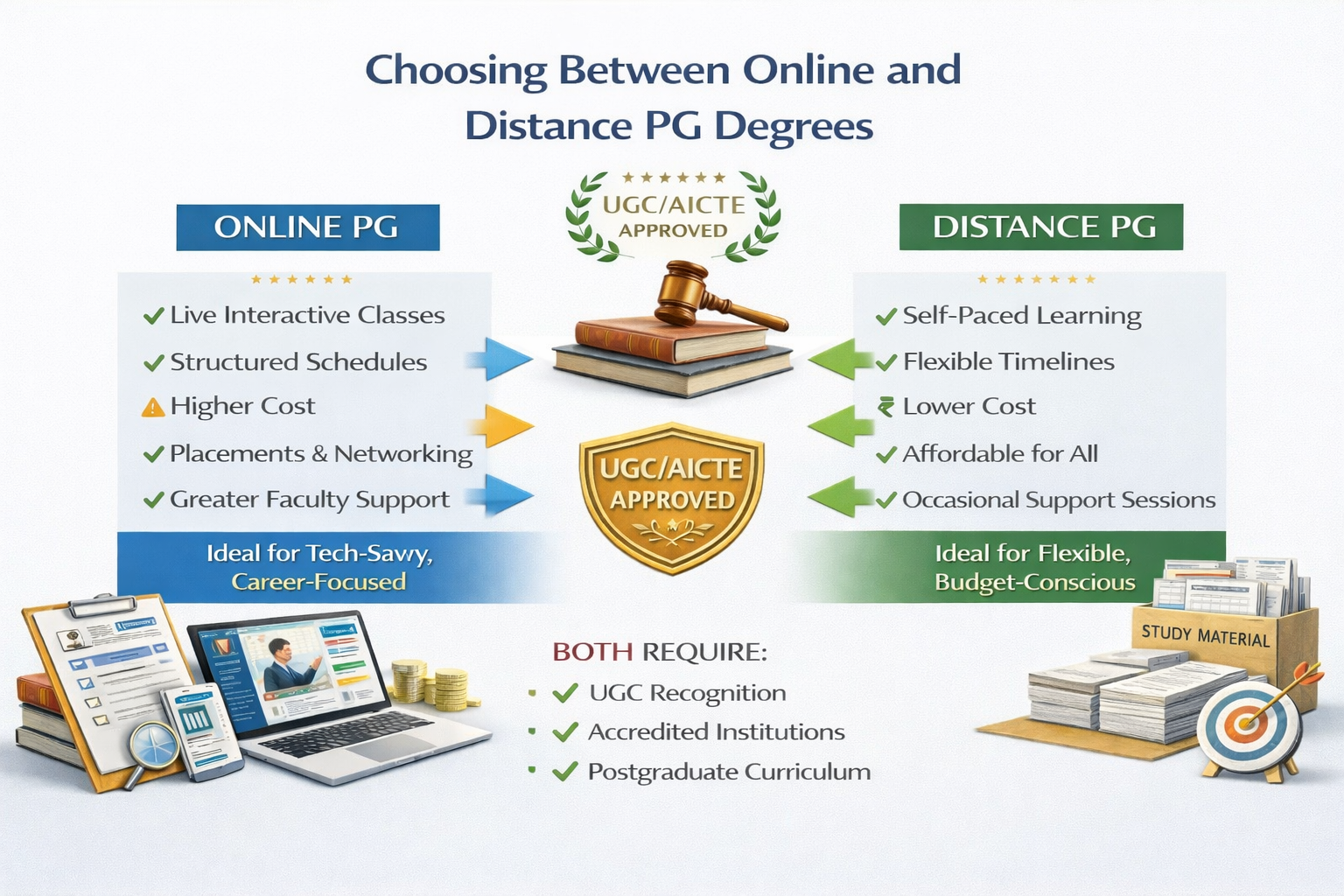
The major difference lies in the level of engagement and structure. Distance programs are flexible but place greater responsibility on the learner to stay motivated. Online programs, while still flexible, create more accountability through scheduled classes and active interaction. For example, a student pursuing an MBA online may participate in live case-study discussions with faculty and peers, whereas a distance MBA student may primarily rely on self-study with occasional support sessions. Employers also perceive online PG programs as slightly closer to regular programs, since they involve real-time interaction and assessments.
Advantages of Distance PG Programs
Distance PG programs are usually more affordable and accessible, making them ideal for students from smaller towns or those with limited financial resources. They are also suitable for learners who prefer studying at their own pace, without the pressure of live classes. For example, a working professional in a government job may prefer a distance degree to complete postgraduation quietly while focusing on career stability. Another advantage is that many universities offering distance programs have a large alumni base, which can be useful for networking.
Advantages of Online PG Programs
Online PG programs are better suited for students who value interaction, collaboration, and regular faculty support. They often include features like online labs, discussion boards, and placement support, which make them more engaging than traditional distance courses. For instance, online MCA students may work on group coding projects with peers across the country, guided by faculty in real-time sessions. Many private universities offering online PG courses also have tie-ups with industries, which helps in internships and placements. For employers, an online degree signals familiarity with modern technology, a skill increasingly in demand.
Challenges in Both Models
Neither model is free from challenges. Distance education can feel isolating and requires immense self-discipline to complete successfully. Students may miss out on peer discussions or practical exposure unless they take additional initiatives. Online education, on the other hand, demands consistent internet access, digital devices, and the ability to manage structured schedules. For rural students, connectivity issues can create obstacles. Moreover, both models may face skepticism from certain traditional employers, though acceptance is improving steadily in India.
Cultural and Professional Relevance in India
In India, where family responsibilities, geographical barriers, and job commitments strongly influence education choices, both online and distance PG programs serve vital roles. Distance degrees often appeal to first-generation learners or those seeking academic qualifications alongside stable careers. Online degrees, however, attract younger professionals who want dynamic interaction and networking opportunities while studying. As Indian workplaces increasingly digitize, the acceptance of online programs is growing rapidly, but distance education continues to be valued, especially in government and teaching sectors.
How to Decide Between the Two
Students should base their choice on personal circumstances and goals. If affordability, flexibility, and independence are priorities, a distance PG program may be better. If engagement, structure, and placement support matter more, an online PG program could be the right fit. The most important factor is ensuring that the chosen university and program are recognized by the UGC, as only then will the degree hold national and international validity. Consulting with alumni, checking course structures, and considering career aspirations can also help make an informed decision.
Conclusion
Online and distance PG degrees both offer pathways to higher education that align with the realities of Indian students’ lives. While distance programs provide unmatched flexibility and affordability, online programs offer interactivity and industry readiness. Neither is inherently better; the value depends on how well the program matches the learner’s circumstances and ambitions. In a country where education is deeply tied to both personal growth and family aspirations, making a thoughtful choice ensures that postgraduate learning becomes a meaningful investment for the future.