
Introduction
In the academic journey of Indian PhD scholars, especially those enrolled in private universities, rewriting software has become a popular tool to tackle challenges related to plagiarism and language clarity. Doctoral admission in India increasingly emphasizes originality and well-articulated writing, which makes rewriting software an attractive shortcut for many. However, while these tools can be helpful, common errors in their use can inadvertently affect the quality and credibility of a thesis. Recognizing these pitfalls is essential for scholars seeking to balance the demands of research, writing, and professional life.
Many students, particularly those new to academic writing or managing multiple commitments, turn to rewriting software hoping for quick improvements. Yet, without careful application, these tools can introduce problems that may complicate the review process or undermine the researcher’s academic voice.
Typical Mistakes in Using Rewriting Software
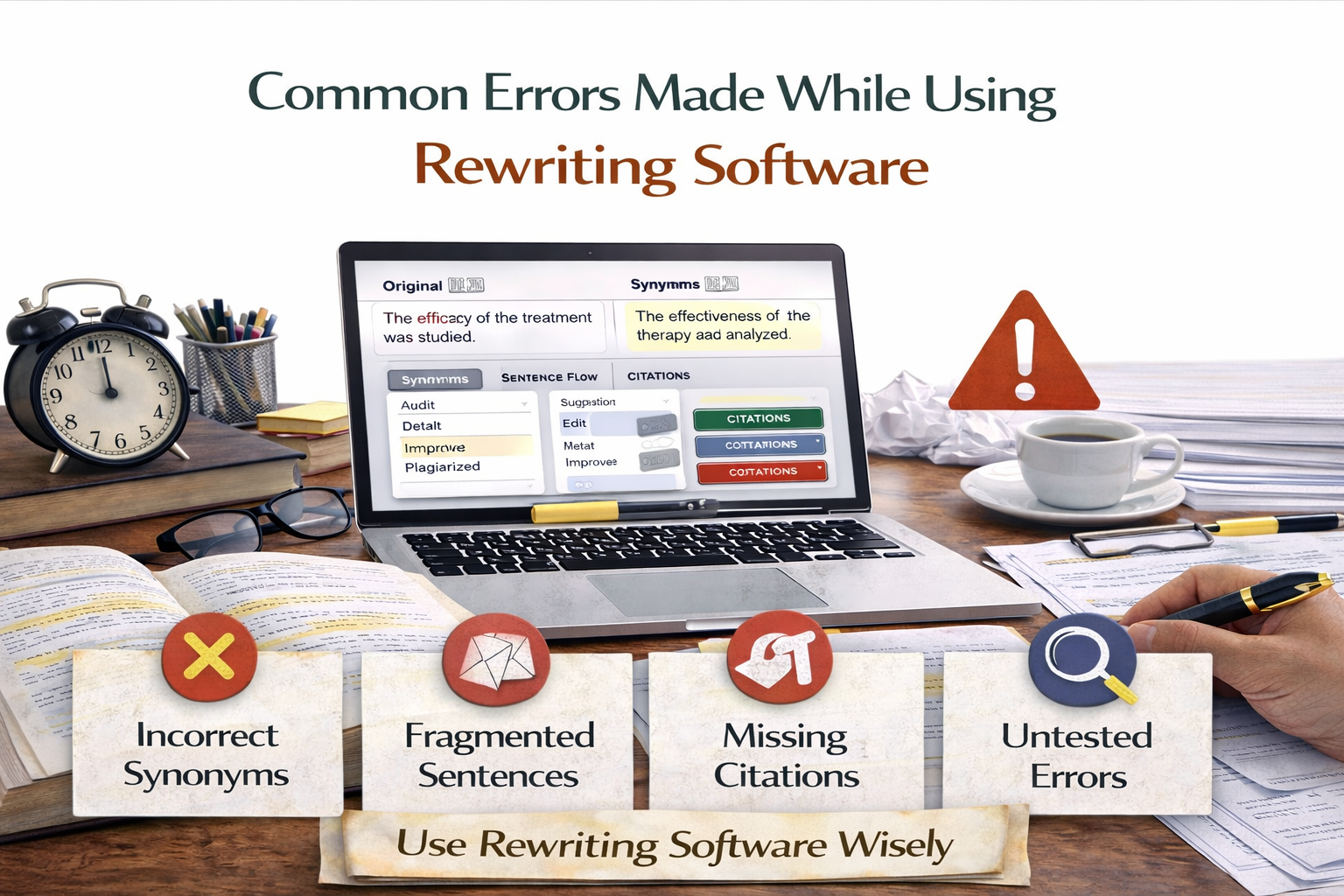
One frequent error is over-reliance on automatic synonym replacement. Rewriting software often substitutes words with synonyms without considering context or discipline-specific terminology. For Indian scholars writing in specialized fields such as engineering, social sciences, or medical research, this can lead to inappropriate word choices that alter the meaning of sentences or produce awkward phrasing. For instance, replacing “efficacy” with “effectiveness” might seem minor but could change a research conclusion’s nuance.
Another common issue is loss of coherence and flow. Rewriting software tends to rearrange sentence structures mechanically, sometimes resulting in fragmented or confusing paragraphs. In Indian private universities, where thesis supervisors expect clear and logical argumentation, this disjointed writing can reduce readability and weaken the thesis’s overall impact.
A further mistake involves neglecting proper citation after rewriting. Some scholars assume that paraphrasing through software eliminates the need to cite original sources, which is a misconception. Indian academic standards are strict about acknowledging intellectual property regardless of how text is rewritten. Failure to cite sources can lead to accusations of plagiarism, regardless of wording changes.
Many candidates also underestimate the importance of manual proofreading after using rewriting tools. Software may introduce grammatical errors, awkward phrases, or typographical mistakes that automated checks do not catch. These errors can distract examiners and reflect poorly on the scholar’s attention to detail.
Implications in the Indian Academic Context
For Indian PhD students, especially those pursuing doctoral admission in private universities, these common errors have practical consequences. Poorly rewritten sections can delay thesis acceptance, require extensive revisions, or cause doubts about the candidate’s comprehension of their research.
The interdisciplinary nature of many Indian doctoral programs adds complexity, as rewriting software may struggle with jargon from multiple fields, leading to inaccuracies. Furthermore, the cultural emphasis on respectful and precise academic communication means that unnatural phrasing or misinterpretation risks diminishing the scholar’s academic credibility.
Supervisors play a crucial role in identifying these errors during the review process and guiding scholars toward more effective rewriting practices. This mentorship is vital to ensure that rewriting software serves as a helpful aid rather than a source of new problems.
Best Practices to Avoid Common Errors
Indian doctoral candidates benefit most when they use rewriting software as a supplementary tool rather than a primary solution. It is advisable to first understand the source material deeply, then manually rewrite key ideas before using software for polishing language or checking for alternative expressions.
Careful review and editing after software use help maintain coherence and correct unintended changes. Scholars should also ensure that every paraphrased section includes accurate citations, aligning with Indian academic norms on intellectual honesty.
Consulting supervisors regularly can help catch errors early and foster a collaborative approach to writing. Combining technological assistance with human judgment balances efficiency with quality and integrity.
Conclusion
While rewriting software offers valuable support for Indian PhD scholars managing complex theses, common errors in its use can hinder rather than help. Overdependence, careless synonym replacement, loss of flow, citation neglect, and inadequate proofreading are pitfalls that must be avoided. Navigating these challenges requires thoughtful integration of software tools with personal understanding and supervisor guidance. Doing so preserves the clarity, originality, and academic rigor essential to successful doctoral admission and research in India’s private university system