
Introduction
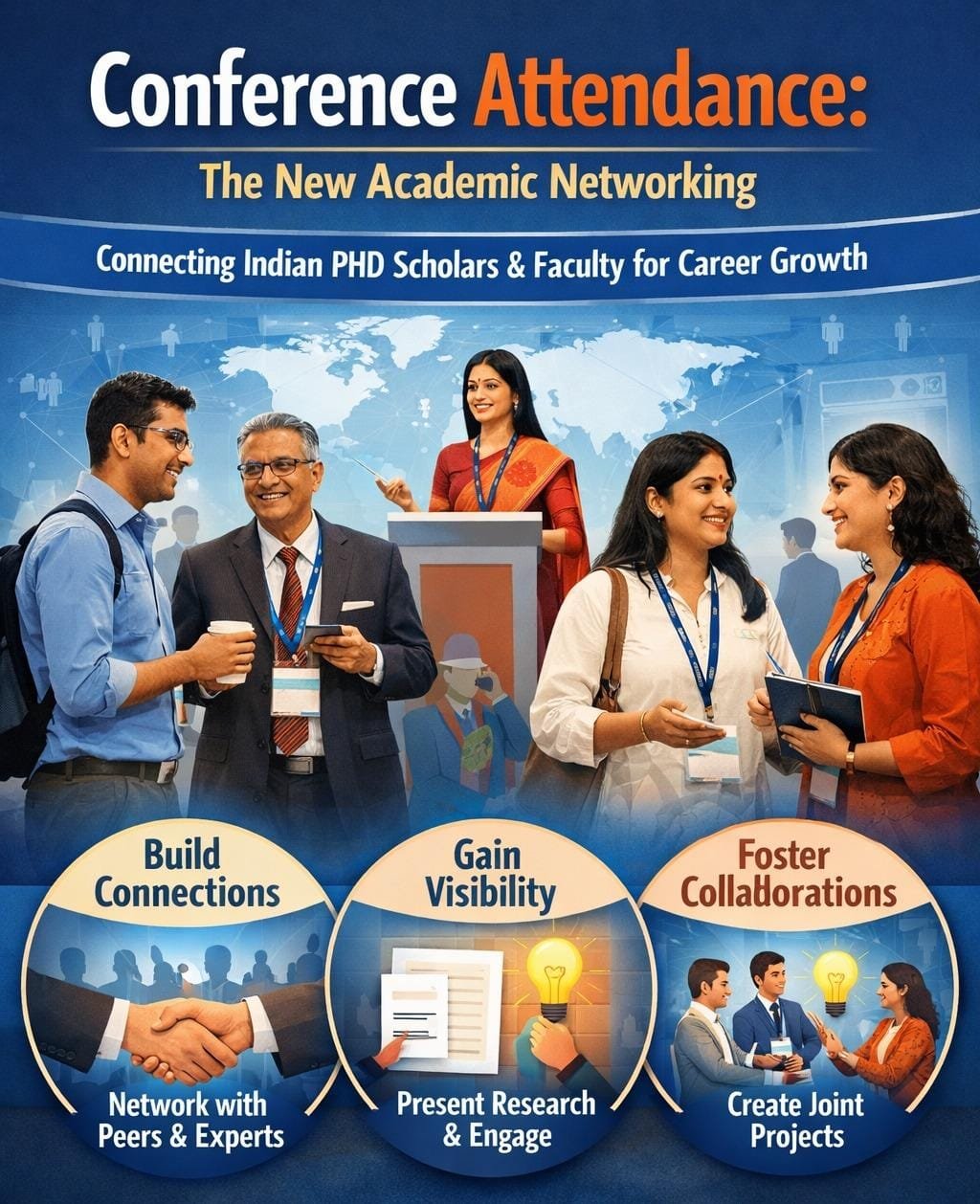
For Indian PhD scholars and faculty, networking has traditionally relied on personal contacts, institutional connections, or mentorship within one’s own university. However, academic conferences have emerged as one of the most effective strategies for professional networking. Attending conferences allows scholars to engage with peers, senior researchers, and industry experts, building relationships that extend far beyond formal presentations. Understanding how conferences serve as networking platforms can help scholars leverage these events strategically for career growth, collaboration opportunities, and long-term professional visibility.
Networking Beyond One’s Institution
In India, many scholars, especially those in private universities or smaller institutions, face limited exposure to wider academic communities. Conferences provide a structured environment where these researchers can connect with colleagues across the country and even internationally. Unlike casual networking, conference interactions are often centered around shared research interests, providing contextually relevant relationships. For example, a faculty member presenting research in education policy may meet peers working on similar projects from other universities, leading to discussions that extend into collaboration or joint publications.
Repeated conference attendance amplifies networking potential. Attending multiple events over the year increases both the breadth and depth of professional relationships. Scholars develop familiarity with peers, create a reputation within their field, and gain access to senior academics who can provide mentorship, guidance, or opportunities for research partnerships. This cumulative presence is especially valuable in the Indian context, where professional visibility and personal connections often influence career progression, funding opportunities, and collaborative research invitations.
Building Academic Credibility Through Interaction
Networking at conferences is not just about exchanging contacts—it is also about establishing credibility. Engaging in discussions, asking thoughtful questions, and sharing insights demonstrates expertise and commitment. For PhD students and early-career faculty in India, this visibility helps in building a professional identity that extends beyond institutional boundaries. Scholars who are recognized for their contributions are more likely to be invited to review papers, join collaborative projects, or participate in interdisciplinary initiatives, further strengthening their academic profile.
Even informal interactions during coffee breaks, poster sessions, or panel discussions contribute to credibility. Observing how senior researchers communicate, defend their work, and respond to critique provides valuable lessons on professional decorum. Young scholars can model these behaviors, gradually increasing their own confidence and effectiveness in academic networking.
Strategic Networking for Career Advancement
Effective networking at conferences requires strategy. Scholars should identify events aligned with their research interests, prioritize sessions where they can meet key figures in their field, and prepare for meaningful engagement rather than passive attendance. Indian researchers often face time and resource constraints, so planning ensures that each conference yields measurable outcomes, whether it is a collaboration, mentorship connection, or feedback for ongoing projects.
Participation should also balance presenting and listening. Presenting research offers direct visibility, while actively listening to others’ work helps identify potential collaborators, emerging trends, and opportunities for future engagement. By combining these approaches, scholars can maximize networking benefits without becoming overwhelmed or scattered.
Long-term Impact on Academic Careers
Networking through conferences has a cumulative effect on career development. Relationships formed at conferences can lead to co-authored papers, joint research grants, invitations to speak, and participation in professional committees. For Indian PhD students, faculty, and postdoctoral researchers, these connections are critical in building a recognizable academic presence. Over time, consistent conference participation positions scholars as active contributors to the field, bridging the gap between local institutional work and national or international academic discourse.
Conclusion
Conference attendance is no longer just an academic requirement—it is a strategic tool for networking, relationship-building, and professional growth. For Indian scholars, it provides exposure, credibility, and access to collaborative opportunities that would be difficult to achieve through institutional channels alone. Thoughtful participation, engagement, and consistent presence at conferences can transform professional networks, creating lasting connections that support both research and career advancement. In this sense, attending conferences is not just about presenting work—it is about becoming an active participant in the global academic community.