
Introduction
For Indian PhD scholars, the viva voce and periodic research reviews are often considered the most challenging stages of the doctoral journey. These evaluations test not only the quality of research but also the scholar’s ability to communicate ideas, defend methodology, and respond to critical questions. In this context, conference presentations emerge as invaluable preparation tools. By presenting research to a broader audience, scholars gain practical experience in defending their work, receiving feedback, and refining arguments, which directly contributes to confidence and performance during formal assessments.
Building Skills for Defense
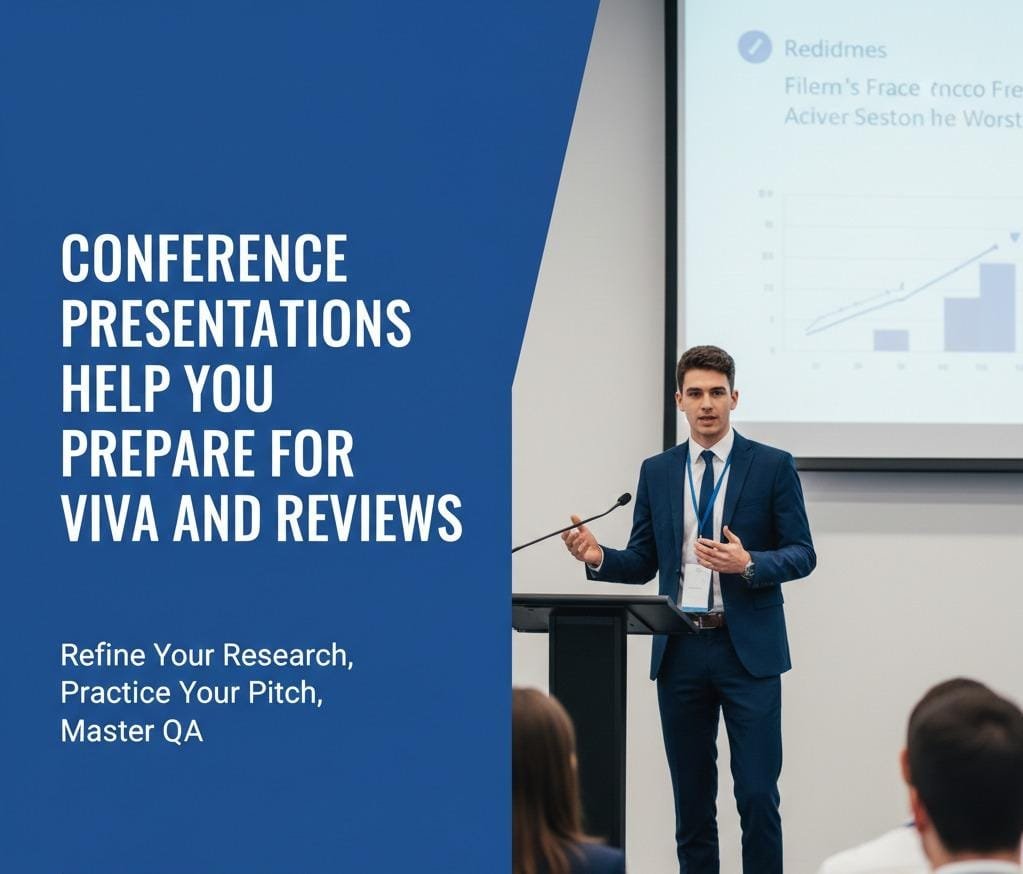
Preparing for a conference presentation requires condensing complex research into concise, coherent arguments. Scholars must identify key findings, justify methodologies, and anticipate questions — skills that mirror those required in viva and review meetings. For Indian PhD students, this practice is particularly beneficial, as viva examinations often involve scrutiny from multiple examiners with diverse academic backgrounds. A scholar who has presented at conferences is better equipped to explain concepts clearly, defend assumptions, and engage critically with evaluators, making the formal assessment process more manageable.
Handling Questions and Critique
Conferences provide a safe yet challenging environment to face questions from experts, peers, and interdisciplinary audiences. Indian scholars frequently report that even a single session of constructive questioning boosts their confidence to handle rigorous reviews. By navigating diverse perspectives and responding to critique in real time, researchers develop poise, resilience, and analytical thinking. These skills are directly transferable to viva examinations and annual reviews, where evaluators test both depth of knowledge and adaptability in defending arguments.
Feedback for Refinement
One of the most practical benefits of presenting at conferences is the immediate feedback received. Comments, suggestions, and alternative viewpoints help identify gaps or weaknesses in research before formal submission. For example, a student researching urban policy may discover overlooked variables or alternative interpretations from colleagues in other universities. This insight allows scholars to refine chapters, strengthen methodology, and anticipate reviewer concerns, ultimately enhancing the quality of the thesis and increasing the likelihood of a smooth evaluation process.
Enhancing Professional Confidence
Beyond technical preparation, conference presentations build self-assurance. Speaking publicly, engaging with questions, and receiving recognition for one’s work instills confidence that extends into the viva room. For Indian PhD candidates, many of whom balance research with teaching or professional responsibilities, this confidence is invaluable. It transforms the perception of evaluations from intimidating exercises into opportunities to share and defend knowledge effectively.
Networking and Mentorship Opportunities
Conferences also facilitate interactions with senior scholars who can offer guidance relevant to viva and review preparation. Discussions with experienced researchers provide insights into common pitfalls, examiner expectations, and strategies for effective argumentation. For private university scholars or those in less-established institutions, such guidance is particularly useful, offering mentorship that strengthens readiness for formal evaluations.
Conclusion
Conference presentations do more than enhance visibility; they function as rehearsal grounds for viva and research reviews. For Indian PhD scholars, these experiences cultivate communication skills, analytical thinking, and professional confidence, all of which are essential for successful evaluation. Each presentation, interaction, and feedback session equips scholars to navigate the critical stages of their doctoral journey with poise and clarity. In this sense, conferences are not just academic events—they are essential stepping stones that prepare researchers for the rigorous but rewarding challenges of defending and advancing their work.