
Introduction
For many Indian PhD scholars and faculty, conferences are often seen primarily as opportunities to present research. While presenting is undoubtedly important, listening and observing can be equally valuable for academic growth. Active listening at conferences exposes scholars to new ideas, methodologies, and perspectives, helping them refine their own work and expand their understanding of the field. Recognizing the benefits of attentive participation can transform the way scholars approach conferences, making each event a learning experience beyond the stage or podium.
Learning Through Observation
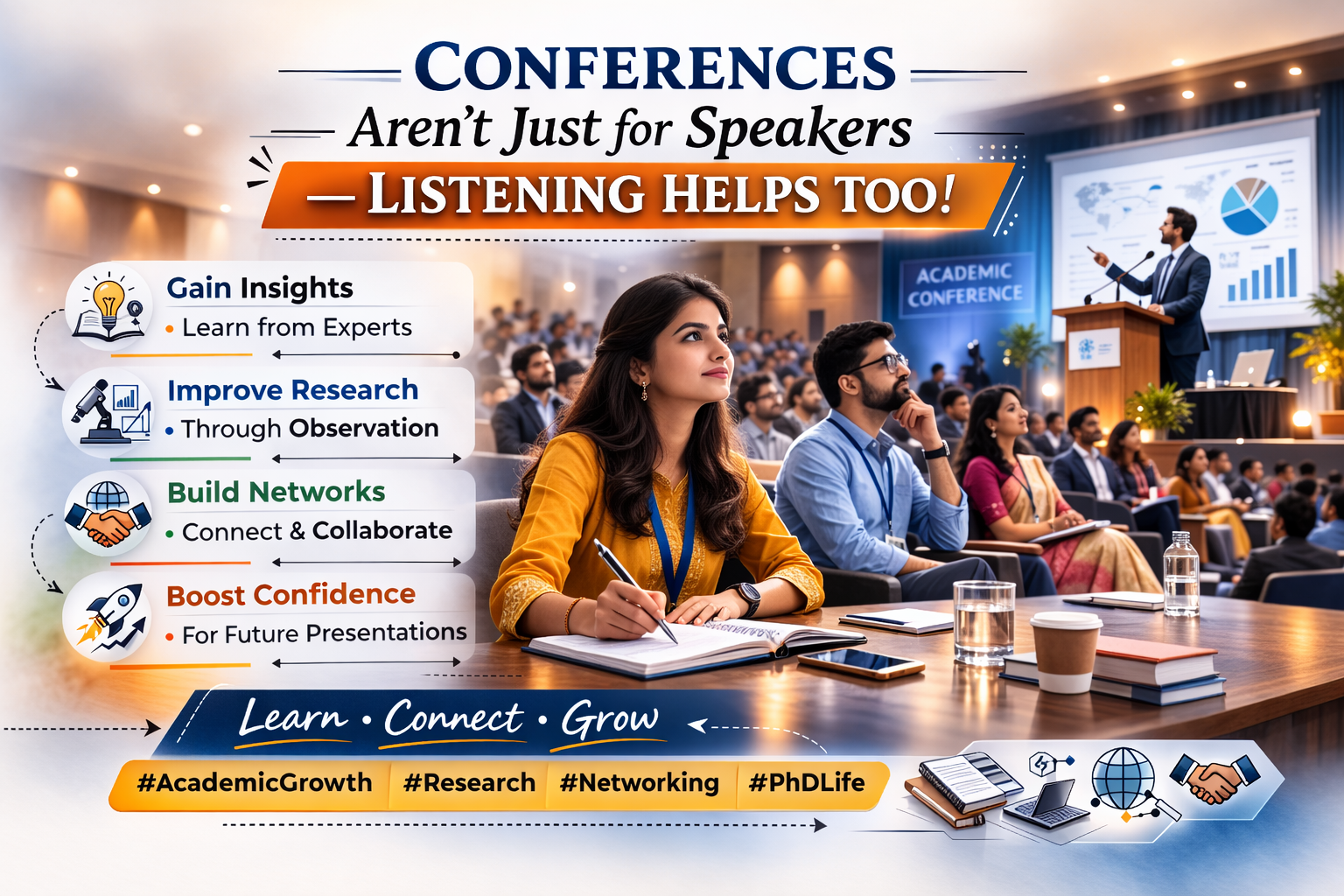
Attending presentations, panels, and discussions allows scholars to observe how experienced researchers structure arguments, present data, and address questions. For Indian PhD students, particularly those in private universities or smaller institutions, this exposure is crucial. It provides models for effective communication, offering insights into strategies that enhance clarity and engagement in both oral and written research outputs. Listening to diverse approaches helps scholars understand what makes a presentation compelling and how complex ideas can be conveyed succinctly.
Observation also offers exposure to interdisciplinary methods. Conferences often bring together participants from multiple academic backgrounds, allowing attendees to see how concepts, frameworks, or methodologies from one field can inform another. For example, a student presenting in an education conference may gain insights from sociology or psychology sessions, enriching their own research design and analytical approach.
Gaining Feedback Indirectly
Even without presenting, listening at conferences provides indirect feedback. By paying attention to discussions, questions, and debates, scholars can gauge current trends, identify gaps in research, and anticipate potential critiques. This insight helps refine one’s own research questions and arguments, ensuring that future presentations, papers, or thesis chapters align with scholarly expectations. For Indian PhD candidates, where timely guidance from supervisors may be limited due to workload or administrative constraints, such learning from observation becomes particularly valuable.
Networking Through Engagement
Active listening also supports networking. Engaging in discussions after sessions, asking thoughtful questions, or commenting on presentations allows scholars to connect with peers and experts meaningfully. In India, where academic collaborations and mentorships often emerge from such interactions, listening attentively can open doors to guidance, joint research projects, and professional support that may not be accessible within one’s own institution.
Additionally, observing senior scholars navigate questions and discussions equips early-career researchers with strategies to handle similar situations in their own presentations. Witnessing effective responses, argument framing, and scholarly decorum builds confidence and provides practical examples for academic communication.
Skill Development Beyond Speaking
Listening cultivates analytical thinking, critical evaluation, and reflective skills. Scholars learn to assess the quality of research, identify strong evidence, and understand the nuances of argumentation. In the Indian academic context, these skills are essential for writing literature reviews, preparing manuscripts for journals, and defending research in vivas or reviews. By integrating observational learning with their own work, PhD students and faculty can improve both the substance and delivery of their research.
Conclusion
Conferences are rich learning environments that extend far beyond the act of presenting. For Indian scholars, listening, observing, and engaging thoughtfully can provide insights, skills, and networks that are as valuable as delivering a presentation. By appreciating the power of active participation through observation, researchers gain knowledge, perspective, and confidence that enhance their academic journey. Each session attended becomes an opportunity to learn from others’ successes, challenges, and approaches, contributing to a deeper, more informed, and well-rounded research profile.