
Introduction
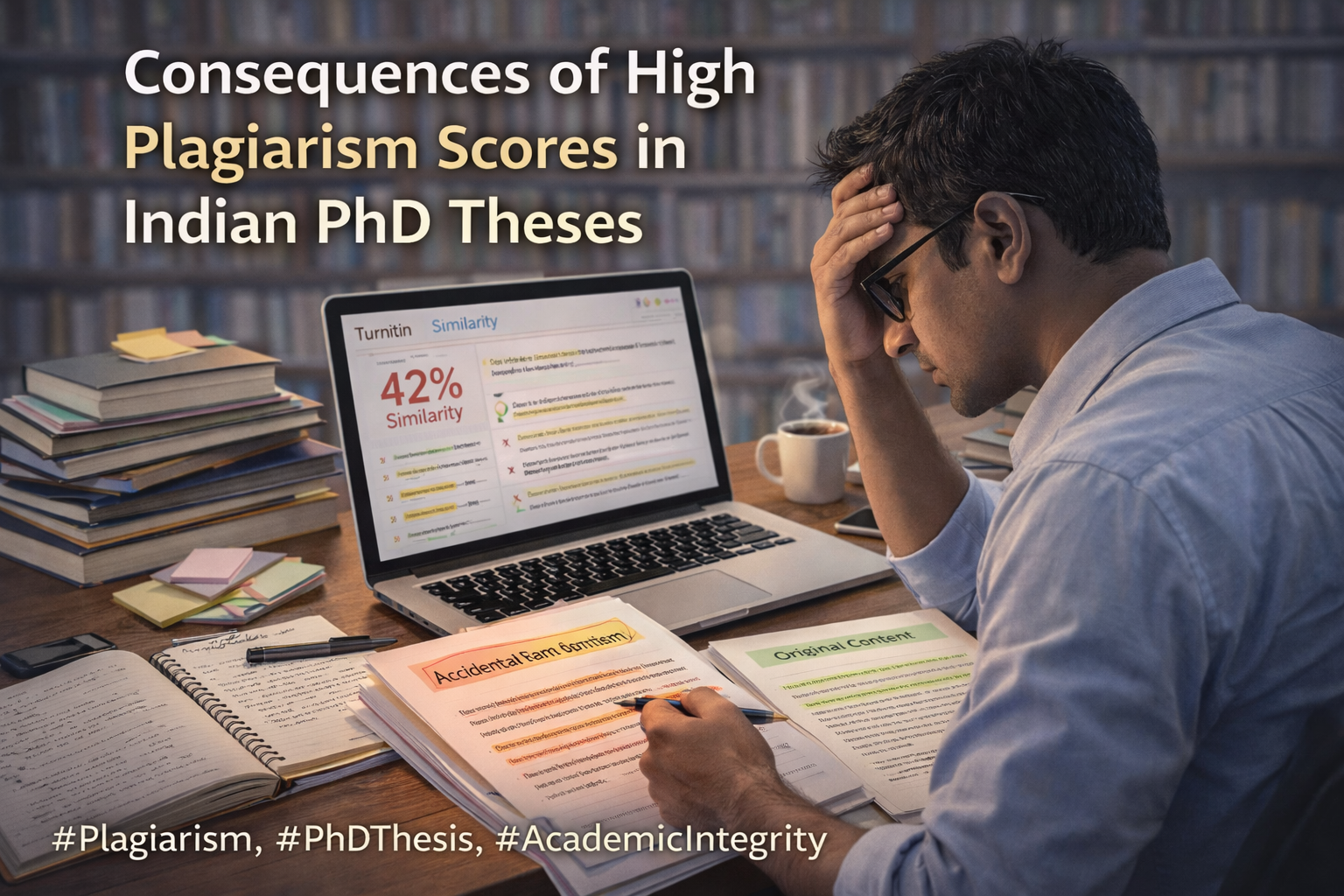
The fear of plagiarism has become a constant shadow over the Indian PhD journey. With universities now mandating similarity reports and many scholars being flagged for unintentional overlap, the consequences of a high plagiarism score are no longer just academic — they are personal, professional, and reputational.
For Indian PhD candidates, especially those in private or interdisciplinary universities, the challenge is compounded by language struggles, unclear writing norms, and lack of editorial guidance. Many are first-generation scholars, mid-career professionals, or working in English as a second language. Despite sincere effort, their thesis drafts sometimes trigger high similarity percentages. What follows can be stressful and, in some cases, damaging.
Understanding what actually happens when your plagiarism score is high — and how Indian universities interpret and act on it — is crucial for every scholar aiming to complete their doctorate with integrity.
What Counts as a High Plagiarism Score in India?
Across Indian universities, the University Grants Commission (UGC) guidelines have prompted a move toward strict scrutiny of PhD theses. While rules may vary slightly by institution, most follow this broad structure:
- Below 10%: Considered safe and acceptable
- 10–30%: Revision usually required; not considered misconduct but flagged for improvement
- Above 30%: Treated as academic concern; may delay submission or require formal justification
- Above 40%: Often viewed as academic dishonesty; can lead to rejection, penalties, or suspension
Private universities, while flexible in scheduling and format, are becoming increasingly firm on plagiarism norms due to their affiliation, credibility concerns, and AI-detection scrutiny. This means scholars cannot afford to ignore similarity scores or hope that reviewers will overlook them.
Importantly, the issue isn’t just about numbers. It’s about where the similarity appears. A 15% score made up of bibliographies and standard definitions is rarely questioned. But a 25% score made up of lifted literature review sections or methodology pages raises red flags.
Real-Life Consequences Indian Scholars Face
High similarity in a thesis is more than a technical glitch. It brings real consequences — some of which can disrupt a scholar’s timeline, confidence, and even career path.
1. Delay in Submission or Viva Approval
If your final draft triggers a high similarity score, your supervisor or university research cell may reject it for revision. This can push your viva date by months, especially in universities where administrative reviews are slow. For working professionals balancing jobs and study, this delay can affect leave planning and academic deadlines.
2. Required Resubmission with Explanation
You may be asked to resubmit your thesis along with a formal explanation of the plagiarised content. In some cases, students must provide proof of rewording or rework the entire chapter, especially if large sections are from online or AI sources. This adds emotional and academic pressure close to the end of the journey.
3. Academic Disciplinary Action
In rare but serious cases — especially when plagiarism appears to be intentional — universities may form a committee to investigate. This can lead to suspension from the program, cancellation of fellowship, or in extreme situations, termination of registration.
4. Long-Term Academic Stigma
Even if the thesis is finally accepted, a known incident of plagiarism (especially one that needed official inquiry) stays in memory. It may affect future recommendations, postdoctoral applications, or positions at academic institutions. In smaller research circles — common in India — such matters are quietly remembered.
5. Erosion of Personal Confidence
Perhaps the most understated consequence is psychological. Scholars who work hard but are still flagged for plagiarism often begin to doubt their capabilities. Some withdraw from writing altogether or rely heavily on consultants and editors out of fear — losing the opportunity to develop their voice.
Why Indian Scholars End Up with High Similarity — Without Realising
Most Indian PhD students flagged for plagiarism aren’t trying to cheat. Instead, they fall into certain patterns:
- Copying phrases from past theses as “reference writing”
- Using AI paraphrasers that retain structural similarity
- Citing sources in the bibliography but not in-text
- Translating material from regional languages without attribution
- Borrowing literature from previous assignments or proposals
These habits are not always deliberate — they often stem from unclear training or the assumption that certain sources “don’t count.” But detection tools don’t interpret intent. They simply highlight overlap.
That’s why scholars must be proactive, not reactive, in managing similarity in their thesis.
How to Avoid Plagiarism Trouble Before It Escalates
Dealing with plagiarism isn’t about finding shortcuts. It’s about developing writing habits that reflect understanding. Here are some culturally and academically grounded practices for Indian researchers:
- Write notes in your own words, not by copying chunks from journals
- Use citation tools like Zotero to manage sources carefully
- Avoid pasting previous seminar papers into your thesis — even if they’re yours
- Get your similarity report before official submission and revise based on that
- Consult a human academic editor, especially if English is not your first writing language
Most importantly, don’t panic if your draft is flagged. The goal of plagiarism detection is not to punish — it’s to push scholars toward better academic habits.
Conclusion
A high plagiarism score in a PhD thesis doesn’t always mean fraud — but in Indian universities, it always means attention. Whether you’re writing in English for the first time or returning to research after years, the pressure to “sound academic” can lead to accidental overlap. But the consequences — from delays to disciplinary action — are too serious to ignore.
What matters is not just fixing a high score, but understanding how it happened. When you revise your thesis with intention, transparency, and ethical care, the result isn’t just a better report. It’s a body of work you can truly stand by — and that’s what Indian research needs more of.