Introduction
With plagiarism checks now a mandatory step in thesis submission, many PhD scholars in India—especially those in private universities—wonder whether free plagiarism tools are enough, or if investing in a paid tool is worth it. While both options aim to identify copied content, the accuracy, features, and reliability can differ significantly. Understanding these differences helps scholars make informed choices and avoid costly mistakes during thesis evaluation.
Free Plagiarism Tools – Convenient but Limited
Free plagiarism checkers are widely available and can be used without subscription or institutional access. Tools like SmallSEOTools, PlagiarismDetector.net, or Quetext offer quick scans and highlight copied sentences from online sources.
However, free tools generally have limitations:
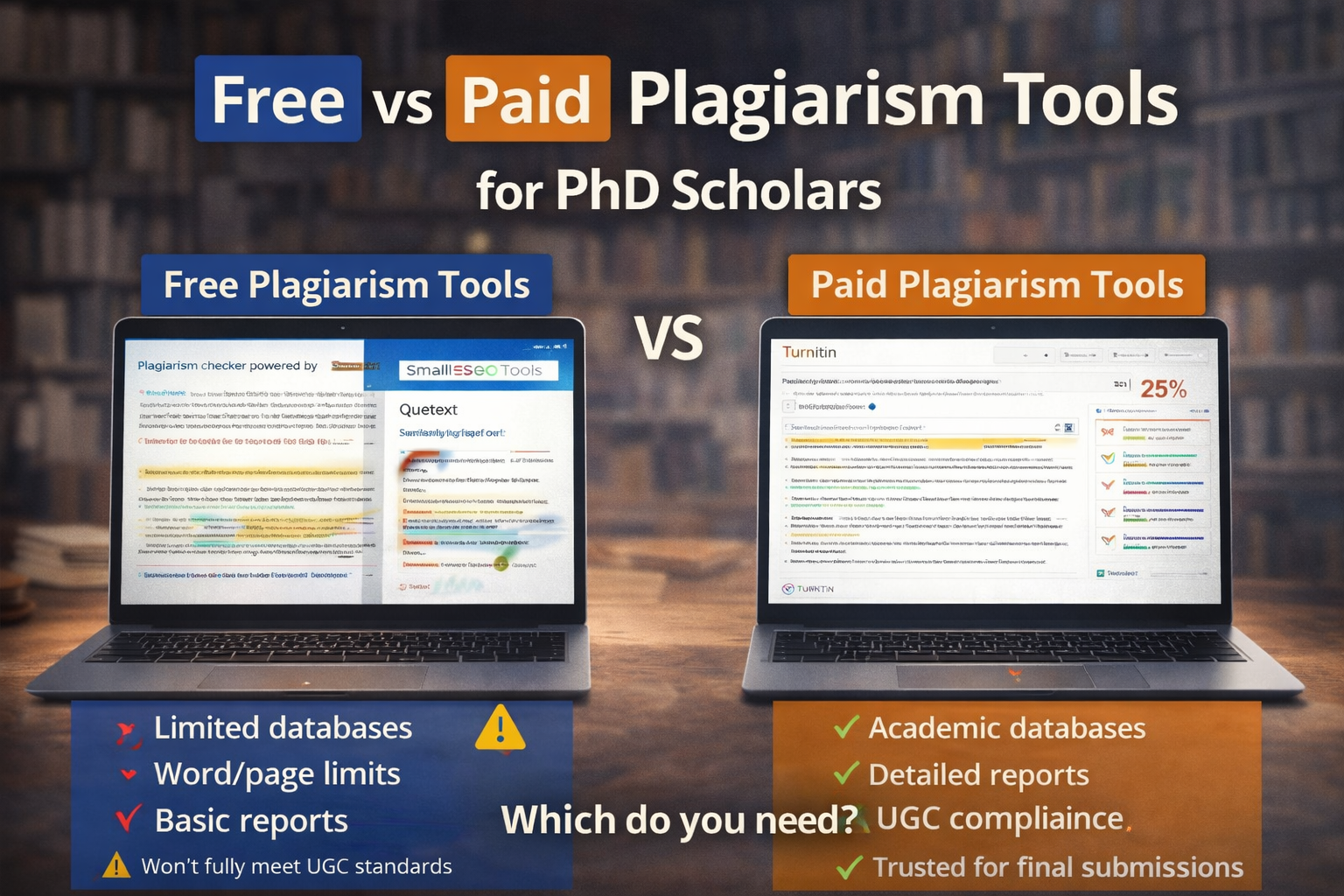
- They mostly compare text against publicly available web content, missing academic journals and subscription-based databases.
- Many have word or page limits, forcing scholars to check their thesis in parts.
- Reports may be less detailed, sometimes giving only a percentage without context.
For early draft checks or casual content writing, these tools are helpful, but for serious academic work, they often fall short.
Paid Plagiarism Tools – Comprehensive and Reliable
Paid tools like Turnitin, Urkund (Ouriginal), iThenticate, and Grammarly Premium provide access to vast academic databases, published research, and previous student submissions. They generate detailed similarity reports with highlighted matches, sources, and citation analysis.
The key advantages of paid tools include:
- Higher accuracy due to broader database coverage.
- Detailed reports that help identify and fix problem areas.
- Compliance with UGC guidelines in India (especially Turnitin and Urkund).
These tools are often accessible through university subscriptions, meaning scholars may not need to pay individually.
When Free Tools May Still Be Useful
Free plagiarism checkers can still play a role in a scholar’s workflow. They are good for:
- Quick checks while drafting.
- Testing specific sections before integrating them into the thesis.
- Early detection of content that might require rephrasing.
However, they should not be the sole method for checking a final thesis before submission.
Cost vs. Value for PhD Scholars
While free tools save money, paid tools save time, reduce risk, and ensure compliance with academic standards. For a PhD scholar, especially in a private university where thesis rejection can mean delays and additional fees, the investment in a paid plagiarism checker—or making full use of the university’s licensed tools—offers better long-term value.
Conclusion
The choice between free and paid plagiarism tools depends on the stage of writing and the stakes involved. Free tools are fine for early drafts, but for final submission, paid tools like Turnitin or Urkund are essential to meet UGC standards and protect research integrity. For Indian PhD scholars, especially in private universities, the best approach is to use free tools for early self-checks and rely on paid, university-approved tools for the final similarity report.