
Introduction
Plagiarism is a daunting challenge for many Indian PhD scholars, particularly those studying in private universities where resources and academic support may be limited. A high similarity score on plagiarism detection software like Turnitin can delay thesis submission, cause rejection, or even lead to serious academic penalties. It is not uncommon for initial drafts to show alarming similarity percentages—sometimes as high as 45% or more. In such situations, many scholars consider paid plagiarism help to reduce their similarity score to acceptable levels, often aiming for under 10%. This blog explores how paid plagiarism services have helped researchers achieve real results, turning high similarity drafts into nearly plagiarism-free documents, and what that process entails.
The Reality of High Similarity Scores
High similarity percentages in theses can stem from various factors. Literature reviews, for instance, naturally contain overlapping text due to citing established work. Methodology sections often use standardized language, contributing to similarity. Additionally, improper paraphrasing, missing citations, and overreliance on direct quotes inflate similarity scores. For many Indian PhD candidates, unfamiliarity with citation norms and academic writing conventions further compounds these issues.
In private universities, where supervision and academic support can be uneven, scholars may struggle more with these aspects. Receiving a similarity score as high as 45% can be discouraging and intimidating, often raising questions about the originality of their research and the feasibility of revision.
How Paid Plagiarism Help Works
Paid plagiarism help is designed to guide scholars through the complex process of reducing similarity scores while maintaining academic integrity. These services do not simply “erase” plagiarism but engage in ethical rewriting, citation correction, and document editing.
The process typically begins with a detailed plagiarism check using tools such as Turnitin or iThenticate to identify the exact sources and sections contributing to the high similarity. Professionals then analyze whether the flagged content involves improper citations, verbatim copying, or common academic phrases.
Subsequent steps involve rewriting the flagged sections with care to preserve the original meaning and technical accuracy. This rewriting is done ethically, focusing on paraphrasing and restructuring sentences rather than mere word substitution, which can lead to poor-quality text or still be detected by plagiarism tools.
Paid experts also assist with correcting and adding citations, ensuring every borrowed idea or direct quote is properly acknowledged according to the required citation style. Additionally, language polishing and formatting improvements make the thesis clearer and more professional, further reducing accidental similarity flags.
A Realistic Transformation: From 45% to 9%
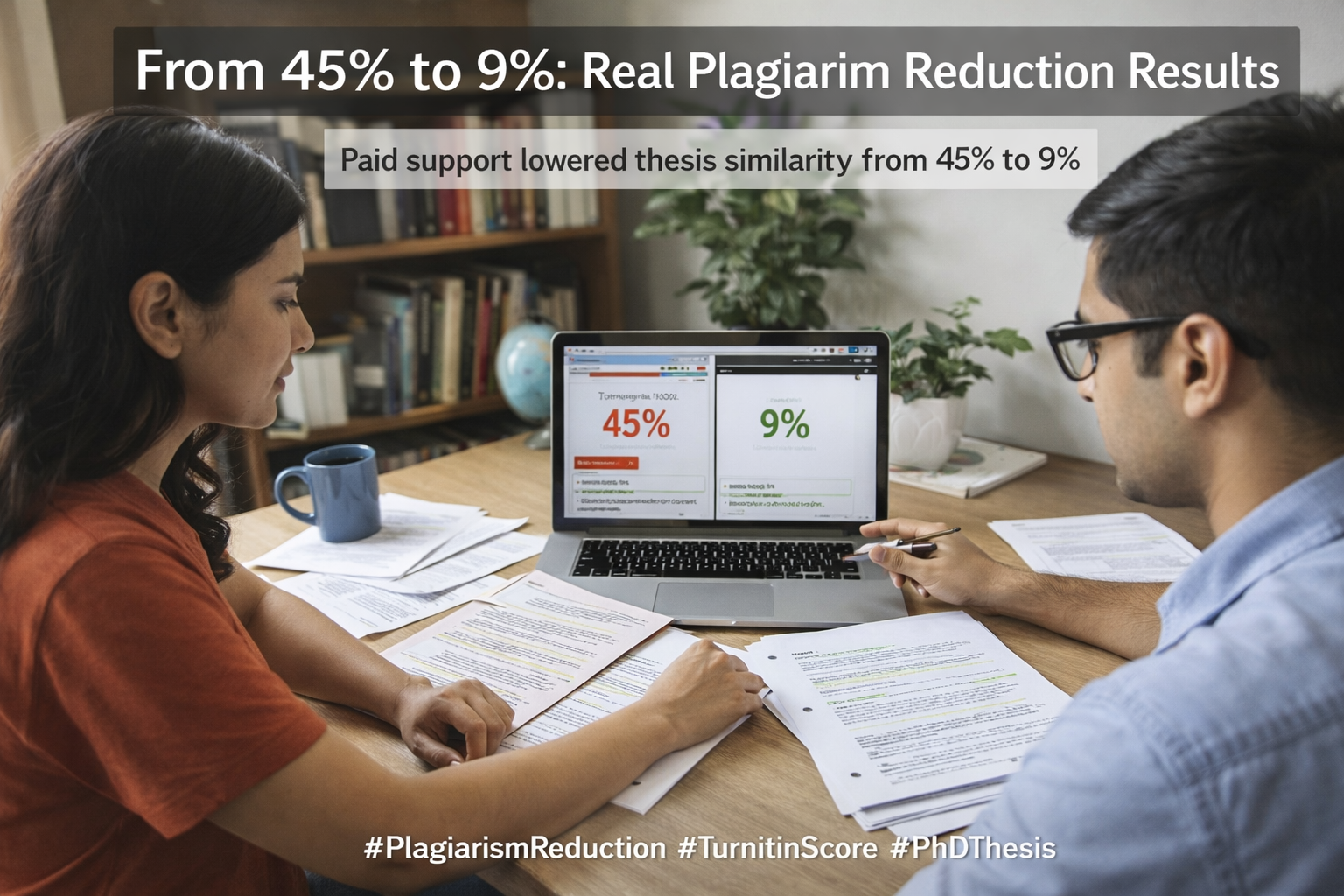
Several Indian PhD scholars have shared experiences of starting with drafts showing similarity scores around 45%. These scores, if left unaddressed, would be grounds for rejection or extensive revision by university committees.
Through paid plagiarism help, their documents underwent thorough revision. The experts rewrote overlapping text with precise paraphrasing, enhanced citation accuracy, and improved academic writing standards. After multiple rounds of editing and Turnitin checks, the similarity score dropped significantly—sometimes to as low as 9%. This percentage is generally accepted by most universities, including private institutions, and allows scholars to proceed with confidence towards thesis submission.
This kind of transformation is not instantaneous. It requires time, cooperation from the scholar to clarify technical content, and a professional team familiar with the nuances of Indian academic regulations. The process involves several iterations to strike the balance between originality and scholarly rigor.
Benefits Beyond Similarity Reduction
Reducing plagiarism similarity scores through paid services offers more than just a numerical advantage. The process often results in improved writing quality, better clarity of argument, and more accurate citations, all of which contribute to a stronger thesis overall. For many Indian scholars, especially those writing in English as a second language, this help enhances their ability to communicate research effectively.
Moreover, these services provide learning opportunities. By reviewing the revisions and understanding the corrections, scholars can improve their academic writing skills and avoid plagiarism pitfalls in future work.
Ethical Considerations
While paid plagiarism help can be transformative, it must be used responsibly. Ethical providers focus on helping scholars produce original work rather than masking plagiarism through superficial rewriting. Indian academic policies emphasize the scholar’s responsibility to maintain integrity, and universities are increasingly vigilant about detecting unethical practices.
Scholars must choose reputable services with clear processes, confidentiality agreements, and realistic promises. Any service guaranteeing zero plagiarism outright or promising to “erase” plagiarism completely without substantive revision should be avoided.
Challenges and Costs
One challenge Indian scholars face is the cost of high-quality plagiarism help. Comprehensive services involving detailed rewriting, citation correction, and multiple revisions can be expensive. Budget constraints can limit access, especially for students in less-funded private universities.
Additionally, the turnaround time for thorough plagiarism correction may extend over weeks, which can be stressful for scholars with tight deadlines. Proper planning and early engagement with paid services can mitigate these issues.
Conclusion
Transforming a thesis similarity score from 45% to 9% is an achievable and real outcome for many Indian PhD scholars who utilize paid plagiarism help wisely. This process involves ethical rewriting, citation improvement, and academic editing, all aimed at preserving originality and meeting university standards. While the journey requires time, investment, and careful selection of trustworthy providers, the benefits extend beyond just lowering similarity scores—they enhance the quality and credibility of the research itself.
For scholars in private universities facing the challenge of high similarity scores, paid plagiarism help can be a valuable partner in overcoming barriers to successful thesis submission. Combining professional support with your own learning and commitment to academic integrity will ultimately ensure that your doctoral work stands strong and respected.