
Introduction
Over the past decade, India has witnessed a quiet transformation in the way research scholars seek help with their PhD journeys. What was once limited to peer discussions or occasional guidance from seniors has now expanded into a growing network of academic support startups. These are not traditional coaching centres or fly-by-night freelancers, but structured services that focus specifically on research writing, data support, formatting, and scholar mentoring. For many Indian PhD students — especially those in private universities or mid-career academic programs — this new ecosystem has become both a relief and a necessity.
The rise of academic support startups for PhD thesis services reflects not just market demand, but also a changing reality of higher education. With flexible doctoral pathways, part-time scholars, and increased pressure to publish, many researchers find themselves in need of organised, ethical, and time-bound assistance. Understanding why these startups are gaining ground — and how scholars are using them — offers insight into the evolving nature of academic support in India.
Why Scholars Are Turning to Structured Services
PhD research in India is no longer confined to full-time scholars with departmental access and daily academic engagement. Today, many doctoral candidates are working professionals, parents, entrepreneurs, or returning students who’ve been out of formal academia for years. Private universities have opened doors for such learners, but they often lack the infrastructure to provide consistent thesis-stage mentorship. The result is a growing gap between institutional expectations and real-time academic support.
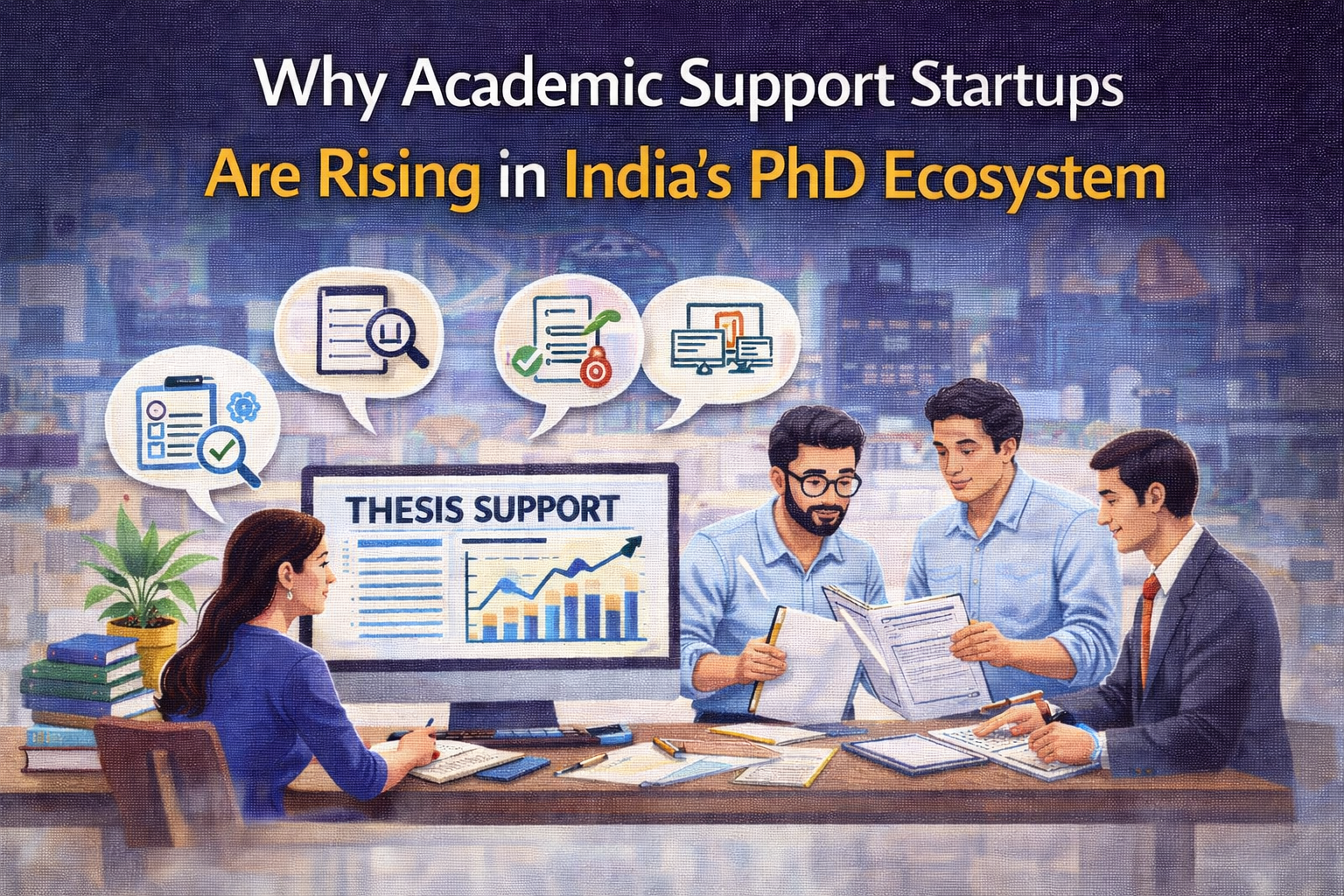
Startups in the academic space have stepped in to bridge this gap. Instead of offering one-size-fits-all packages, many now provide modular support — proposal review, chapter feedback, qualitative data analysis, SPSS training, plagiarism checks, and even mock viva sessions. What makes them different from informal helpers is their process: structured timelines, documented communication, and usually, a small team of domain experts. This organised approach is especially useful for scholars who need professional help without crossing ethical boundaries.
The Shift from Freelancers to Startups
A few years ago, students seeking help often had to rely on individual freelancers found through word of mouth or social media. While some of them were experienced and helpful, others operated without accountability — delivering late work, plagiarised content, or charging hidden fees. The lack of professionalism left many scholars frustrated, and sometimes in trouble with their institutions.
Academic startups emerged in response to this inconsistency. They brought not just better project management but also more visibility into the process. For example, a PhD scholar in Hyderabad shared how a startup assigned a specific reviewer for each chapter and provided feedback in stages. She was not handed a ready-made thesis — instead, she was engaged in her own work through structured guidance. The clarity of process helped her trust the service, and more importantly, trust herself to complete the thesis with support rather than dependence.
Navigating the Ethics of Academic Help
One of the key reasons these startups have found acceptance among Indian scholars is their stated commitment to ethical support. Many advertise “no ghostwriting,” “zero plagiarism,” or “chapter-wise coaching only.” While not every service lives up to these claims, the shift in tone is telling. It reflects a growing awareness among both providers and users that PhD work must remain the scholar’s own — and that academic support should only guide, not replace.
This is especially relevant in Indian universities, where plagiarism detection has become more rigorous, and viva committees often quiz scholars in depth to ensure they’ve authored their work. Startups that focus on training — such as helping students use citation tools, understand research design, or polish their language — are more likely to be respected by both scholars and guides. Over time, this approach not only protects academic integrity but builds a scholar’s own confidence.
Affordability, Accessibility, and Language Sensitivity
For many Indian researchers, especially from tier-2 and tier-3 cities, language remains a barrier. They may have strong ideas and field experience but struggle with academic English, citation norms, or journal formatting. Academic startups that recognise this gap are offering support in regional languages, bilingual communication, and translator services for certain chapters — not to write for the scholar, but to help them express more clearly.
Affordability is also shaping how these services are used. While full thesis outsourcing remains expensive and risky, many startups offer pay-per-service or pay-per-chapter models. This flexibility allows even low-income or self-funded scholars to access specific help without committing to large packages. A PhD candidate from Assam, for instance, shared that he could not afford editorial help for the entire thesis, but managed to get plagiarism checking, reference corrections, and final formatting through small, affordable segments.
What This Trend Says About the Future of Research Support
The growing demand for academic support startups does not mean Indian scholars are less capable. It means they are navigating a more complex research environment — one where university systems may lag behind in providing timely, detailed, and personalised thesis-stage support. These startups have simply formalised what students always needed: timely feedback, academic companionship, and a sense of structure.
Importantly, the best of these startups do not try to replace a supervisor or a scholar’s own responsibility. They operate in the background, offering scaffolding where institutional systems fall short. For Indian academia to mature, both universities and independent services will need to coexist — with clear boundaries and mutual respect.
Conclusion
In an era where PhD research is no longer limited to a privileged few, support systems must evolve too. The rise of academic support startups is not just a business trend — it’s a response to the real needs of Indian researchers trying to balance rigour with reality. These startups don’t offer shortcuts; they offer structure. They don’t undermine the scholar’s role; they help preserve it.
For many scholars, especially those outside traditional academic circles, such support may be the reason they finish their work with integrity — and with pride. And that makes these startups not just service providers, but quiet partners in India’s expanding research story.