
Introduction
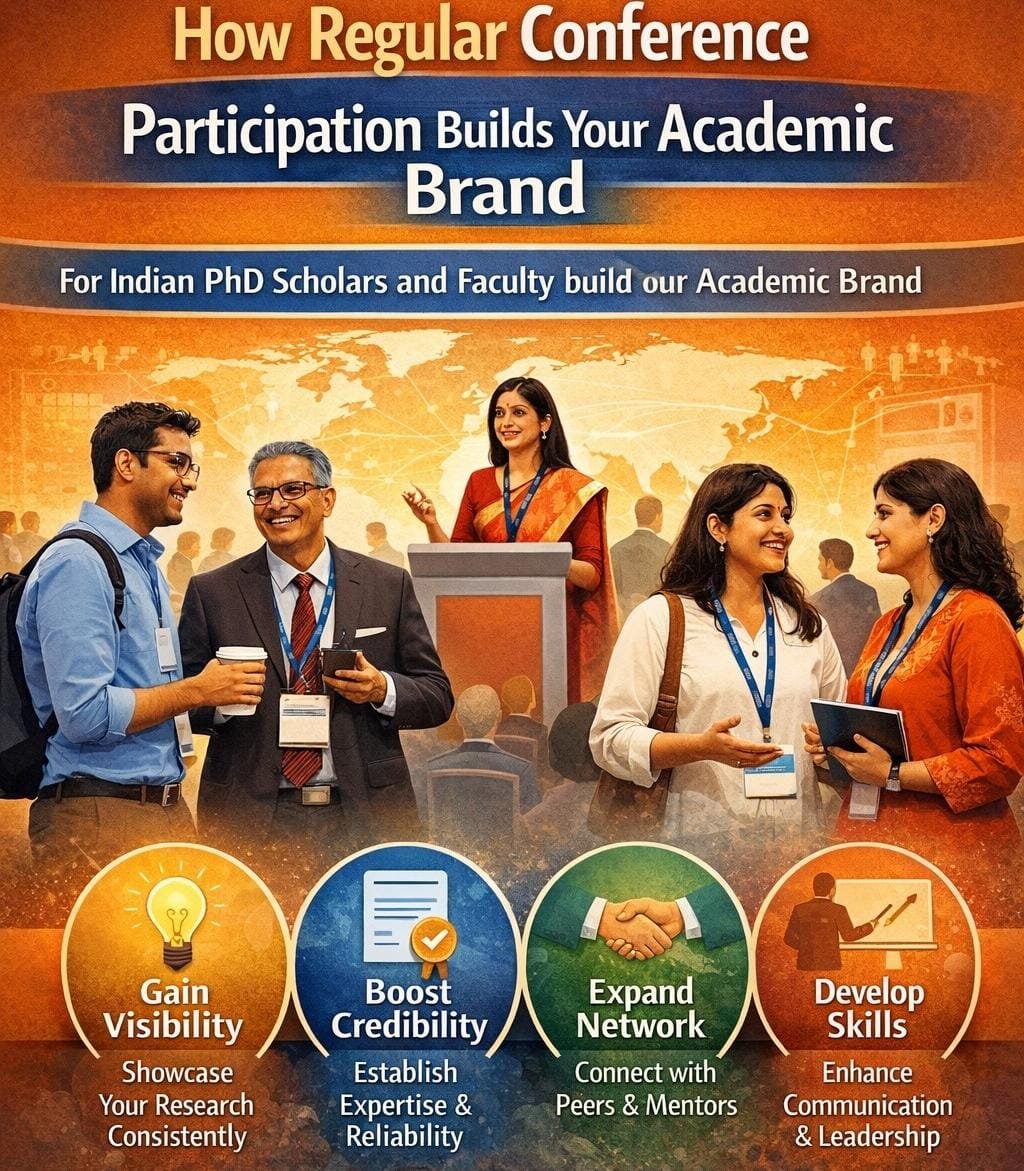
For Indian PhD scholars and faculty, establishing an academic brand is increasingly important. A strong academic brand signals expertise, credibility, and consistent contribution to the field. One of the most effective ways to build this brand is through regular conference participation. Attending and presenting at conferences allows researchers to showcase their work, connect with peers, and demonstrate thought leadership. Understanding how consistent engagement contributes to professional identity can help scholars make strategic decisions about their research dissemination and career development.
Consistency Signals Commitment
Regular conference participation communicates dedication to one’s research area. In India, where young faculty or PhD students may struggle to gain recognition outside their institution, repeated engagement establishes a visible presence. Each conference attended adds to a scholar’s track record, showing that they are actively contributing to the academic community. Whether presenting a paper, chairing a session, or participating in discussions, consistent involvement demonstrates reliability and professionalism, key components of a recognizable academic brand.
Consistency also builds familiarity among peers. Scholars who are repeatedly present at conferences become known within their field, making it easier to initiate collaborations, secure invitations for talks, or participate in joint research projects. Over time, this recognition reinforces credibility, which is particularly valuable for researchers in private universities or smaller institutions seeking broader visibility.
Visibility and Professional Identity
Participating in conferences regularly enhances visibility. Presenting research allows scholars to communicate findings directly to a relevant audience, while attending sessions enables observation of emerging trends and methodologies. For Indian PhD students and faculty, these experiences help refine research approaches and align work with global academic standards. A visible, consistent presence at conferences signals expertise and engagement, building a professional identity that extends beyond publications or institutional affiliation.
Moreover, conference participation demonstrates active engagement with the scholarly community. By asking questions, providing insights, or collaborating on discussions, scholars showcase analytical thinking and critical evaluation skills. Such interactions contribute to a reputation as a thoughtful, engaged, and credible researcher, which strengthens their academic brand.
Networking and Collaboration
Conferences are also platforms for building meaningful networks. Regular attendance allows scholars to connect with peers, mentors, and senior researchers, creating opportunities for collaboration and knowledge exchange. In India, where networking plays a significant role in academic growth, repeated conference engagement helps scholars expand their professional circle, leading to co-authored papers, joint projects, or participation in workshops and panels. These relationships reinforce a scholar’s academic presence and contribute to long-term professional development.
Skill Development and Thought Leadership
Regular conference participation develops communication, presentation, and interpersonal skills. Scholars learn to convey complex research concisely, respond effectively to critique, and engage with diverse audiences. Over time, these skills position researchers as thought leaders, enhancing their brand within the academic community. Observing senior scholars, participating in discussions, and integrating feedback also help refine one’s professional voice and research narrative.
Strategic Approach to Conferences
Building an academic brand requires strategy. Scholars should select conferences aligned with their research interests, prioritize quality over quantity, and balance presentation with active listening. Online and offline events can complement each other, providing exposure to both local and international communities. Thoughtful participation ensures that conference engagement strengthens professional identity rather than being a mere formality.
Conclusion
Regular conference participation is a powerful tool for building a strong academic brand. For Indian PhD scholars and faculty, it enhances visibility, credibility, and professional identity while providing opportunities for collaboration, skill development, and thought leadership. By engaging consistently and strategically in conferences, researchers position themselves as active contributors to their field, creating a lasting academic presence that supports both career growth and scholarly impact. Conferences, therefore, are not just events—they are platforms for shaping and sustaining one’s professional brand.