
Introduction
PhD scholars across India, particularly those enrolled in private universities, face the dual challenge of producing original research while navigating strict plagiarism checks. Turnitin has become the go-to platform for similarity detection, but many students wonder how best to combine Turnitin and editing tools to ensure safer, plagiarism-free results. The process is not simply about passing a software test; it requires a nuanced approach that blends technology with the scholar’s own understanding and writing style.
Balancing doctoral admission in India’s private university sector with professional or family responsibilities can make managing this process more complex. Many candidates find themselves relying heavily on editing software like Grammarly or QuillBot alongside Turnitin reports. Understanding how these tools complement each other—and where their limits lie—is key to maintaining both academic integrity and confidence in one’s thesis submission.
Using Turnitin as a Diagnostic Tool
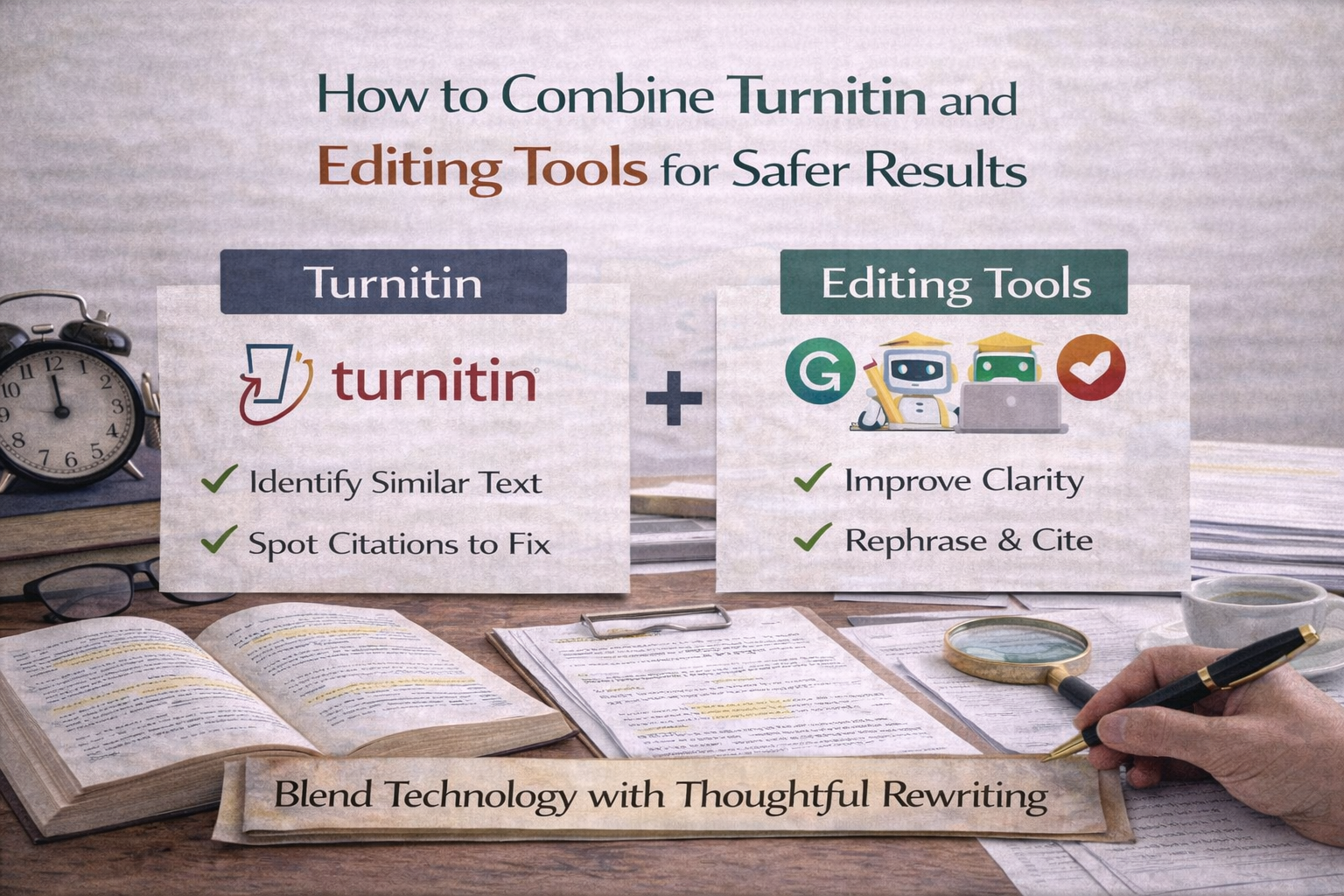
Turnitin’s primary role is to identify sections of a thesis that match published sources or student papers. For Indian PhD scholars, especially those new to research writing, the detailed similarity reports can be overwhelming. Rather than viewing Turnitin as a final judge, it is more productive to treat it as a diagnostic tool that highlights where rewriting or additional citation is needed.
After receiving a Turnitin report, scholars can use editing tools to improve sentence clarity, grammar, and structure. For example, Grammarly can help correct complex sentences that might have been copied too closely, making the phrasing more original and easier to read. However, editing tools should not be used blindly. They work best when scholars understand the context of the flagged content and actively rewrite it to reflect their own voice.
Integrating Editing Tools with Manual Rewriting
Automated editing tools can assist in polishing the text, but they are not a substitute for thorough manual rewriting. For instance, QuillBot’s paraphrasing features can offer alternative phrasings, but these must be carefully reviewed to ensure the meaning remains accurate and the academic tone is preserved. This is especially important in disciplines like science or law, where precision is paramount.
In private universities, where doctoral candidates often juggle work and study, time management becomes crucial. Allocating dedicated periods to review Turnitin feedback alongside editing suggestions can lead to more effective rewriting. Scholars benefit when they first focus on understanding the original source’s ideas and then express them in their own words, using editing tools only to refine language and flow.
It is also helpful to run multiple Turnitin checks at different stages—after initial rewriting and again after editing—to catch any new similarities introduced during the polishing phase. This layered approach reduces the risk of last-minute surprises and strengthens the overall quality of the thesis.
Cultural and Institutional Sensitivities
Indian academia places a strong emphasis on originality and proper citation, but it also recognises the diverse backgrounds of doctoral candidates. Many scholars come from regions or professions where formal academic writing is a new experience. Editing tools can support this transition, but supervisors and examiners expect to see evidence of the candidate’s own intellectual contribution.
The interplay between Turnitin and editing software also reflects this expectation. While Turnitin ensures that copied text is identified, editing tools help candidates present their ideas clearly and coherently. However, overdependence on software risks diluting the scholar’s voice or introducing phrasing that feels generic or mechanical. Awareness of these risks is essential in maintaining the authenticity that Indian universities value.
Conclusion
Combining Turnitin and editing tools thoughtfully offers Indian PhD scholars a safer path to managing plagiarism and refining their writing. Turnitin serves as an early warning system highlighting areas for revision, while editing tools support clarity and originality in expression. The most successful approach blends these technologies with manual rewriting grounded in the scholar’s understanding and voice. In private university contexts, where flexibility meets rigorous standards, this balanced method ensures that theses not only pass similarity checks but also represent genuine academic effort and insight.