
Introduction
Plagiarism is a serious concern in Indian academia — and for good reason. With the widespread use of detection tools like Turnitin and Urkund, universities are becoming increasingly strict about what constitutes original work. But what many PhD scholars in India face is not always intentional dishonesty. In fact, most cases flagged in thesis reviews are the result of accidental plagiarism.
For Indian scholars — especially those coming from regional language backgrounds, interdisciplinary programs, or mid-career professional routes — writing in academic English can be challenging. Ideas are understood, but rephrasing them in formal language, using correct citations, and avoiding structural overlaps often becomes difficult. You might feel confident about your work, only to receive a report showing 25% similarity — and not fully understand what went wrong.
Accidental plagiarism is not a failure of intent. It is usually a gap in training, awareness, or support. This blog helps you understand what causes it, and more importantly, how to correct it before your final submission.
Why Accidental Plagiarism Happens — Especially in the Indian Context
The structure of doctoral education in many Indian universities, particularly private institutions, often lacks intensive training in academic writing. Scholars are expected to learn citation styles, literature review techniques, and paraphrasing norms on their own — usually after coursework is completed.
Here’s why accidental plagiarism is more common than people think:
- Language gaps: Translating understanding into academic English isn’t always smooth. Scholars may reuse phrases they’ve seen in books or articles because they don’t know how else to express the same idea.
- Over-reliance on source material: During the literature review phase, many students take notes directly from sources and then forget which lines were copied and which were their own interpretation.
- Misuse of paraphrasing tools: Some scholars run content through online “rewording” software, believing that it makes the writing original. But AI paraphrasers often retain structure and phrasing that software can still detect.
- Improper citation habits: Some students cite the source in their bibliography, but forget to include in-text citations. Others quote content without quotation marks, thinking the citation alone is enough.
- Self-plagiarism: Reusing sections from conference papers, MPhil dissertations, or research proposals without mention — even if you wrote them — is still considered plagiarism if not properly referenced.
All of these are honest mistakes, but they still raise red flags during review. And they can affect your reputation, delay your viva, or result in rework just weeks before your planned submission.
Steps to Handle Accidental Plagiarism Ethically and Calmly
If your thesis draft has been flagged for plagiarism — don’t panic. Indian universities are slowly recognising the difference between intentional misconduct and unintentional overlap. What matters most is how you respond.
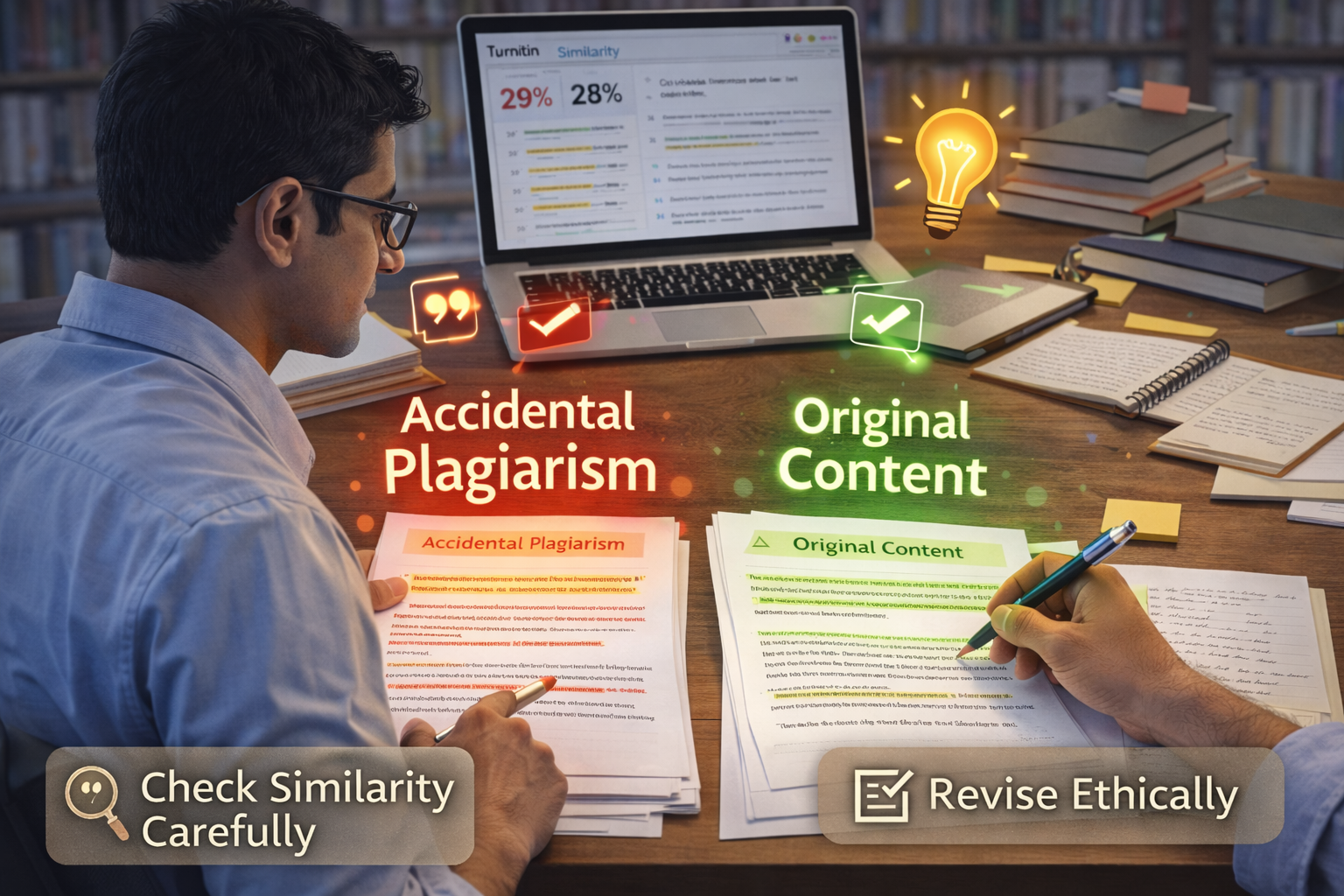
1. Understand the Similarity Report in Detail
Don’t just look at the percentage. Look at which parts of your thesis have been highlighted. Is it mostly definitions? Literature review summaries? Methods? Or large copied sections from a single source?
Flagged matches to standard phrases, university templates, or bibliography sections are usually ignored. But blocks of copied text without quotation or citation are what need addressing.
2. Revise with Meaning, Not Just Language
If a section is similar because it repeats another author’s idea, go back to the original. Ask yourself: what is the main idea here? Then write it in your own structure — not just with synonyms, but in a way that reflects your understanding. For example, instead of writing:
“Social capital is the networks of relationships among people who live and work in a particular society,”
you could say:
“In sociology, the term social capital describes how personal and professional networks influence societal functioning and access to resources.”
Same idea, different framing — and no risk of plagiarism.
3. Use Tools with Care
Turnitin reports may not always distinguish between your own writing and paraphrased segments. Don’t rely only on software. After revising, ask a human editor or academic peer to review the sections again — especially if English isn’t your first language.
4. Add or Correct Citations Wherever Needed
One of the easiest ways to reduce accidental plagiarism is by placing citations at the right points. If you’re paraphrasing an author, you must include their name and year in the text. If quoting directly, you need quotation marks and the citation.
Many Indian scholars cite everything in the bibliography but forget in-text references — which leads to avoidable suspicion.
5. Keep Track of Your Notes and Sources
Moving forward, maintain a reference log. Use citation managers like Zotero or Mendeley. Tag each section of your thesis with the source it was drawn from. This prevents mix-ups and helps with revisions later.
6. Inform Your Guide or Committee if Needed
If your similarity report is high and you’ve made sincere revisions, don’t hide it. Share the before-and-after with your supervisor. Most guides appreciate honesty, especially if you’re taking steps to correct the issue on your own.
Conclusion
Accidental plagiarism doesn’t mean you’re dishonest. It means you’re still learning the craft of academic writing — something many Indian PhD scholars have to do without structured guidance. The key is to treat the issue seriously, not fearfully.
By reviewing your content, understanding how citation and paraphrasing truly work, and seeking human editorial support when needed, you can turn a flagged draft into a strong and ethical thesis. A few careful revisions now can save months of rework later — and build your confidence as a researcher who respects not just knowledge, but how it’s presented.
In the end, your thesis should be a reflection of your learning, not your loopholes. And fixing accidental plagiarism is just one part of that honest journey.