
Introduction
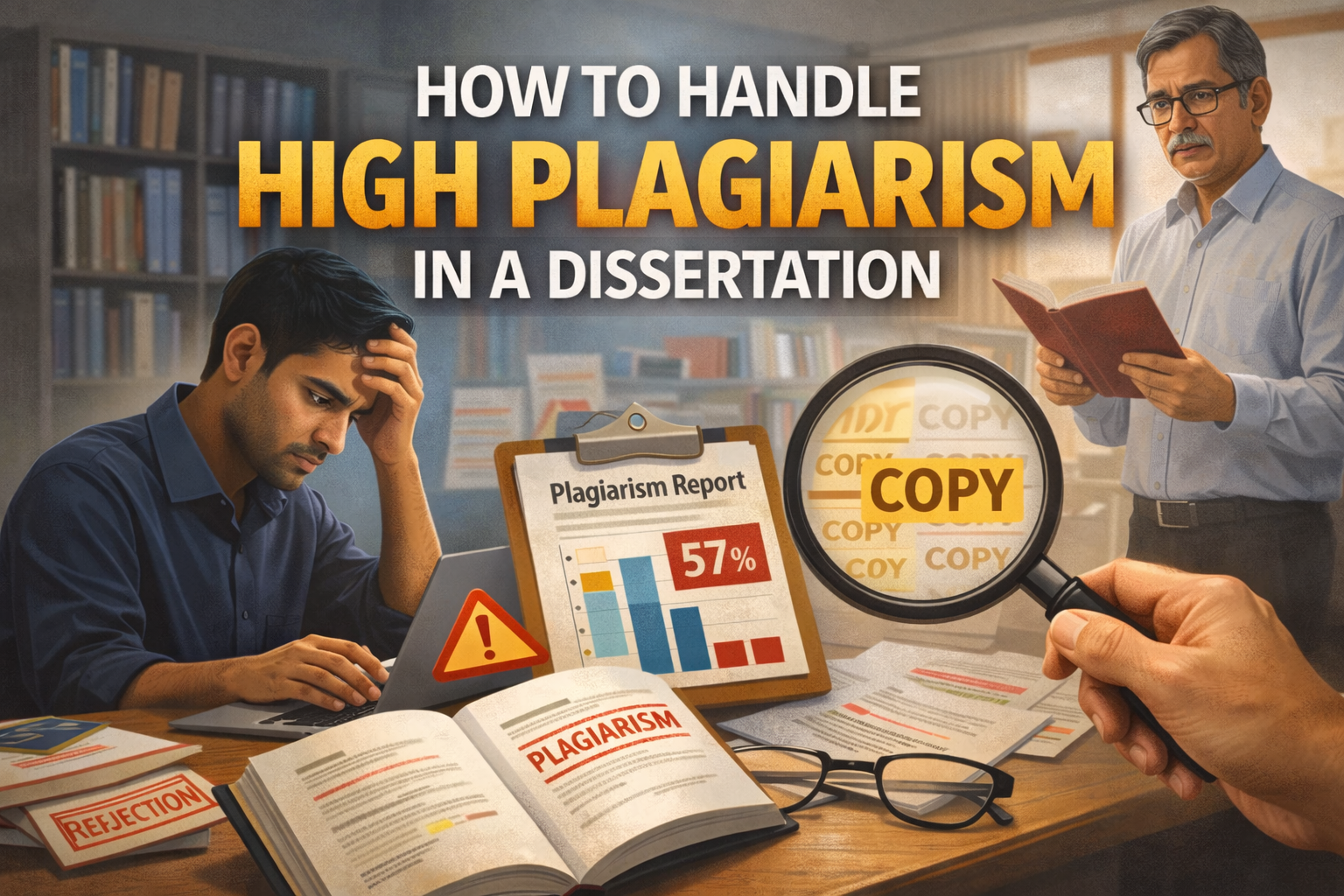
Discovering that your dissertation has a high level of plagiarism can feel discouraging, especially within Indian academia where strict policies are enforced. However, it is not the end of your research journey. Understanding what caused the high similarity score and taking deliberate corrective actions can help you recover and refine your work.
This blog outlines how to manage and reduce excessive plagiarism without compromising your academic integrity.
What a High Similarity Score Indicates
A high similarity score, often above 40%, doesn’t always mean you’ve copied content intentionally. It could arise from:
- Heavy use of quotations
- Improper paraphrasing
- Missing or incorrect citations
- Reusing your own previous work (self-plagiarism)
- Commonly used technical terms or definitions
Understanding the context behind the highlighted sections is essential before making edits.
Review the Similarity Report
Begin by carefully reading the similarity report. Separate the problematic areas from acceptable overlaps, such as:
- Properly cited quotations
- Bibliographic references
- Common academic phrases
Highlight sections that need rewriting or citation adjustments.
Improve Paraphrasing and Citation
Avoid the temptation to just change words. Instead, read the source material thoroughly, understand the idea, and rewrite it in your own academic language. Always provide proper citations, even when paraphrasing.
Minimise Quotations and Summarise Instead
Too many direct quotations can raise your similarity score. Instead of quoting entire blocks of text, summarise the idea and cite the original source. This shows deeper understanding and reduces overlaps.
Address Missing or Incomplete Citations
Ensure that every idea, data point, or argument borrowed from a source is properly cited. Use citation management tools like Zotero, EndNote, or Mendeley to stay organised and accurate.
Handle Self-Plagiarism Properly
If you’ve reused your previously published work, make sure to cite it appropriately. Discuss this with your supervisor to understand your institution’s policies on self-plagiarism, which vary from one university to another.
Re-run Plagiarism Checks After Editing
After you’ve made substantial edits, generate a fresh plagiarism report. This helps ensure that the revised version meets your university’s standards before submission.
Know the Acceptable Limits
In Indian universities, plagiarism thresholds are usually governed by UGC guidelines:
- Less than 10% is considered ideal
- Between 10–40% generally requires corrections
- Anything above 40% is seen as serious and may lead to rejection
These thresholds may vary slightly depending on the institution and department. Always consult your research supervisor to be sure.
Seek Guidance From Faculty
Your supervisor is the best resource when you’re unsure about how to interpret or respond to a high similarity report. Don’t hesitate to ask for feedback or suggestions before submitting the final version.
Preventing High Plagiarism in the Future
- Begin writing early in your own words
- Maintain detailed notes and citations during research
- Regularly back up and organise your references
- Rely on multiple sources instead of one dominant text
- Focus on your original contribution and critical analysis
Conclusion
A high plagiarism score can be intimidating, but it is correctable with sincere effort and academic honesty. Taking the time to revise, cite, paraphrase, and consult experts will not only reduce similarity but also improve the overall quality of your dissertation.
Ethical research is not just about passing plagiarism software—it’s about respecting knowledge and contributing meaningfully to your field.