
Introduction
For many PhD candidates in India, paraphrasing is one of the most misunderstood aspects of thesis writing. The task is not just to “change words” but to fully re-express the meaning of a source in one’s own voice while maintaining accuracy. However, the pressure of similarity checks often turns paraphrasing into a game of avoiding plagiarism tools rather than a genuine act of academic engagement. Whether enrolled in a central institution or a private university catering to working professionals, scholars frequently ask how to reframe existing material so it passes plagiarism detection without distorting the content.
Doctoral admission in India now typically includes training sessions or workshops on research ethics, but these cannot cover every nuance of paraphrasing. The challenge lies in balancing three demands: maintaining academic integrity, meeting plagiarism thresholds, and keeping the writing style consistent. This makes paraphrasing not only a technical skill but also a matter of scholarly judgement.
Understanding What Tools Actually Detect
Plagiarism detection software used by Indian universities works by comparing text strings and sentence structures against a vast database of published material, online content, and previous submissions. These tools flag similarities in both wording and organisation, which means simply replacing a few words with synonyms will not work. If the sentence structure remains too close to the original, the similarity percentage may still be high.
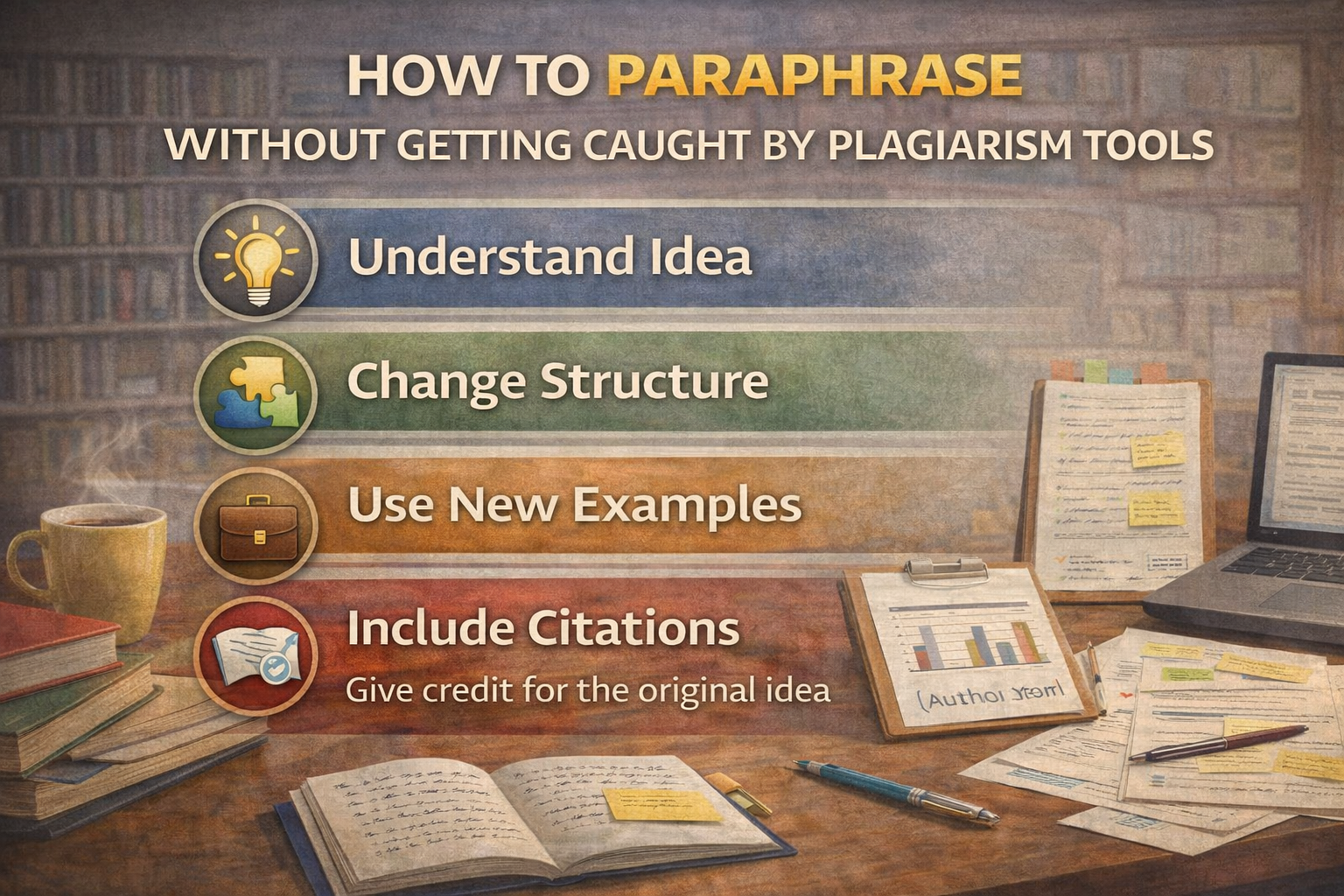
A successful paraphrase, therefore, begins with comprehension rather than substitution. For example, a PhD candidate in education might read a paragraph about teaching methodologies, pause to reflect on its meaning, and then rewrite it entirely in a way that fits the flow of their own thesis. This not only reduces the likelihood of detection but also deepens the scholar’s understanding of the material.
Paraphrasing as a Process of Ownership
The best paraphrasing comes from a position of ownership over the idea being expressed. This does not mean claiming credit for someone else’s research, but rather engaging with it so thoroughly that it becomes part of the scholar’s own academic reasoning. When the researcher understands the concept in depth, they can describe it naturally in their own words, using sentence structures and examples that reflect their personal style.
For instance, a management scholar might take a model described in an international research paper and restate it using an Indian business case they have observed. The terminology may remain technical, but the framing and examples will make it distinctly original. This approach both avoids plagiarism and ensures that the thesis resonates with the scholar’s intended audience.
Avoiding Mechanical Rewording
One common trap in plagiarism removal is mechanical rewording, often done through online paraphrasing tools. While these tools may produce quick results, they often generate awkward phrases, unnatural vocabulary, or shifts in meaning that weaken the thesis. More importantly, they can still produce text that is too similar in structure to the original, leading to detection by plagiarism software.
Mechanical rewording can also disrupt the writer’s voice, making different sections of the thesis sound inconsistent. This becomes especially noticeable to examiners in the Indian doctoral system, where the viva voce requires the candidate to defend the content orally. If certain sections sound unlike the candidate’s usual expression, it may raise questions about authorship or comprehension.
Balancing Paraphrasing with Citation
Even a well-executed paraphrase often still requires a citation. In academic writing, rephrasing someone else’s idea without attribution can still count as plagiarism, because the originality lies in the idea itself, not just in the words used to express it. This is why the safest approach for Indian PhD candidates is to treat paraphrasing and citing as complementary actions rather than alternatives.
For example, a doctoral researcher in environmental science may paraphrase a report’s findings but still cite it to acknowledge the source. This ensures transparency, strengthens the academic foundation of the work, and avoids any suspicion of misrepresentation.
Practising Early to Avoid Last-Minute Pressure
Paraphrasing improves with practice. Candidates who wait until the final stages of thesis submission to address similarity issues often face unnecessary stress, leading to rushed and less effective rewrites. By practising paraphrasing during the literature review stage, scholars develop the habit of processing and re-expressing ideas in real time.
Private universities in India that cater to working professionals often encourage early paraphrasing exercises, allowing candidates to integrate this skill naturally into their research process. This not only reduces similarity scores later but also produces a more coherent thesis overall.
Conclusion
Paraphrasing without getting caught by plagiarism tools is not about finding clever tricks; it is about mastering the skill of re-expressing ideas with clarity, accuracy, and authenticity. For PhD candidates in India, this means moving beyond mechanical word changes to a deeper engagement with sources, ensuring that each section of the thesis both meets plagiarism requirements and reflects the scholar’s own voice.