
Introduction
Plagiarism detection is now a mandatory part of academic writing in India, especially for PhD submissions in private universities. While tools like Turnitin and Urkund are the standard for official checks, many scholars prefer to run a preliminary review themselves before submitting drafts. Grammarly, known mainly for its grammar correction features, also offers a built-in plagiarism checker in its premium version. But can it be used effectively for light plagiarism checks? The answer lies in understanding its capabilities and limitations.
Why Grammarly Appeals to PhD Scholars
Grammarly is widely used by students for improving sentence structure, vocabulary, and overall clarity. Its plagiarism checker is an added feature that compares your text with billions of online sources and ProQuest’s database. For scholars working in private universities, this can be a convenient way to spot obvious overlaps before the official check. The interface is user-friendly, requiring no technical training, and results appear within seconds.
How Grammarly’s Plagiarism Checker Works
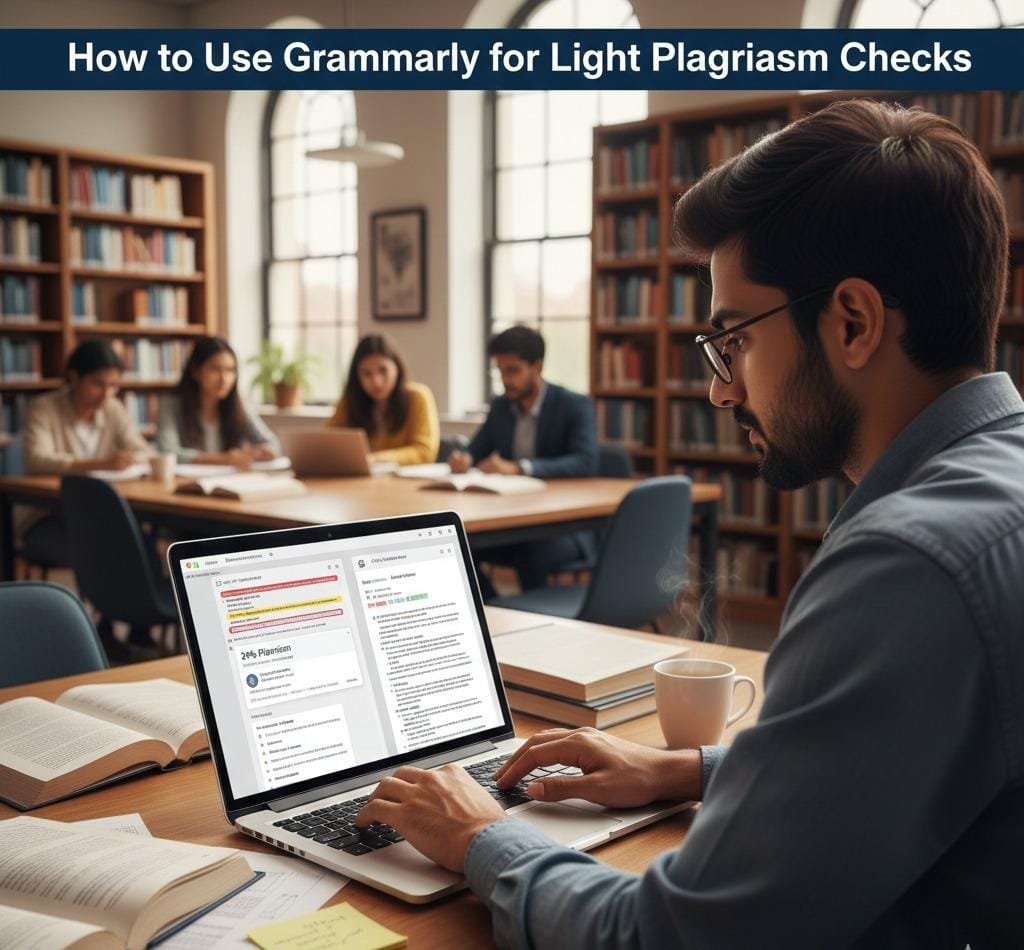
Grammarly scans the text and highlights sentences or sections that match online sources or documents in its database. It provides:
- Highlighted Matches – The tool underlines text that matches an existing source.
- Source Links – Direct links to the online content for easy verification.
- Overall Percentage – A rough similarity score to give an idea of the overlap level.
Unlike Google Search, Grammarly can catch some paraphrased or slightly altered sentences. However, its accuracy still depends on the scope of its database.
Best Practices for Using Grammarly for Light Checks
If you plan to use Grammarly as a preliminary plagiarism check, keep these points in mind:
- Check Smaller Sections First – Run chapter-by-chapter checks for more detailed feedback.
- Use It Before Final Drafting – Grammarly is most useful during early editing stages to clean obvious matches before the official institutional scan.
- Combine with Manual Review – Even Grammarly can miss matches, so also review citations and paraphrasing yourself.
- Don’t Ignore Formatting Issues – Make sure your references and quotations are correctly styled; Grammarly won’t fix them for you.
Limitations You Must Know
Grammarly’s plagiarism detection is designed for general writing, not academic compliance:
- No Access to Full Academic Databases – It does not cover all journal articles, dissertations, and books indexed in Turnitin or Urkund.
- Not UGC-Compliant – Indian universities require plagiarism reports from approved software, and Grammarly’s report may not be accepted.
- Possible False Negatives – Paraphrased academic content from restricted databases may pass through without detection.
Why It Works Well for “Light” Checks
Despite its limitations, Grammarly is perfect for catching common web-based plagiarism, accidental copy-paste from open-access sources, and repeated phrases from widely available content. It helps scholars refine their text so that by the time they submit it for the official scan, the chances of high similarity scores are reduced.
The Indian Academic Perspective
In Indian private universities, supervisors often appreciate when students take initiative to pre-check their work. Grammarly’s plagiarism checker can play a role here—it ensures that before the thesis is run through Turnitin or Urkund, the obvious matches are already addressed. This proactive step can prevent last-minute panic when official similarity reports are generated.
Conclusion
Grammarly’s plagiarism checker is not a replacement for institution-approved tools, but it is a valuable resource for light, early-stage plagiarism checks. For PhD scholars in India, it can help identify and fix easily detectable overlaps before the official evaluation. The best approach is to use Grammarly in combination with manual review and approved software, ensuring that your thesis meets both academic standards and UGC requirements without unnecessary stress.