
Introduction
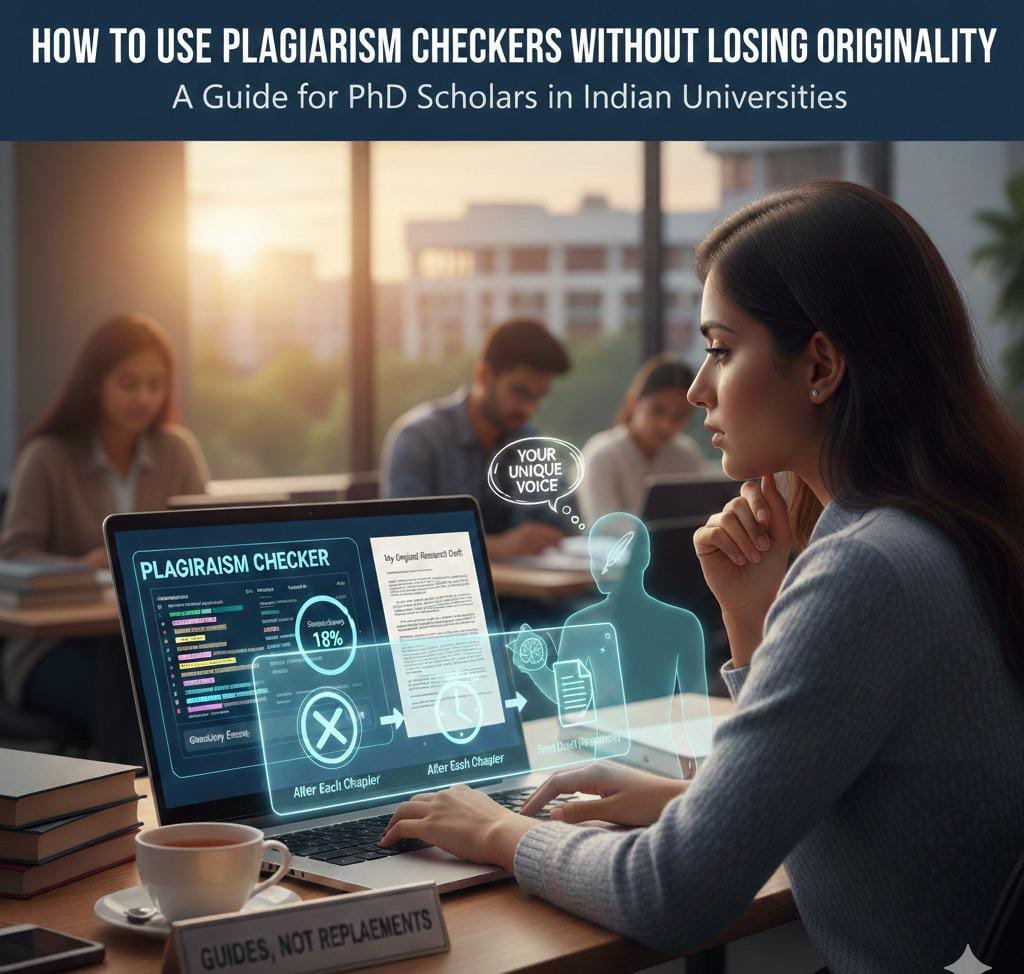
Plagiarism checkers are a vital part of thesis writing in India today, especially for PhD scholars in private universities where strict UGC guidelines apply. However, many students misunderstand how to use these tools effectively. Over-reliance can lead to robotic rewriting, while underuse can risk unintentional plagiarism. The key is learning to use plagiarism checkers as a guide—not as a replacement for original thinking.
Understanding the Purpose of Plagiarism Checkers
Plagiarism detection tools like Turnitin, Urkund, and Grammarly are designed to identify similarity between your text and existing sources. They don’t judge your work’s creativity; they simply highlight where content matches.
When used correctly, these tools help you:
- Spot missing citations.
- Identify overused phrases.
- Improve paraphrasing.
The goal is to improve academic integrity without losing your own voice in the process.
Checking Drafts at the Right Time
One common mistake scholars make is running every small change through the plagiarism checker. This not only wastes time but can lead to unnecessary rewrites. A better approach is:
- First, write freely without thinking about similarity percentage.
- Do a check after completing a full chapter.
- Do the final check after incorporating supervisor feedback.
This ensures you spend more time thinking critically and less time chasing a low percentage number.
Reading the Report – More Than Just a Number
Many students focus only on the percentage shown in the similarity report. In reality, the report’s detailed view is more important. For example:
- A 20% similarity might be fine if it’s mostly common phrases or properly cited references.
- A 5% similarity could still be problematic if it contains unattributed core ideas.
By examining highlighted sections and their sources, you can decide whether rephrasing or citation is the best solution.
Avoiding the “Over-Paraphrasing Trap”
Overusing plagiarism tools can make scholars obsessively rewrite sentences just to avoid matches. This often results in awkward language that weakens clarity. Instead:
- Focus on understanding the concept deeply before explaining it in your own words.
- Use proper citation for direct quotes or unique ideas.
- Maintain your personal academic style, even while adjusting text.
Using Plagiarism Checkers as a Learning Tool
Rather than treating plagiarism checkers as a final hurdle, consider them part of your writing improvement process. Each time you review a report, note the types of phrases or structures that get flagged. Over time, you’ll naturally write in a way that reduces similarity without constant checking.
Conclusion
Plagiarism checkers should help you protect your originality—not replace it. For Indian PhD scholars, especially in private universities, the best practice is to use them strategically: check drafts at meaningful stages, read reports carefully, and focus on expressing ideas authentically. By doing so, you’ll meet academic integrity requirements without losing your own scholarly voice.