
Introduction
For many Indian PhD scholars, especially those pursuing degrees at private universities, machine-based rewriting tools have become common aids in thesis writing. With doctoral admission in India becoming increasingly competitive, these tools offer a way to quickly paraphrase text and reduce similarity scores. However, one frequent challenge after using such tools is the disruption of sentence flow. The mechanical restructuring often leads to awkward phrasing or loss of coherence, which can affect the clarity and quality of academic writing. Understanding how to improve sentence flow after machine-based rewriting is vital for scholars balancing research with professional or family commitments.
Writing a doctoral thesis demands more than rephrasing sentences; it requires a clear, logical progression of ideas that reflects the scholar’s own voice. Especially in the Indian academic context, where supervisors and examiners value coherent and polished writing, addressing the flow issues introduced by rewriting software is crucial to meet expected standards.
Challenges in Sentence Flow Post-Rewriting
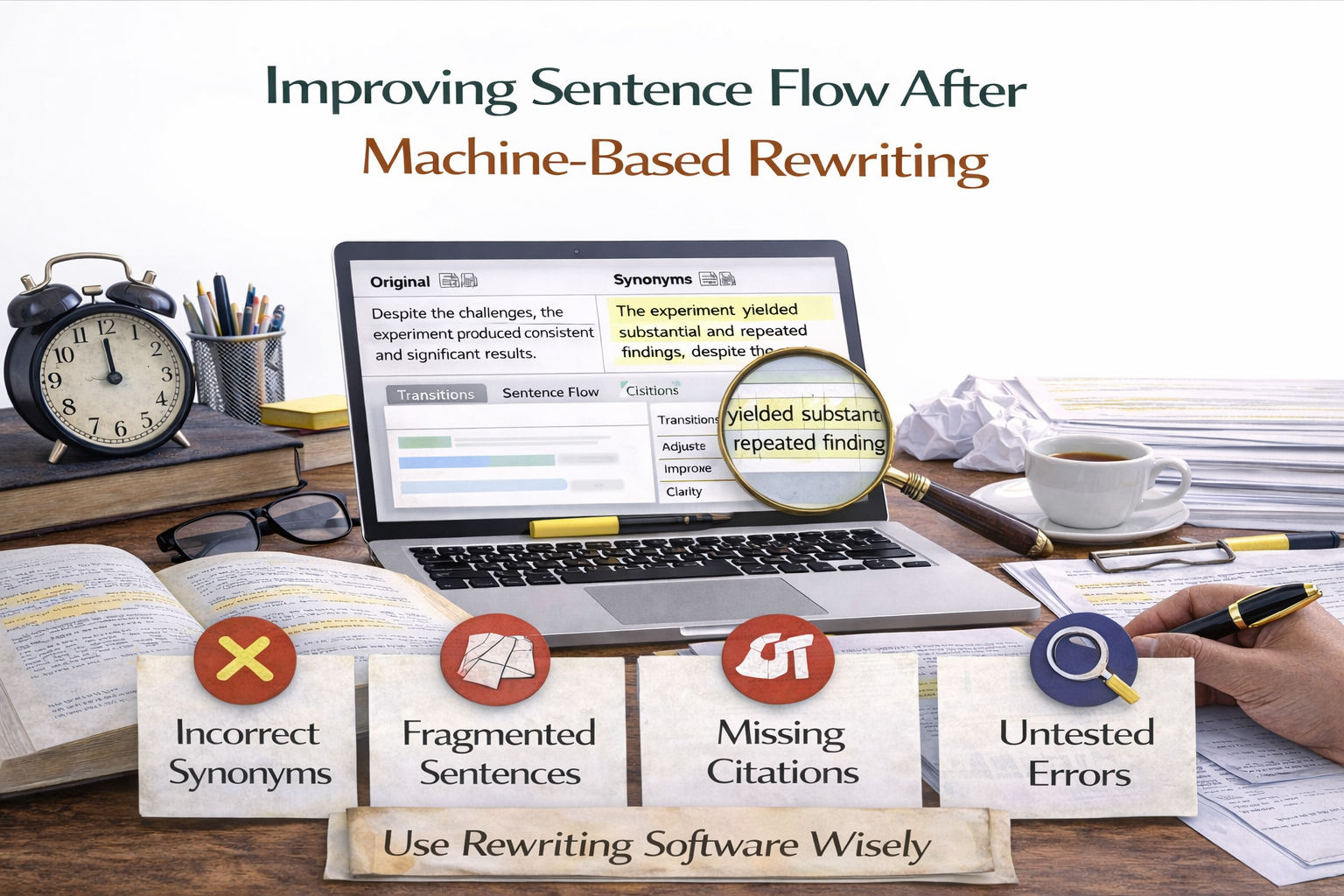
Machine-based rewriting tools primarily rely on algorithms that reconfigure sentences based on pattern recognition. While this can effectively reduce plagiarism flags, the outcome often feels robotic or fragmented. For example, a complex argument might be split into disconnected clauses, or linking phrases that create natural transitions may be omitted. Such disruptions interfere with the reader’s ability to follow the argument smoothly.
In the Indian higher education system, theses often involve interdisciplinary content, blending concepts from various fields. Machine rewriting tools may struggle to maintain the logical connections between these ideas, especially when technical jargon or cultural references are involved. This is particularly noticeable in private universities where research topics may cover emerging or region-specific themes.
Moreover, machine-generated text may lack the nuanced tone or emphasis that reflects the scholar’s understanding. The absence of varied sentence lengths and transitional words can make paragraphs monotonous, diminishing reader engagement and making the thesis appear less professional.
Strategies to Enhance Flow After Using Rewriting Tools
Improving sentence flow after machine-based rewriting begins with close, manual editing. Scholars should read the rewritten text aloud to identify awkward pauses or abrupt transitions. This practice helps detect sentences that require reordering or additional connectors to restore coherence.
Inserting transitional phrases such as “furthermore,” “in contrast,” or “as a result” can guide readers through the logical progression of arguments. However, in the Indian academic context, it is important to use these phrases judiciously to avoid sounding overly formal or mechanical. Natural variation in language style helps maintain reader interest and reflects the scholar’s authentic voice.
Breaking down long, complex sentences into shorter, clearer ones is another effective technique. Conversely, combining very short, choppy sentences can create a smoother rhythm. Indian scholars should also be mindful of cultural nuances in expression, ensuring that the language remains accessible without losing academic rigor.
Seeking feedback from supervisors or peers familiar with the research area can provide valuable insights. They can highlight sections where flow is disrupted and suggest revisions that align with disciplinary conventions and Indian academic expectations.
Using writing aids alongside rewriting tools can also be beneficial. Grammar checkers or style editors like Grammarly or ProWritingAid can identify repetitive sentence structures or suggest synonyms that improve readability. However, these tools should complement—not replace—manual revisions.
Maintaining Academic Integrity While Enhancing Flow
While focusing on sentence flow, Indian PhD candidates must ensure that the original meaning and academic accuracy remain intact. Over-editing can unintentionally alter technical terms or the intended argument. It is crucial to cross-reference rewritten sections with source material and maintain proper citations according to Indian academic standards.
Preserving one’s academic voice is equally important. Machine rewriting often produces generic phrasing, so scholars should infuse their writing with personal insight and clarity. This effort not only improves flow but also strengthens the overall quality of the thesis, contributing positively to doctoral admission evaluations.
Conclusion
Machine-based rewriting tools offer valuable assistance to Indian doctoral candidates, yet they often disrupt sentence flow, posing challenges to clear academic writing. Addressing these issues requires deliberate, manual editing focused on restoring coherence, natural transitions, and stylistic variation. By combining technological tools with careful revision and supervisor feedback, scholars can produce theses that are both original and readable. This balanced approach ensures that writing quality meets the expectations of private universities and doctoral admission committees, ultimately supporting the success of Indian PhD scholars in their academic pursuits.