
Introduction
For many Indian PhD scholars, especially those enrolled in private universities or balancing demanding careers, plagiarism removal can be a daunting hurdle. This challenge often leads them to consider paid plagiarism removal consultants. Yet, the question of ethics around using such services remains a common concern. This blog discusses the ethical considerations of employing paid plagiarism consultants within the Indian academic context, helping scholars make informed and responsible decisions.
Understanding the Role of Plagiarism Removal Consultants
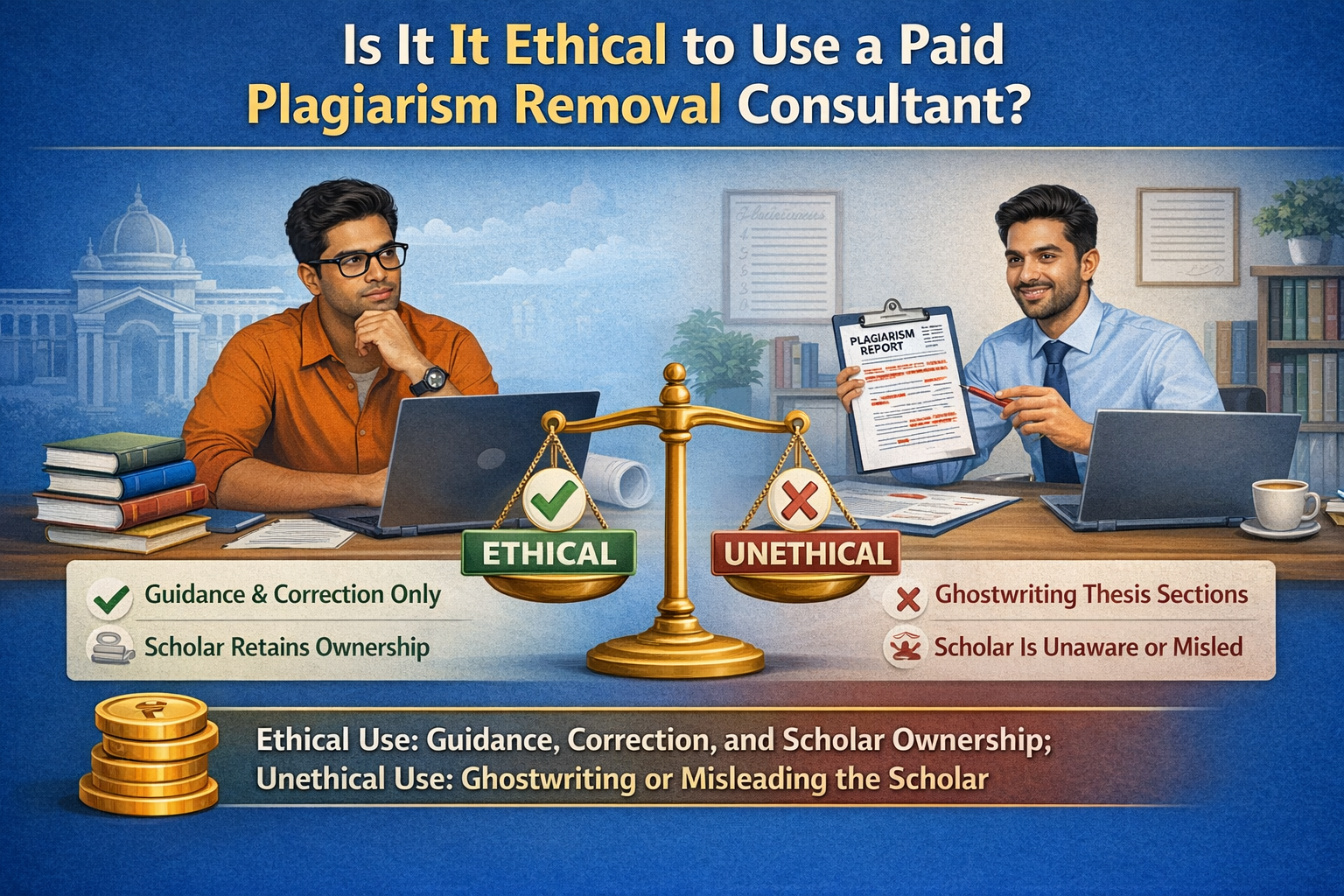
Paid plagiarism removal consultants primarily assist scholars by identifying problematic sections of a thesis, suggesting paraphrasing improvements, and correcting citation errors. They do not typically write original content on behalf of the student but guide rewriting to reduce similarity scores. When used for these purposes, such services align with ethical academic support, much like professional editing or proofreading.
When Does It Become Unethical?
The ethical line is crossed if consultants engage in ghostwriting—creating original thesis sections without the scholar’s involvement—or if they submit rewritten work without the scholar’s understanding. Indian academic regulations are strict about intellectual honesty; submitting work that is not the student’s own undermines the research process and can lead to rejection or penalties. Therefore, transparency and active participation by the scholar are crucial.
Cultural and Academic Pressures in India
The academic environment in India places significant pressure on timely completion of PhDs, especially in private universities where flexibility often means less structured guidance. Many scholars are first-generation researchers or non-native English speakers, making the writing and citation process difficult. Paid plagiarism consultants can ethically support these scholars by providing expertise in language and formatting without compromising original thought.
Comparing to Other Academic Supports
Just as scholars seek help from supervisors, language editors, or statistical consultants, plagiarism removal services can be part of a broader support system. Ethical use means the consultant’s role is advisory and corrective rather than creative. This approach respects the scholar’s intellectual contribution while enhancing the quality and integrity of the thesis.
University Policies and Transparency
Most Indian universities do not forbid the use of plagiarism removal consultants as long as the scholar retains ownership and understanding of the content. Being transparent with supervisors about using such help is advisable. Some institutions provide guidelines or approved vendor lists to ensure ethical standards are maintained.
Conclusion
Using a paid plagiarism removal consultant is ethical if the service supports the scholar’s own work through guidance, correction, and education. Problems arise only when these services replace genuine effort or obscure the scholar’s intellectual role. Recognising this balance helps Indian PhD scholars navigate academic challenges responsibly, preserving the integrity of their research and upholding university expectations.