
Introduction
In India, the rise of online academic events has changed how scholars connect, yet in-person conferences continue to hold a unique place in the doctoral journey. For PhD candidates, especially those in private universities or balancing research with professional commitments, attending offline conferences remains one of the most impactful ways to gain recognition, exchange ideas, and build credibility. While virtual formats offer convenience, the tangible benefits of face-to-face interaction, immersive learning, and direct engagement with peers and experts are difficult to replicate. Understanding why offline conferences remain essential helps scholars make informed decisions about their academic growth.
Why Physical Presence Matters
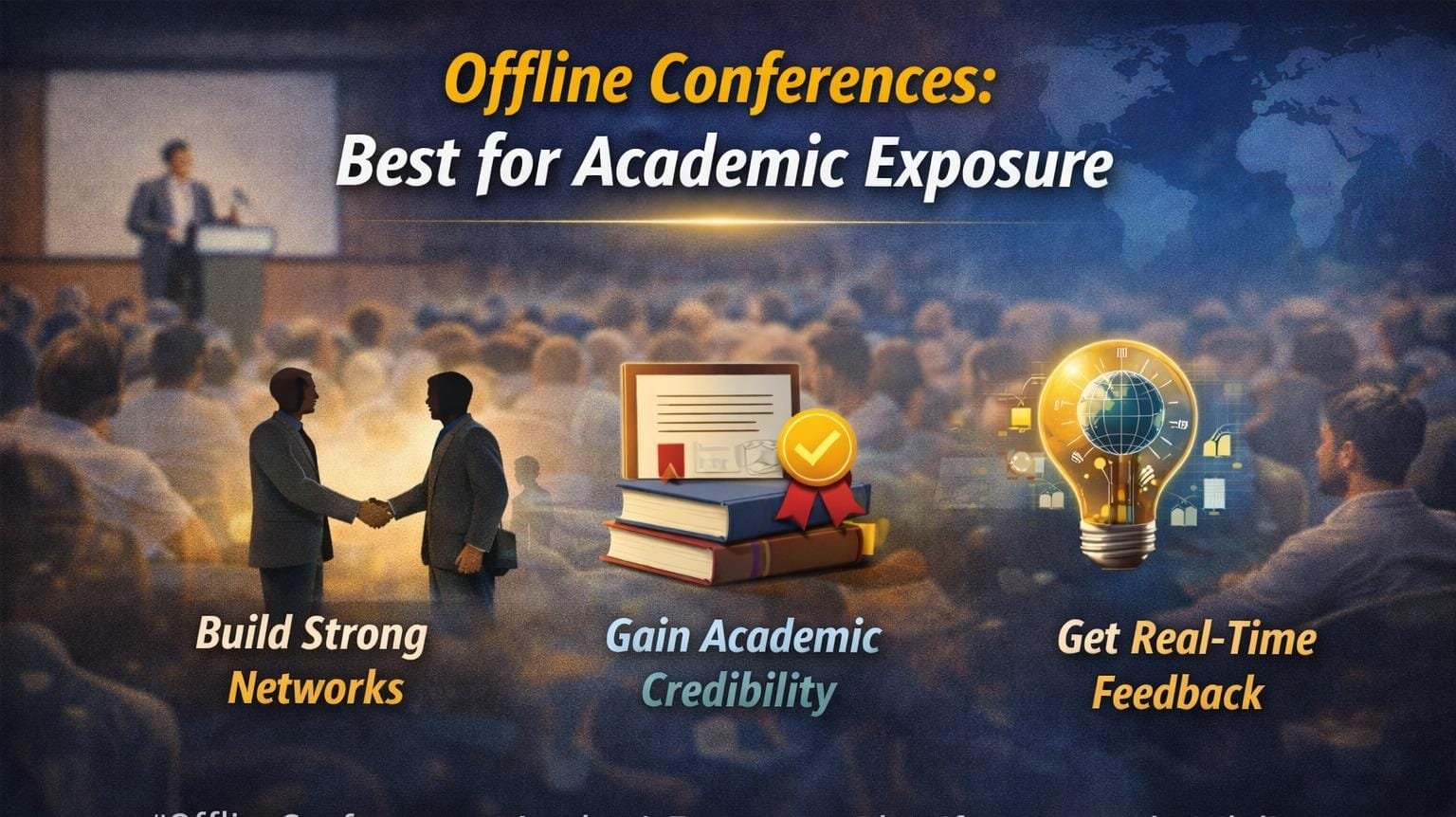
Offline conferences create an environment where ideas are shared dynamically. Presenting research to an audience in the same room allows scholars to gauge reactions, read body language, and respond in real time. For Indian PhD students, these subtle cues are valuable, as they reveal whether arguments are persuasive or require refinement. A research paper on urban development policies, for instance, may generate immediate suggestions from experts in urban planning, economics, and sociology — feedback that can significantly strengthen the study.
Moreover, the credibility associated with offline participation carries weight in Indian academia. Universities, faculty members, and even employers often perceive attendance at national or international conferences as a mark of seriousness. Being physically present signals dedication, commitment, and a willingness to invest time and resources in one’s research. These impressions are particularly important for scholars from emerging institutions who are working to establish a reputation alongside peers from older, more established universities.
Networking and Professional Relationships
One of the most significant advantages of offline conferences is the opportunity to build networks organically. Informal conversations during breaks, meals, or poster sessions often lead to collaborations, mentorship, and professional friendships that persist beyond the event. Indian PhD scholars frequently report that valuable guidance or research opportunities arose from casual discussions that would have been unlikely in a virtual setting. These interactions not only enhance research quality but also provide exposure to multiple perspectives, encouraging interdisciplinary thinking.
Offline conferences also allow mid-career professionals pursuing a PhD to gain credibility among peers and supervisors. In-person interactions reassure colleagues and family that the scholar is actively engaging with the academic community, creating a visible record of progress that complements publications or thesis milestones. This cultural aspect is particularly relevant in India, where external recognition often influences personal and professional perception.
Exposure to Emerging Research Trends
Participating in offline conferences provides a concentrated learning experience. Scholars are exposed to a wide array of research presentations, keynote speeches, and panel discussions in a single setting. This immersion allows for serendipitous learning — noticing connections between unrelated fields, discovering new methodologies, or identifying potential gaps in one’s own work. For Indian researchers, whose access to global conferences may be limited due to financial or logistical constraints, national and regional events still offer a rich environment for observing contemporary academic discourse.
The physical format also encourages focus and engagement. Unlike online events, which can be interrupted by digital distractions, attending in person requires active participation. This level of immersion helps scholars internalise ideas more effectively and brings energy to discussions, often leading to deeper insights and more meaningful academic conversations.
Balancing Challenges
Offline conferences are not without challenges. Travel, accommodation, and registration costs can be significant, particularly for students from smaller towns or emerging universities. Preparing for presentations, managing time away from research or work, and handling language or stage concerns can also be daunting. However, the benefits — real-time feedback, professional networking, skill development, and visibility — often outweigh these hurdles. Even attending regional conferences provides opportunities for growth and exposure that are difficult to achieve solely online.
Conclusion
Offline conferences continue to play a central role in shaping the academic journey of Indian PhD scholars. They combine direct feedback, personal interaction, and immersive learning in ways that online formats cannot fully replicate. While virtual events offer accessibility and convenience, the depth of engagement, professional recognition, and organic networking of in-person conferences make them invaluable. For scholars committed to serious academic growth, participating in offline conferences remains a cornerstone of building a credible and respected research profile.