
Introduction
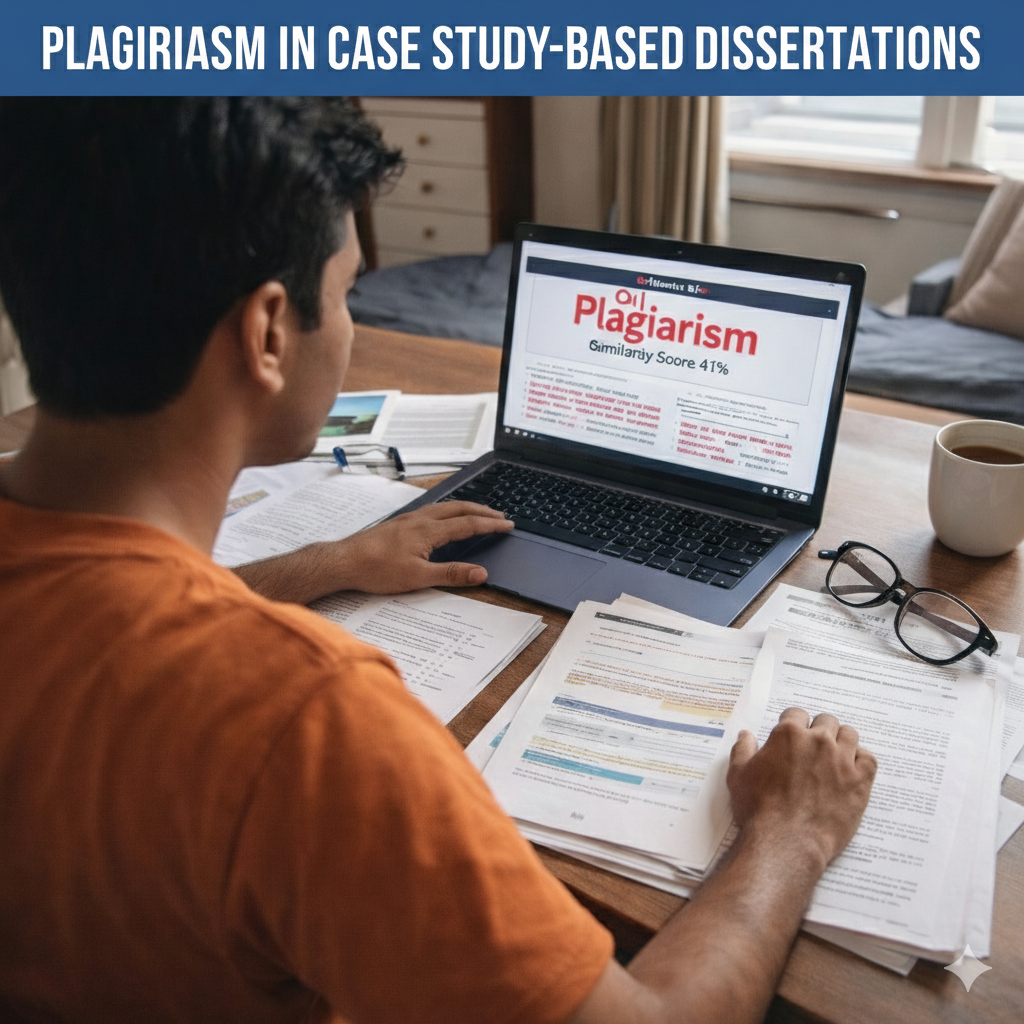
Case study-based dissertations are common in fields such as management, education, law, and social sciences, especially in Indian private universities. They allow scholars to examine real-world situations in depth and apply theoretical concepts to practical problems. However, the nature of case studies makes them highly vulnerable to plagiarism. Since a large portion of the data, examples, and even wording may come from existing reports, websites, or publications, it becomes easy for accidental or intentional similarity to occur. For PhD scholars, understanding how plagiarism manifests in case study-based work is essential to producing an original, ethical dissertation.
Why Case Study Dissertations Are More Prone to Plagiarism
Unlike experimental research, case studies often involve describing scenarios, events, or organisations in detail. This means the scholar might use existing descriptions or findings from secondary sources. If proper citations are missing or the wording is too similar, plagiarism is almost inevitable. In India, where many private university students rely heavily on publicly available case studies from journals or consultancy reports, this risk becomes even higher.
Common Sources of Plagiarism in Case Studies
Plagiarism in case study dissertations can occur in several ways:
- Copying from published case studies without proper citation or permission.
- Using secondary data such as company profiles or government reports verbatim.
- Reusing content from previous student dissertations stored in the university library or online repositories.
- Borrowing tables, charts, or models without acknowledging their original creators.
The Challenge of Paraphrasing in Case Studies
Paraphrasing in case study writing is more difficult than in purely theoretical chapters. Certain technical terms, company-specific details, or unique event descriptions cannot be altered significantly. However, the scholar must still find ways to present information in their own words, supplemented with correct citations. Relying on simple word substitutions can result in high similarity scores during plagiarism checks.
How to Avoid Plagiarism in Case Study-Based Work
- Collect primary data wherever possible. Conducting interviews, surveys, or observations reduces dependence on secondary material.
- Cite all secondary sources clearly, even for short factual statements.
- Summarise rather than copy—explain data in your own analytical style instead of reproducing original text.
- Maintain a source log during research to track every piece of borrowed information.
- Use plagiarism detection tools at multiple stages to identify risky sections early.
The Role of Ethical Scholarship
In case study-based dissertations, originality is not just about unique findings—it is also about how responsibly the scholar handles existing information. Ethical writing ensures that the work stands up to academic scrutiny, avoids legal issues, and demonstrates the scholar’s genuine contribution. Private universities in India increasingly emphasise plagiarism checks for case study dissertations, meaning careless work is more likely to be rejected.
Conclusion
Case study-based dissertations carry a higher risk of plagiarism because they rely heavily on descriptive content drawn from existing materials. For PhD scholars, especially in Indian private universities, the safest path is to combine primary research with careful citation of all secondary data. By treating ethical writing as an integral part of the research process, scholars can ensure their work reflects originality, integrity, and academic professionalism.