
Introduction
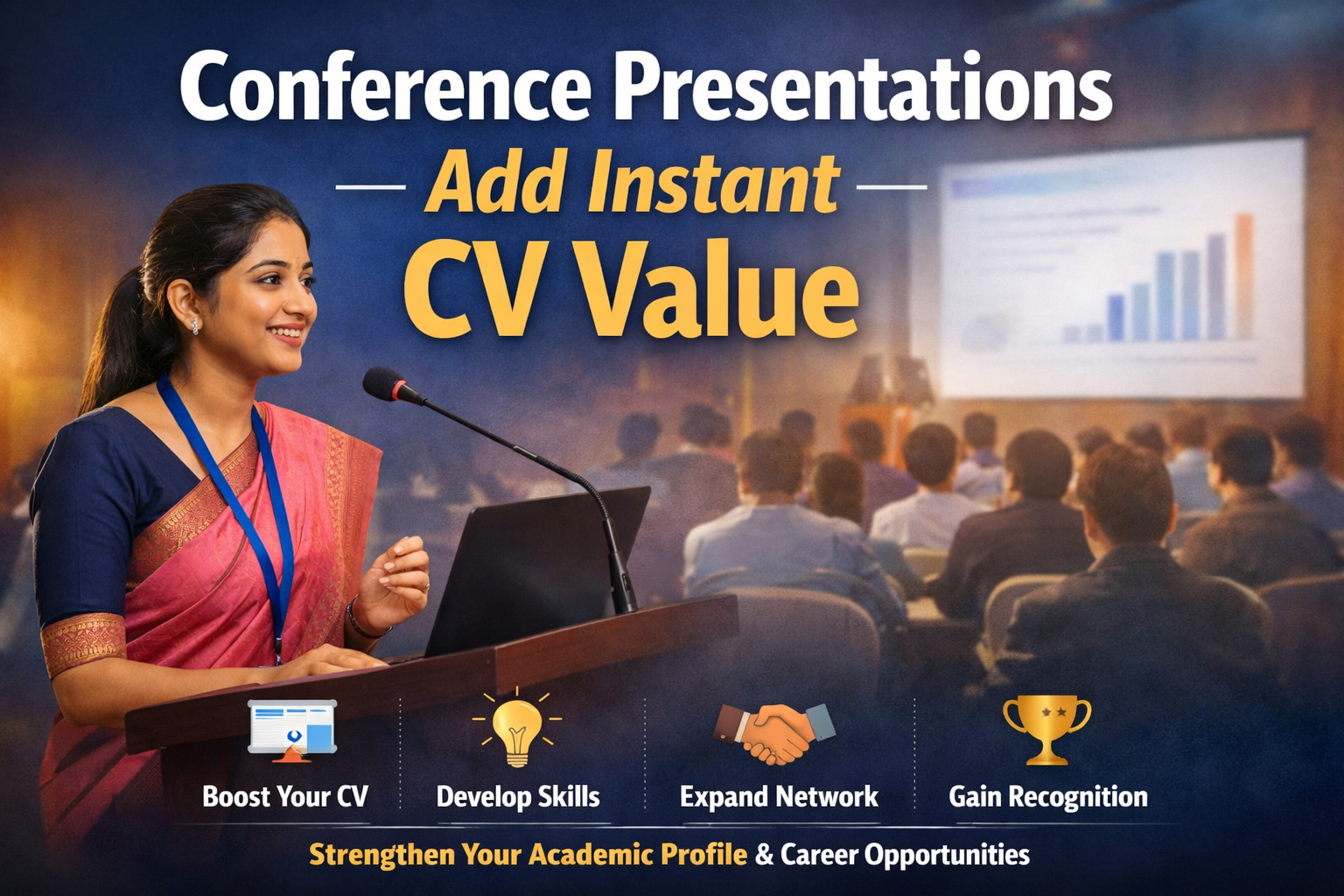
For PhD scholars in India, building a strong curriculum vitae is an ongoing concern. Beyond publications and awards, one of the most immediate ways to enhance an academic profile is through conference participation. Presenting at a conference is more than a formal requirement; it demonstrates engagement, initiative, and the ability to communicate research effectively. Whether a scholar is enrolled in a private university, a central institution, or pursuing doctoral studies alongside professional commitments, including conference presentations on a CV adds tangible value that is recognized by supervisors, peers, and potential employers.
Why Conference Presentations Matter
Academic work is often measured not just by completed research, but by how it is shared with the wider scholarly community. A conference presentation signals that a scholar’s work has reached a level worthy of discussion and critique. In India, where doctoral research timelines can be long and milestones often appear distant, presenting at conferences provides interim achievements. It reflects not only scholarly progress but also the confidence to communicate ideas publicly.
Moreover, a CV that lists conference presentations conveys a pattern of consistent engagement. It shows that the scholar actively participates in academic dialogue, seeks feedback, and contributes to ongoing debates. For employers, whether in academia or industry, these entries indicate initiative, communication skills, and a commitment to staying current in the field.
Skill Development Through Presenting
Preparing for a conference presentation requires condensing months of research into clear, structured content. This process hones academic writing, enhances critical thinking, and improves the ability to summarize complex findings succinctly. Delivering the presentation further develops verbal communication skills, as scholars learn to articulate ideas clearly, respond to questions on the spot, and engage with an audience that may not share the same background.
For Indian PhD candidates, these skills are invaluable. Many face viva examinations, teaching responsibilities, or future roles that demand clear communication. Presenting at conferences provides practical experience in managing these situations, translating abstract research into digestible narratives, and demonstrating authority over the subject matter.
Networking and Professional Exposure
Conference participation is not limited to presentation alone; it also offers opportunities for networking. Scholars interact with peers, senior researchers, and practitioners, opening doors to collaborations, mentorship, and knowledge exchange. For students in private universities, where institutional reputation may be developing, these interactions help establish credibility in the broader academic community. Even regional or national conferences provide exposure to contemporary research, methodologies, and interdisciplinary perspectives, all of which can be reflected in a CV as evidence of active scholarly engagement.
Furthermore, conferences often lead to invitations for journal submissions, collaborative projects, or speaking opportunities. Including these experiences on a CV signals to reviewers and employers that the scholar’s work is recognised, discussed, and valued beyond the immediate academic circle.
Cultural and Career Significance in India
In the Indian context, tangible proof of progress is especially important. Families, colleagues, and institutions often look for visible markers of academic achievement. Conference presentations serve as clear milestones that demonstrate a scholar’s growth and commitment. They also highlight initiative and the ability to engage in professional dialogue, qualities that are increasingly valued in hiring, promotions, and fellowship applications.
Even a single presentation can make a difference. It shows that the scholar is proactive, confident, and willing to invest effort into professional development. Over time, multiple presentations build a record of sustained engagement, which strengthens the CV and positions the researcher as an active contributor in their field.
Conclusion
Including conference presentations on a CV is more than a formality; it reflects a scholar’s visibility, engagement, and professional maturity. For Indian PhD students, especially those in private universities or managing multiple responsibilities, these entries provide immediate recognition and demonstrate serious academic commitment. Beyond enhancing a CV, the experience builds skills, networks, and confidence that benefit both research and future career paths. Each presentation becomes a marker of progress, a sign that the scholar is not only producing knowledge but also sharing it with the community that matters.