
Introduction
In the Indian academic landscape, particularly for PhD scholars in private universities, plagiarism is a major concern. Many students struggle to maintain originality in their thesis or research papers due to language barriers, lack of writing skills, or pressure to meet deadlines. This has led some scholars to seek external help, including freelancers who offer plagiarism rewriting services. But the question remains: should you trust freelancers for this sensitive work? This blog explores the risks and realities of hiring freelancers for plagiarism rewriting and offers guidance on making informed decisions.
Understanding Plagiarism Rewriting
Plagiarism rewriting, sometimes called paraphrasing or rewriting services, involves modifying existing text to reduce similarity scores on plagiarism detection software like Turnitin. While paraphrasing is a legitimate academic skill, relying solely on rewriting services can be risky if the work lacks originality or proper citation. Freelancers often promise to “remove plagiarism” by rewording sentences, but the quality and ethics behind their work vary widely.
The Appeal of Freelancers for Indian PhD Scholars
For many scholars, especially those enrolled in private universities, freelance services appear to be a convenient solution. Freelancers are easily accessible online, often affordable, and offer quick turnaround times. Indian students facing challenges such as limited English proficiency, heavy workloads, or strict submission deadlines might find freelance rewriting appealing as a shortcut to meet academic requirements.
Risks Involved in Trusting Freelancers
- Quality and Authenticity Concerns
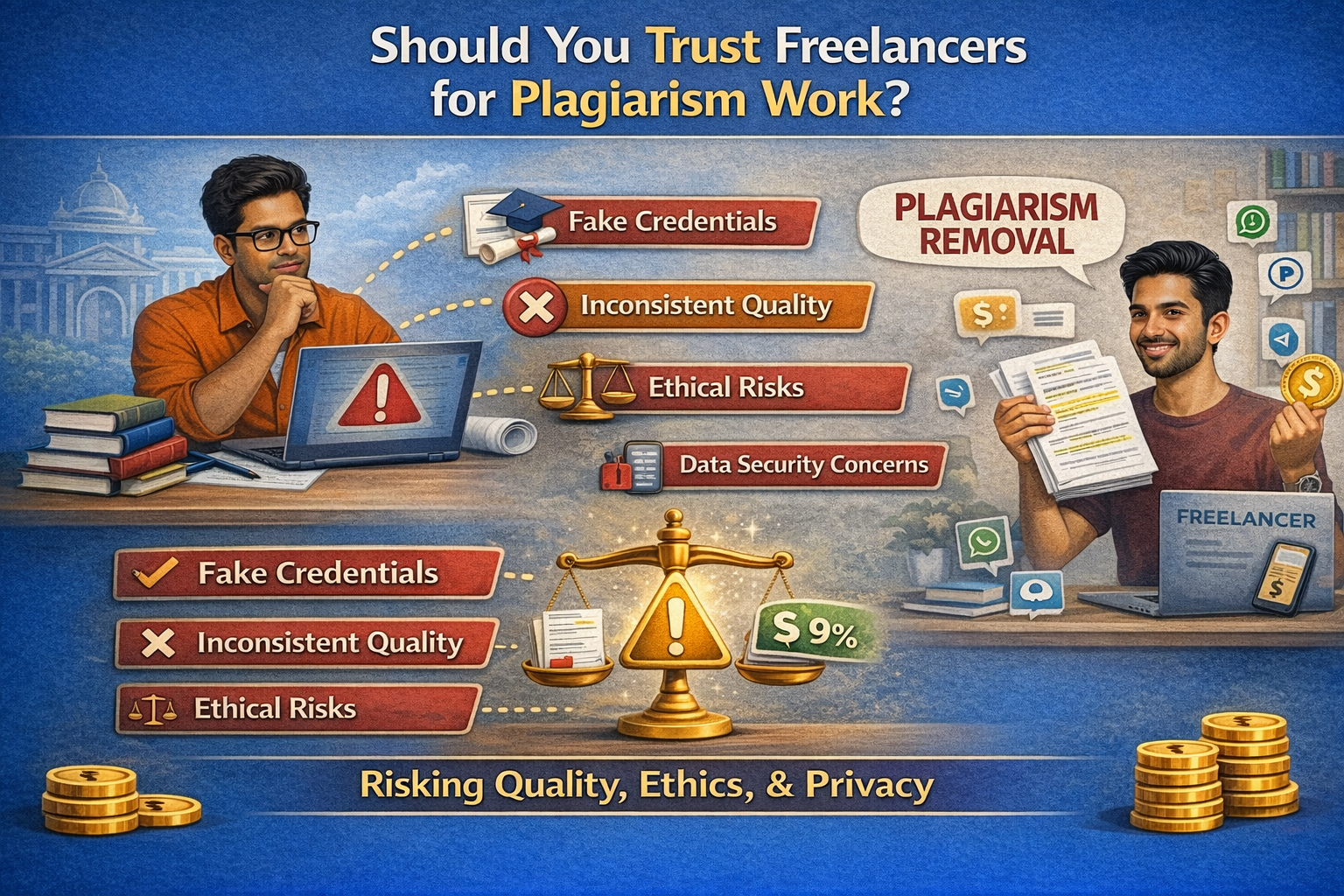
Freelancers’ expertise can be inconsistent. Some might deliver poorly paraphrased content that still gets flagged for plagiarism, or worse, submit copied work directly. This jeopardizes the scholar’s academic integrity and could lead to serious consequences from universities. - Lack of Accountability
Unlike institutional support services, freelancers may not have accountability or transparency. If the work is substandard or if plagiarism issues arise later, there may be no recourse or refund. - Ethical Implications
Using rewriting services to bypass proper citation or original thinking can be unethical. Scholars risk compromising the value of their research and their reputation. Indian academia is increasingly strict about plagiarism, and even private universities enforce policies to maintain research standards. - Data Security and Privacy
Sharing your thesis or research documents with unknown freelancers online raises privacy risks. Confidential research may be leaked, plagiarized elsewhere, or misused.
How to Make an Informed Decision
If you still consider hiring a freelancer, keep these points in mind:
- Check Credentials and Reviews
Look for freelancers with verified academic writing experience and positive reviews from other Indian scholars. Ask for sample work before committing. - Prefer Academic Consultants over General Freelancers
Freelancers specializing in academic writing and familiar with Indian university standards tend to offer better, more ethical services. - Clarify the Scope of Work
Make sure they focus on helping you improve writing clarity and proper citation, not just rewriting to evade plagiarism detection. - Use Freelancers as Support, Not a Shortcut
Consider freelancers as aids for language polishing or formatting rather than for rewriting entire sections. This preserves your originality and complies with academic integrity. - Avoid “Plagiarism Removal” Guarantees
No service can ethically guarantee zero similarity scores. Focus on improving your understanding and writing skills alongside any support you seek.
Alternatives to Freelancers for Plagiarism Rewriting
- University Writing Centres and Supervisors
Many Indian universities, including private ones, offer writing support or can guide you toward trustworthy resources. - Professional Academic Editing Services
These services focus on improving language and structure without compromising originality. - Peer Support Groups
Collaborate with fellow PhD scholars to review and improve your writing. - Self-Learning and Use of Tools
Using plagiarism checkers, paraphrasing guides, and academic writing resources can empower you to rewrite ethically.
Conclusion
Trusting freelancers for plagiarism rewriting work can be tempting for Indian PhD scholars under pressure, especially in private universities where support might be limited. However, it carries significant risks related to quality, ethics, and privacy. Rather than relying solely on freelancers, it is wiser to seek credible academic support, enhance your own writing skills, and maintain integrity throughout your research journey. When external help is necessary, choose freelancers carefully—prefer those with academic credentials, clear ethics, and a focus on improving your original work rather than merely avoiding plagiarism detection. Ultimately, your thesis should reflect your genuine scholarship, which no amount of rewriting services can replace.